Advanced Jian Taolu: Exploring Intricate Footwork and Sword Maneuvers
🥋 Dive into "Advanced Jian Taolu" as we explore intricate Jian sword footwork techniques and complex maneuvers that showcase mastery, precision, and…
Read article
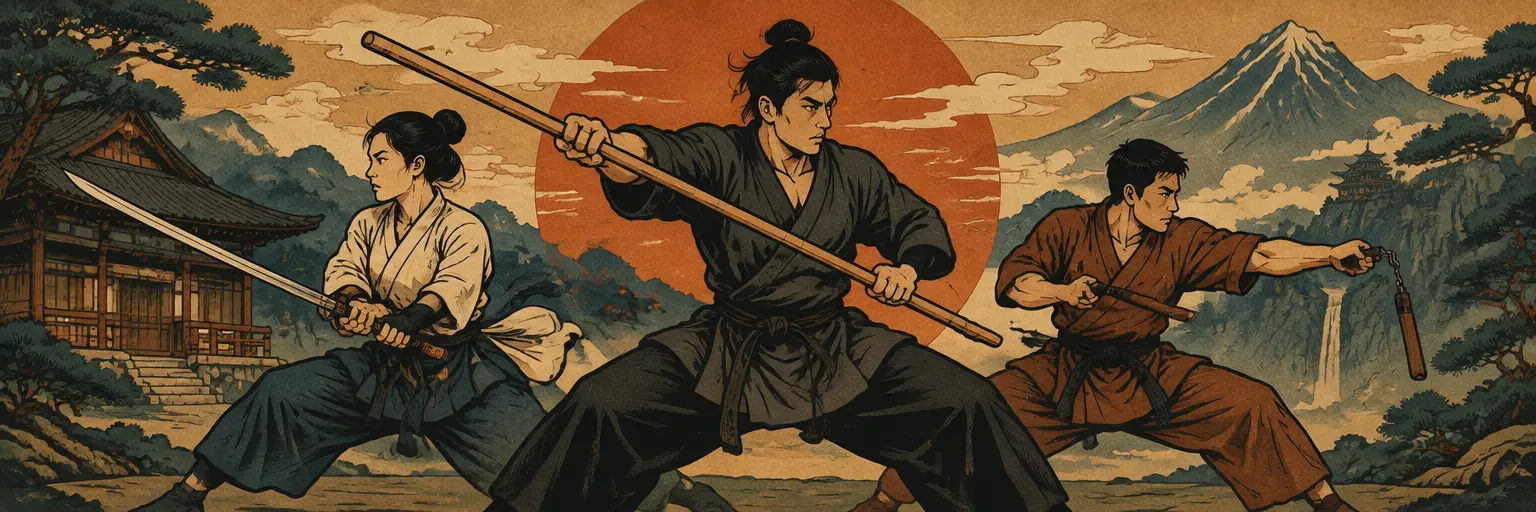
Unlock the precision and flow of traditional weapons forms with our detailed breakdown of bo staff, sword, and nunchaku sequences. Whether you’re perfecting the elegant angles of a taolu or the explosive power of a kata, this guide offers step-by-step analysis of stance transitions, grip mechanics, and striking patterns. Dive into the rhythmic cadence of each movement, from the sweeping arcs of the staff to the sharp, controlled slashes of the blade and the rapid, whipping rotations of the nunchaku. Learn how to build muscle memory, improve timing, and maintain combat efficiency while preserving the artistic integrity of these ancient disciplines. Perfect for practitioners aiming to refine their form accuracy, understand application beyond choreography, or prepare for competition—this is your resource for mastering weapon-based movement with technical clarity and martial intent.
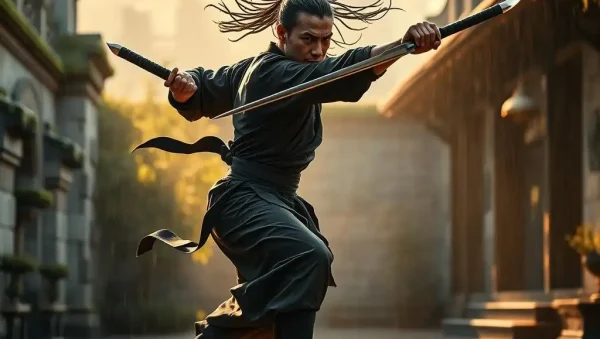
🥋 Dive into "Advanced Jian Taolu" as we explore intricate Jian sword footwork techniques and complex maneuvers that showcase mastery, precision, and…
Read article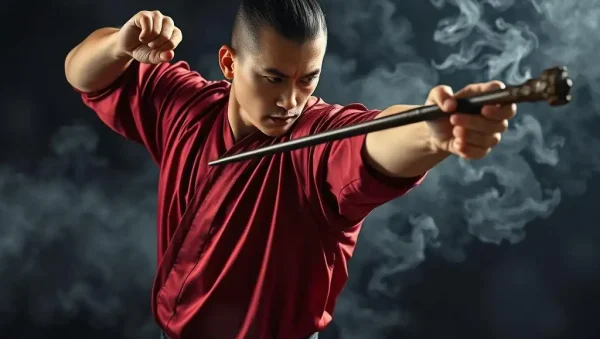
🥋 Discover the intricate "Yin Shou Gun" technique, a powerful staff Taolu that exemplifies martial arts mastery. This detailed guide explores its…
Read article
🥋 Mastering the Jian grip technique details is crucial for precise form execution in martial arts. This article explores the subtle nuances…
Read article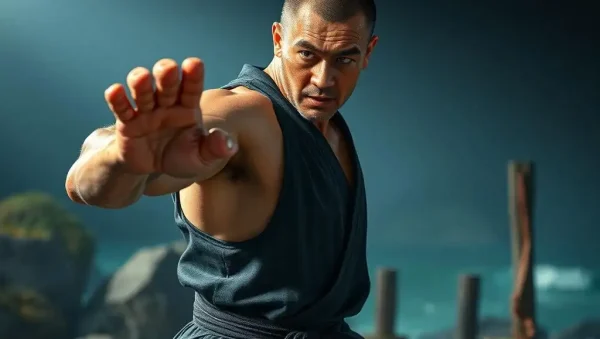
🥋 Discover the rich history and mastery behind Shushi no Kon Dai, an iconic Okinawan bo kata, as we explore its intricate…
Read article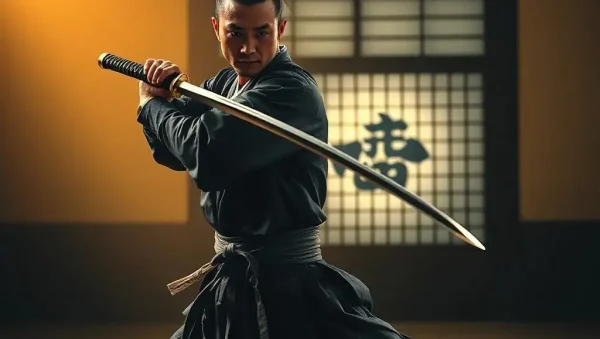
🥋 Explore the intricate "Tachi Uchi no Kurai technique" in this deep dive into classical kenjutsu, uncovering its historical significance, fundamental movements,…
Read article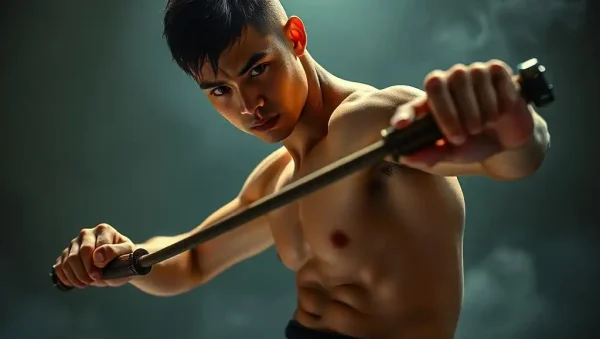
🥋 Discover essential Nunchaku patterns for beginners that enhance coordination and control. MartialArtsMastery.org guides you through foundational techniques, blending historical insights with…
Read article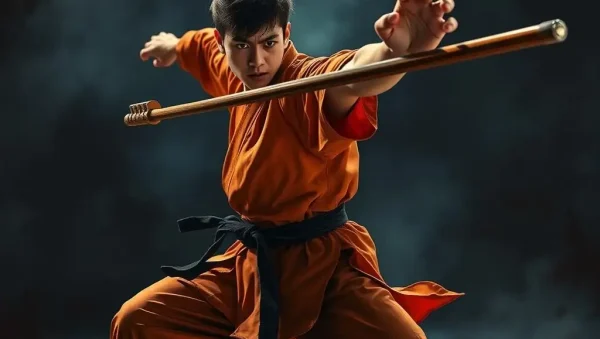
🌟 Discover the essentials of Bo staff kata beginners need to master, as we break down fundamental movements and techniques in a…
Read articleThis subcategory delves deep into the structured, choreographed routines of traditional weapons—specifically the bo staff, sword, and nunchaku. Unlike basic technique drills, kata (Japanese) and taolu (Chinese) embody the essence of combat application, flow, and mental focus. Here, we break down each sequence move-by-move, exploring stances, transitions, timing, and the hidden defensive applications embedded within every strike and block. Whether you're a beginner seeking clarity or an advanced practitioner polishing your form, this analysis transforms rote memory into living martial knowledge.
Bo staff forms, or kata, are the backbone of Okinawan and Chinese weapon training. In this section, we dissect classic sequences like the Rokushaku Bo and Choun No Kon, focusing on the rotational power of the wrists and the explosive hip-driven thrusts. Expect a move-by-move breakdown of figure-eight sweeps, overhead strikes, and low sweeps, with clear cues on grip placement and hand-switching to maintain momentum without breaking rhythm.
Beyond the choreography, we reveal the bunkai (practical applications) behind each sequence. Learn how a simple twirl redirects an opponent’s weapon, or how a low block becomes a vital strike to the knee. We emphasize the importance of maai (distance control) and posture, ensuring you not only memorize the kata but understand why each movement exists. This analysis also highlights common errors—like hyperextending elbows or lifting the shoulders—and offers corrective drills to build fluidity and power.
Sword taolu, whether in Chinese wushu or Japanese kenjutsu forms, demand razor-sharp precision and a seamless connection between mind, body, and blade. Here, we analyze iconic sequences such as the Yang-style Tai Chi Sword and Katori Shinto-ryu kata. Each section covers the four primary cuts (vertical, diagonal, horizontal, and thrust), focusing on seme (pressure) and zanshin (remaining awareness) to project intent beyond the physical movement.
We also address the critical aspect of edge alignment (hasuji in Japanese), ensuring your blade travels at the correct angle to slice, not bat. Through detailed gaze and hip-body mechanics, you’ll learn to generate torque from your rear foot, through the core, and into the tip. Expect practical tip boxes on grip tension (a relaxed forefinger and thumb), breathing cadence, and how to transition between fast, explosive cuts and slow, controlled circles—making your sword form both a workout and a moving meditation.
Nunchaku kata blend rhythmic flailing, figure-eight patterns, and rapid hand-to-hand exchanges that showcase the weapon’s speed and unpredictability. This section breaks down traditional Okinawan nunchaku kata and modern competition taolu, emphasizing the two critical skills: makiwara (strike control) and kasane (stacking). Each sequence is analyzed for the spin plane—vertical, horizontal, or diagonal—and how you shift your lead hand to create smooth transitions without losing grip or striking yourself.
More than just flash, we dissect the self-defense applications: how a back-hand swing becomes a joint lock, a overhead strike becomes a choke release, and a monkey grip wrap controls an opponent’s limb. We explain how practicing with a padded or foam nunchaku improves muscle memory for contact drills, and how to safely train the advanced “rebound” off a target or floor. Expect troubleshooting common issues like wrist fatigue, inconsistent spin rhythms, or tangled chains, plus progressive drills from slow-motion to full-speed execution.
Weapons forms are not random moves strung together; they follow a logical combat scenario with deliberate entries, traps, and exits. Here, we analyze the structure of kata/taolu—the embusen (performance line) versus actual engagement angles—and how the order of techniques mimics a fight against multiple assailants. Learn to identify the “kiai” or focal points in bo staff twirls, sword flourishes, and nunchaku cranks, which signal a change in intent or defense.
We dive into the rhythmic cadence of each weapon: the bo’s long, sweeping tempo; the sword’s punctuated “cut–pause–flow”; and the nunchaku’s sharp, percussive snaps. Understanding this ma (interval) allows you to add nuance—slowing down for emphasis, accelerating for surprise—which distinguishes a hollow performance from a living form. We also cover common structural mistakes, such as over-reliance on upper-body strength, neglecting hip rotation, or breaking the connection between the last move and first move of the next sequence.
This final conceptual section provides a systematic approach to mastering any weapons form. Start with kata bunkai (application extraction), then practice each movement as a standalone technique, then combine every two moves (kihon-pairing), and finally run the full sequence with a metronome or partner. We break down how to use shadow work to refine angles, a mirror to check posture, and a slow-motion video to self-analyze the transition points.
Next, we bridge the gap between kata and kumite (sparring) through pre-arranged drills. For bo, practice safe thrusts against a shield pad; for sword, use a bokken with a partner to practice distance and timing; for nunchaku, use foam versions to simulate hits and traps. We emphasize a gradual progression from no-contact to light-contact, always focusing on zanshin and proper recoil. This section ends with tips on tailoring forms to your body length, strength, and weapon weight, ensuring your kata is not a copy but an authentic, personal expression of technique.
Kata is a Japanese term for detailed choreographed patterns, often linear and with a focus on combat efficiency and timing. Taolu is Chinese, emphasizing acrobatic transitions, fluidity, and dramatic expression. Both encapsulate technique and application, but taolu is more performative. For weapons like bo, sword, and nunchaku, the underlying mechanics—stance, grip, and intent—are universally shared.
The bo staff is typically the easiest due to its longer handle, allowing for greater visibility and control, plus less risk of self-impact. Nunchaku are hardest because of rebound unpredictability and spin timing. A beginner should master a basic bo kata first to learn proper rotation and footwork, then transition to sword for precision, and finally nunchaku for speed and coordination.
A typical 30–45 second sequence with 20–30 movements can take three to six months to memorize, plus another six months to refine posture, power, and smooth transitions. Full mastery, including bunkai and spontaneous application, may take three to five years of consistent practice. Focus on quality over speed; slow-motion reps accelerate long-term retention.
Yes. Use alternatives like a lightweight wooden bo, a padded foam sword, or rope/sponge nunchaku to avoid injury. For shadow practice, even a rolled-up towel works for sword forms. Ensure clear ceiling space for nunchaku spins and a soft floor for drops. For bo, a broomstick is acceptable for learning footwork, but seek a proper weight for muscle-memory transfer.
Identify each movement’s bunkai: a block becomes a strike, a thrust becomes a joint lock, a twirl becomes a trap. Practice with a partner in slow-motion, isolating one move from the sequence. Then, respond to random attacks by substituting a kata movement. For bo, use the end of the staff for striking; for sword, learn parry-to-cut transitions; for nunchaku, use the chain for wraps.