Understanding the Deeper Purpose of Kata, Poomsae, and Taolu
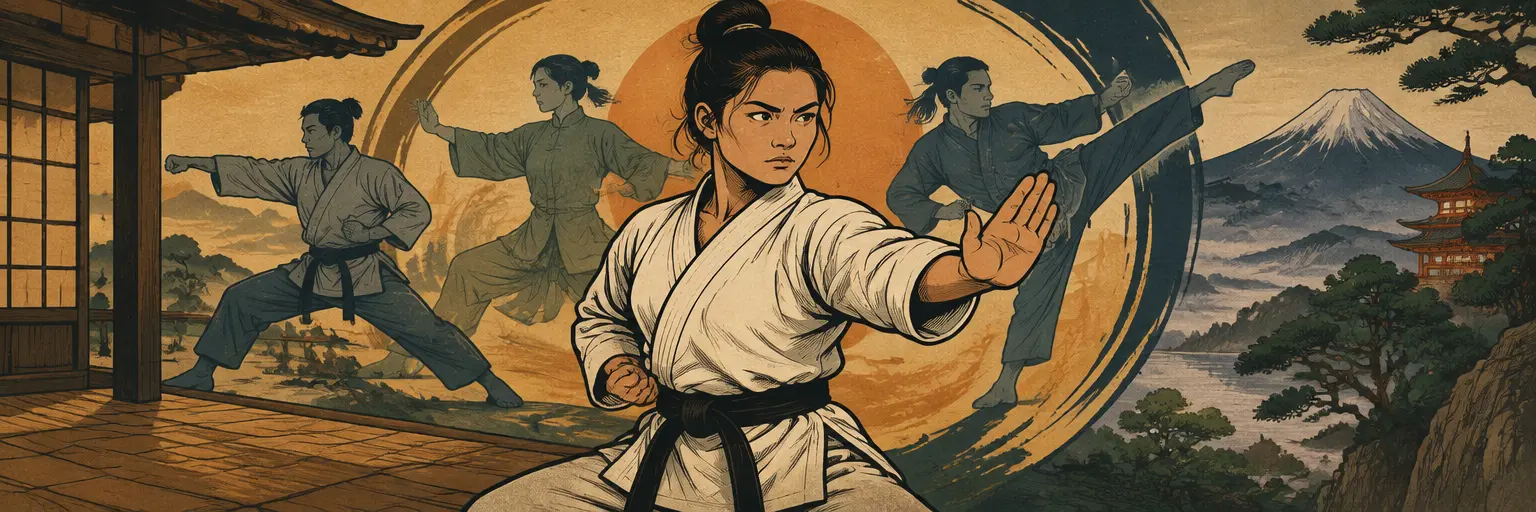
In martial arts, forms—whether called kata in Japanese karate, poomsae in Korean taekwondo, or taolu in Chinese kung fu—are much more than choreographed sequences of movement. They are living libraries of combat knowledge, philosophical tools, and meditative practices compressed into a physical routine. On this page, we explore why these patterns exist, how they function as self-defense repositories, and why advanced practitioners spend decades refining them. If you have ever wondered why your instructor insists on perfecting every stance and angle, this detailed analysis will reveal the hidden layers of meaning and utility embedded in every form.
🛡️ The Historical Role of Forms as Combat Archives
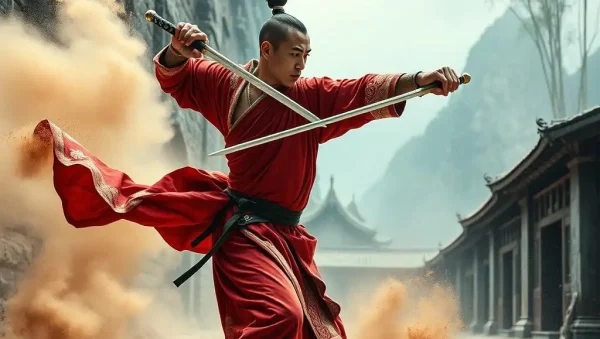
Before written manuals and video tutorials, martial artists preserved their techniques through forms. Each movement sequence was a mnemonic device, encoding strikes, blocks, throws, and joint locks against unseen opponents. For example, the Okinawan kata Sanchin includes tensing and breathing patterns that condition the body for close-quarters combat, while many taolu in Shaolin kung fu mimic defenses against multiple attackers. Forms were not meant to be performed in the air; they were rehearsals for survival, with each turn representing a directional threat.
Understanding this historical context changes how you practice: every posture has a practical application (bunkai for karate, hoshinsul for taekwondo, chaijiao for taolu). When you study forms as archives, you begin to extract self-defense techniques that are not immediately obvious. This perspective transforms your training from simple repetition into active research, where you ask “What if an opponent grabs here?” or “How does this pivot avoid a spear thrust?” The form becomes a dialogue with past masters.
🧠 Cognitive Benefits: Building Muscle Memory and Reaction Speed
Performing forms repeatedly builds procedural memory, which allows your body to execute complex techniques without conscious thought. This is crucial in a real fight where split-second reactions determine outcomes. Each repetition strengthens neural pathways, making stances stable and transitions fluid. Moreover, forms train your spatial awareness—knowing where your body is in space—which improves balance, coordination, and the ability to adjust to different distances against an opponent.
Beyond physical reaction, forms enhance cognitive flexibility. Memorizing long sequences forces your brain to chunk information, improving overall memory skills that transfer to daily life. Advanced practitioners often slow down their forms or change tempo to challenge their focus, turning the practice into a form of moving meditation that reduces stress and sharpens mental clarity. In this way, kata is not just exercise; it is brain training that makes you a smarter, calmer, and more adaptive martial artist.
⚖️ Philosophical and Spiritual Dimensions Embedded in Movement
Every form carries philosophical principles, often tied to the culture it originated from. In Japanese karate, the kata’s rhythm reflects Bushido values—start slow, explode in technique, then regain calm. In Chinese taolu, movements mimic animals or natural elements, embodying Taoist ideas of yielding, flow, and harmony. Korean poomsae, such as the Taegeuk series, represent the dual forces of yin and yang, teaching balance between hard and soft, attack and defense. The physical body becomes a canvas for these timeless wisdom traditions.
When you practice with intention, you are not just moving—you are internalizing concepts like patience, discipline, and non-aggression. Many forms begin and end with a bow, symbolizing respect for the art and one’s opponent. The repetition of forms teaches perseverance: mastery is not achieved in a day but through consistent, humble effort. This philosophical layer provides a meaningful framework that keeps practitioners motivated beyond mere physical fitness, connecting them to a lineage that spans centuries and cultures.
🎯 Technical Proficiency: Perfecting Stance, Timing, and Breath Control
Forms are the ultimate testing ground for technical precision. Each form has defined angles, heights, and speeds, forcing you to refine hip rotation, foot placement, and shoulder alignment. Unlike free sparring, where sloppiness might go unnoticed, a form exposes asymmetry or weakness. This is why judges in competitions focus on minute details: a proper horse stance must be deep, a front kick must chamber correctly. Practicing forms repeatedly polishes these fundamentals, which then transfer to all other aspects of your martial arts, including sparring and self-defense.
Breath control is another critical component. Different forms require specific breathing patterns—sometimes explosive exhales for strikes, other times slow, controlled inhales for balance. Coordinating breath with movement improves stamina and oxygenates muscles, preventing fatigue during combat. Additionally, learning to breathe calmly under physical exertion is a form of stress inoculation, preparing you to remain composed in adrenaline-filled situations. Thus, each form is a complete fitness and skill system, addressing strength, flexibility, posture, and cardiovascular health in one unified exercise.
📏 Measuring Progress and Passing on Tradition
In most martial arts, forms are the benchmark for ranking and promotion. From white belt’s first basic kata to black belt’s advanced taolu, each form signifies a level of skill and understanding. This structured progression gives students clear goals and a sense of achievement, making the long journey to mastery tangible. Moreover, forms serve as a standardized curriculum, ensuring that students from different schools or countries learn the same core movements, preserving the art’s integrity.
Beyond individual progress, forms are a vessel for cultural transmission. When you teach a form to a junior student, you are not just showing movements—you are passing down history, discipline, and values. Many forms have names that reference historical events, legendary warriors, or philosophical concepts, offering a narrative thread that connects generations. In this way, forms are the heartbeat of the martial arts community, keeping ancient practices alive and relevant in the modern world, whether practiced in a dojo, a community center, or an online class.
Frequently Asked Questions
Why do martial artists practice forms that seem unrealistic for fighting?
Forms may look stylized, but each movement has a practical application that becomes clear through analysis. The exaggerated stances and slow motions are for developing strength, balance, and alignment. When you learn the bunkai (applications), you see that a low block is actually an arm drag or a grab break, and a horse stance is a base for throwing an opponent. With context, forms are highly effective combat training tools.
How long should I practice a form before moving to the next one?
There is no fixed timeline, but a good rule is to master the fundamentals—correct stance, breath, and rhythm—before advancing. On average, practitioners spend 3 to 6 months on a basic form, but advanced forms can take years to refine. The goal is not just memorization but internalization, so your body moves without thought. Quality over speed is always better in forms practice.
Can forms help with self-defense in real street situations?
Yes, but only if you train applications. The movements themselves develop the muscles, reflexes, and body mechanics needed for effective strikes and blocks. However, to use a form in a real fight, you must practice partner drills that extract the techniques. Once you understand how each movement applies to a realistic attack, your form becomes a toolbox of practical self-defense strategies.
Are kata, poomsae, and taolu the same thing?
They share the same core concept—a sequence of movements that simulate combat—but differ in style and origin. Kata is Japanese, often characterized by sharp, linear movements and deep stances. Poomsae is Korean, emphasizing dynamic transitions and philosophical meanings. Taolu is Chinese, featuring a mix of acrobatic and martial movements, often with extended arms and flowing power. All three serve as training and grading tools in their respective arts.
Why do I feel more tired after forms than after sparring?
Forms require intense mental focus and exact muscular control, which can be more exhausting than the adrenaline-driven activity of sparring. Holding precise stances, controlling your breath, and concentrating on every detail engages your entire nervous system. Additionally, slow movements create tension that builds endurance. This fatigue is a sign that you are training both body and mind, which is the ultimate goal of forms.