The Art of O Guruma: Generating Power and Momentum
🔥 Discover the secrets of O Guruma power generation, a fundamental technique in martial arts that harnesses momentum and torque. Mastering this…
Read article
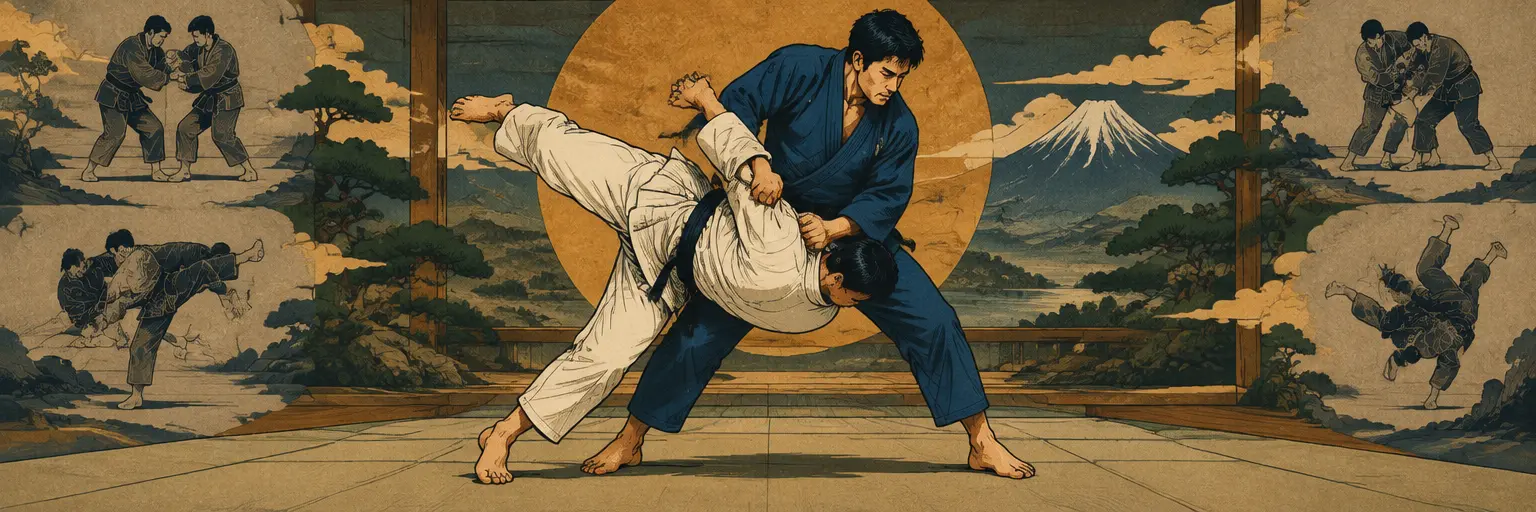
Unlock the explosive power of Judo’s nage-waza with a deep dive into ashi-waza—the art of foot and leg throws. These dynamic techniques are the cornerstone of Olympic Judo, using balance-breaking (kuzushi) and precise sweeping motions to topple opponents with efficiency and grace. From the iconic o-soto-gari (major outer reap) to the subtle de-ashi-harai (advancing foot sweep), mastering ashi-waza transforms your groundwork, sharpens your timing, and builds unshakeable confidence in close combat. Whether you’re a white belt or a seasoned competitor, honing these throwing techniques offers a practical, self-defense-ready edge while preserving the philosophical essence of “maximum efficiency, minimum effort.” Explore the mechanics, common pitfalls, and training drills that turn theory into seamless, powerful motion—perfect for anyone passionate about individual martial arts styles and technical mastery.
🔥 Discover the secrets of O Guruma power generation, a fundamental technique in martial arts that harnesses momentum and torque. Mastering this…
Read article
🥋 Master the Perfect O Uchi Gari technique by understanding its core mechanics: drive, hook, and finish. This precise balance of timing…
Read article
🥋 Discover advanced O Guruma techniques setup strategies to elevate your judo skills. This article delves into innovative combinations and tactical setups,…
Read article
🥋 Discover the evolution of Ashi Guruma, from fundamental moves to advanced Ashi Guruma Competition Techniques that dominate tournaments. Explore expert training…
Read article
🥋 Master the art of balance and timing with essential De Ashi Barai Sweep drills. These targeted exercises enhance precision and effectiveness,…
Read article
🤼♂️ Explore how Hiza Guruma can be effectively integrated with other Judo throw combinations techniques to enhance your mastery, offering strategic links…
Read article
🌟 Discover how Ashiwaza techniques can be adapted for all, including specific tips for Ashiwaza beginner body types, ensuring effective and personalized…
Read articleWithin the vast repertoire of Judo’s Nage-waza (throwing techniques), Ashi-waza stands as the most dynamic and technically demanding family of throws. These “leg techniques” use sweeping, hooking, or reaping motions of your feet and legs to unbalance and throw an opponent, prioritizing timing and leverage over brute strength. For practitioners at Martial Arts Mastery, mastering Ashi-waza is the gateway to fluid, high-percentage throws that work against larger opponents. This subcategory explores the mechanics, key variations, and strategic applications of these devastating lower-body maneuvers, perfect for both beginners refining fundamentals and advanced judoka seeking competition insights.
Ashi-waza success hinges on perfect kuzushi (off-balancing). Unlike hip or shoulder throws, leg sweeps require you to disrupt your opponent’s center of gravity using circular or linear movements of your feet, often while they are already moving. You must learn to attack the precise moment their weight shifts to one leg or during their forward or backward steps, making the sweep effortless.
Expect to drill fundamental footwork patterns, including tsugi-ashi (following steps) and ayumi-ashi (walking steps), to create constant motion. By combining these foot patterns with hand pulls (hikite and tsurite), you’ll learn to break posture without telegraphing your attack. The goal is to make the opponent’s own momentum do the work, turning their advance into your scoring opportunity. This section provides a step-by-step breakdown of the initial off-balancing angles that make every Ashi-waza effective, from linear pulls for forward throws to circular rotations for lateral sweeps.
De-ashi-barai (advanced foot sweep) is the foundational Ashi-waza, attacking the opponent’s supporting foot just as they step forward. It teaches precise timing and the “ankle-height” contact that defines all sweeps. Okuri-ashi-barai (sliding foot sweep) is its more complex cousin, where you sweep both of the opponent’s feet in the same direction while they shuffle sideways—often used to counter lateral pressure.
This section focuses on execution details: striking with the sole of your foot, not the toes, and using a “shaving” motion rather than a kick. You’ll learn to coordinate the sweep with a simultaneous hand pull, creating a figure-four motion of your arms and legs. Expect drills to develop ankle sensitivity and rhythm, alongside common mistakes to avoid—such as leaning forward or chasing the foot instead of waiting for the opponent’s weight shift. These two throws alone can become reliable scoring weapons for shiai (competition) if mastered with deliberate practice.
Reaping techniques (gari) involve a powerful leg-hook that removes your opponent’s entire leg from under them. O-soto-gari (major outer reap) is a classic forward throw, using your rear leg to sweep both of the opponent’s legs while you drive them backward. Ko-soto-gari (minor outer reap) is a sneakier, low-amplitude version, hooking the ankle from the outside to catch them off-balance during circular movement.
Here, you’ll explore the precise body positioning: for O-soto, your chest must nearly touch theirs, with your head over their shoulder, and your sweeping leg traveling in a large arc. For Ko-soto, the motion is shorter and sharper, using the side of your foot to hook the Achilles area. This section contrasts the two—one for power, one for subtlety—and provides practical setups against common stances. You’ll also learn vital safety and falling techniques (ukemi) for both Uke and Tori, ensuring these dynamic throws are practiced without injury.
Hiza-guruma (knee wheel) is a deceptive throw that uses the sole of your foot against the opponent’s knee while your hands spin them in a circular motion, forcing them to topple over your extended leg. Sasae-tsurikomi-ashi (propping drawing ankle throw) is similar but targets the ankle, using a “prop” action to stop their forward motion while your hands lift and pull—a perfect counter to aggressive forward attacks.
This section demystifies the “wheel” mechanics: you do not actually kick or push; instead, your leg acts as a stationary block while your upper body rotates the opponent around it. You’ll practice torso rotation and the critical lifting of the hands (tsurikomi) that creates the arc for the fall. Expect to learn both static and moving entries, plus how to transition directly into groundwork (ne-waza) after a successful hook. These throws are highly effective against defensive opponents who keep their weight low and centered.
Ashi-waza excels when hidden within combination chains. A failed O-soto-gari can seamlessly transition into a Ko-soto-gari, or a De-ashi-barai attempt can bait a defensive step into an O-uchi-gari (major inner reap). This strategic layer elevates Ashi-waza from isolated techniques to a continuous attacking system that exploits your opponent’s reactive movements.
This final section teaches you how to sequence throws logically, using the direction of the opponent’s defensive reaction to launch the next attack. You’ll learn classic combinations like Ko-uchi-gari to O-soto-gari or Sasae to De-ashi-barai with clear progressions. We also cover counters (kaeshi-waza) where Ashi-waza neutralizes incoming sweeps, transforming your defense into scoring opportunities. By the end, you’ll understand how to read an opponent’s weight distribution and build fluid, unpredictable chains that keep them constantly off-balance—a hallmark of advanced Judo mastery.
Ashi-waza specifically uses your legs and feet to unbalance, sweep, or reap the opponent's lower body, requiring no lifting with your hips or upper body. Other Nage-waza like Koshi-waza (hip throws) or Te-waza (hand throws) rely on positioning and pulling your opponent over your own center. Ashi-waza is generally faster and uses less raw power, making it ideal for smaller practitioners.
Basic sweeps like De-ashi-barai can be learned in a few weeks, but true proficiency under live resistance often takes 1-2 years of consistent practice. The key is developing “foot feel” and timing, which only comes from thousands of repetitions in randori (free practice). Mastery of advanced reaps like O-soto-gari may take 3-5 years to execute, instinctively, with full power.
Yes, Ashi-waza is highly practical for self-defense because a quick foot sweep can immediately off-balance an attacker without requiring you to grab clothing or close the distance to a grappling range. A well-timed De-ashi-barai can trip an oncoming aggressor, giving you a moment to escape. However, be aware of the ground environment, as falling debris can cause injuries.
Most beginners try to “kick” the opponent’s leg rather than shave or hook it with a relaxed ankle. This creates telegraphing and often results in missing the target. Another frequent error is neglecting kuzushi—sweeping without first pulling the opponent’s weight onto the foot you are attacking. Always coordinate your hand pull with your leg motion for success.
Most Ashi-waza are fully legal in Shiai (IJF competition), including all sweeps and reaps, provided you do not attack the knee joint or use a scissor-like motion that endangers the joint. However, techniques like Kani-basami (flying scissor throw) are forbidden. Always check current IJF rules, as leg grabs below the belt are also prohibited since 2013, affecting some old-school variations.







