From Kata to Kumite: Bridging the Gap in GojuRyu Training
🥋 Discover how GojuRyu kata kumite training seamlessly integrates traditional forms with dynamic sparring, bridging the gap between technique and application, and…
Read article
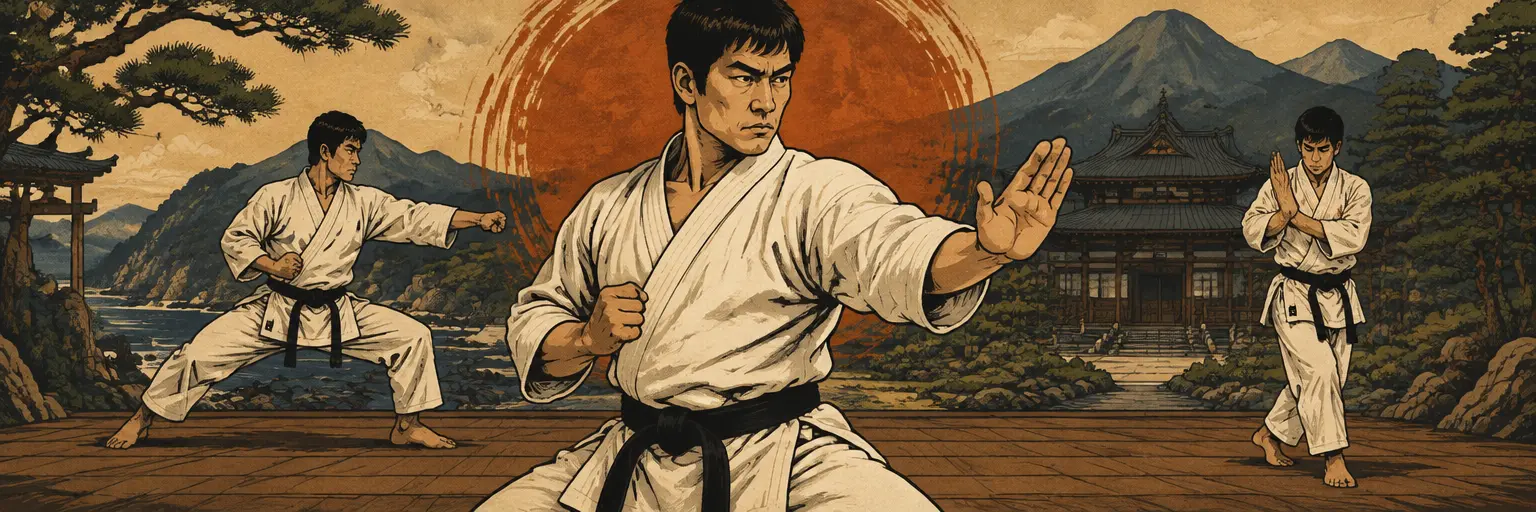
Discover the profound depth of Goju-Ryu Karate, a classical Okinawan style where hard and soft techniques merge into a powerful, flowing system. Rooted in the ancient Sanchin kata, this discipline emphasizes tension breathing, rooted stances, and explosive body mechanics—building both iron-like strength and fluid adaptability. Unlike modern sport karate, Goju-Ryu prioritizes close-quarter combat, joint locks, and defensive circular movements, making it a highly effective art for practical self-defense. Through rigorous Sanchin training, practitioners develop unbreakable posture, focused intent, and internal energy (ki)—key elements that separate Goju-Ryu from other styles. Whether you’re a beginner or seasoned martial artist, mastering these core techniques and kata unlocks a richer understanding of timing, distance, and resilience. Immerse yourself in the heritage of Chojun Miyagi’s legacy, where every strike, block, and stance tells a story of disciplined evolution and real-world efficacy. This comprehensive exploration covers training drills, breathing methods, and application breakdowns, ensuring you grasp not just the “how” but the “why” behind each movement.
🥋 Discover how GojuRyu kata kumite training seamlessly integrates traditional forms with dynamic sparring, bridging the gap between technique and application, and…
Read article
🥋 Discover the essential GojuRyu footwork techniques training that enhances agility and positioning, enabling practitioners to move efficiently, defend effectively, and master…
Read article
🥋 Discover the essential principles of GojuRyu pressure testing techniques training to enhance your martial arts mastery. Learn realistic methods to refine…
Read article
🥋 Discover how Kakie, a vital element of GojuRyu sticky hand training, enhances sensitivity, control, and reflexes, empowering practitioners to master the…
Read article
💪 Discover the bedrock of Goju-Ryu Karate with Sanchin Kata. This foundational practice cultivates an unyielding spirit, precise technique, and profound internal…
Read article
🥋 Master Sanchin kata with precision! This article tackles prevalent Sanchin kata common mistakes, offering clear corrections for optimal form. Elevate your…
Read article
🥋 Discover the power of Kote Kitae, a vital component of GojuRyu forearm training techniques that enhances blocking and striking strength. Dive…
Read articleWelcome to the definitive guide on Goju-Ryu Karate, a traditional Okinawan style renowned for its fusion of hard strikes and soft circular defenses. Within this subcategory, we delve deep into the core techniques that define this martial art, from powerful stance work to explosive hand strikes, while giving special attention to the Sanchin Kata—the iconic "three battles" form that builds formidable structure and breathing control. Whether you are a beginner seeking authentic knowledge or a seasoned practitioner refining your fundamentals, this resource covers the essential techniques, principles, and historical context, all optimized to enhance your training and understanding.
In Goju-Ryu, stance formation is the bedrock of all power and stability. You will learn about the shiko-dachi (square stance), sanchin-dachi (hourglass stance), and neko-ashi-dachi (cat stance), each designed to develop rootedness and efficient weight transfer. The emphasis is on tanden (lower abdomen) engagement and hip rotation (koshi no kaiten), which generates explosive force without sacrificing balance. Expect detailed breakdowns of alignment, foot pressure, and how to cultivate a grounded, immovable body—essential for both offense and defense.
Mastering these mechanics transforms your technique from mere movement into powerful, connected action. You will understand why Goju-Ryu practitioners appear relaxed yet explosive, as we explain the principle of chinkuchi (muscle contraction and relaxation timing). This section also covers breathing synchronization with stance transitions, ensuring your body moves as a single unit, ready to absorb impact or deliver devastating counterstrikes.
This part focuses on the practical strikes unique to Goju-Ryu, such as the uraken (backfist), shuto (knife-hand), and the devastating nukite (spear-hand). You will also explore circular blocks like sukui uke (scooping block) and uchi uke (inside forearm block), which redirect rather than meet force head-on. Crucially, Goju-Ryu incorporates grappling and joint locks (tuite) within its striking framework, making it a complete self-defense system. Learn how to transition seamlessly from long-range striking to close-quarter control.
Each technique is explained with its practical application (bunkai) against realistic attacks, not just in kata forms. We emphasize the hard-soft philosophy: using a hard, linear strike after a soft, evasive block. You will gain insights into targeting vital points and developing the kime (focus) necessary to deliver decisive blows, ensuring your techniques are effective under pressure, not just stylistically correct.
While Goju-Ryu emphasizes hand techniques, its kicks are equally devastating and strategically used. You will learn the mae geri (front kick) with a snapping or thrusting action, the low yoko geri (side kick) for attacking the knee joint, and the mawashi geri (roundhouse) delivered with the shin. More advanced is the kansetsu geri (joint kick), targeting the opponent’s balance points. Beyond kicking, we cover sweeps and foot traps (ashi-barai) that disrupt footing, setting up takedowns or throws—all essential for practical self-defense.
This section teaches you how to generate kicking power without losing balance, using the from-the-ground-up force generation. We also highlight the strategic use of kicks to create distance or close in, always aligning with Goju-Ryu’s principle of efficient, economical movement. Expect training tips for hip flexibility, shin conditioning, and how to integrate kicks with hand combinations for fluid, overwhelming attacks.
No study of Goju-Ryu is complete without the Sanchin Kata, considered the "heart and soul" of the style. This section provides a step-by-step analysis of the kata, focusing on its isometric tension (ibuki breathing) and tanden concentration. You will learn the correct sequence of basic blocks, strikes, and stance transitions, all performed with slow, powerful breathing that develops internal strength (ki) and muscular endurance. We demystify the "three battles" meaning: unifying mind, body, and spirit.
Beyond form, we explain how to practice Sanchin for maximum benefit, including body conditioning exercises to harden the limbs and torso, as well as the crucial role of a partner for testing structural integrity. This kata is not a performance but a living meditation on physical alignment. Expect practical advice on breath control, muscle contraction sequencing, and how to maintain mental focus during the demanding, slow-paced movements—key to unlocking the true power of Goju-Ryu.
Bunkai (application) is where kata movements become lethal self-defense techniques. This section translates the sequences of Sanchin and other common Goju-Ryu forms into real-world scenarios, such as defending against grabs, punches, and multiple attackers. You will see how a simple block becomes a joint lock, a stance transition becomes a throw, and a strike becomes a pressure-point control. The philosophy of ikken hisatsu (one strike, one kill) is contextualized for modern needs.
We emphasize contextual awareness—recognizing an attack’s intent and using the most efficient response. Through drills and partner exercises, you will practice flowing between hard strikes and soft redirections, making your responses instinctual. Expect analysis of pressure points, proper distancing, and follow-up sequences that neutralize threats swiftly. This is essential content for anyone seeking to use Goju-Ryu beyond sport or fitness for genuine protection.
To truly master Goju-Ryu, you must understand its Okinawan heritage and the influence of Chinese martial arts. This section traces the style from its founder, Chojun Miyagi, to its evolution into a distinct system after his trip to Fujian, China, where he learned the "hard and soft" principles. You will learn the meaning behind the name: Go (hard) and Ju (soft), representing the style’s dual nature. The philosophy extends beyond combat, emphasizing moral discipline, humility, and continuous self-improvement.
We explore the dojo kun (training hall precepts) and how they apply to daily life, reinforcing the goal of becoming a peaceful yet formidable individual. This context enriches your practice, transforming techniques from mere movements into a way of life. Expect stories of early masters, the importance of lineage, and how Goju-Ryu influences modern karate globally. Understanding its roots will deepen your appreciation and commitment to authentic practice.
Goju-Ryu emphasizes close-quarters combat with circular, soft blocks and explosive short-range strikes, plus grappling. Shotokan favors long-range linear movements, deep stances, and powerful hip rotation. While both use kata, Goju-Ryu includes Sanchin for body conditioning, whereas Shotokan focuses on kihon (basics) with more dynamic, fast techniques. In practice, Goju-Ryu feels more grounded and practical for self-defense at short range.
Learning the physical sequence can take a few weeks, but mastering proper ibuki breathing, muscle tension, and body alignment takes years of consistent practice. Most practitioners refine Sanchin over a decade, as it’s used for conditioning and meditation. A beginner should expect 6-12 months of dedicated training to perform it acceptably, but true mastery is a lifelong pursuit that deepens with every session.
Yes, highly effective. Its techniques include strikes to vital points, joint locks, throws, and pressure-point control, all designed for real confrontations. The tuite grappling skills and circular blocks work well against larger attackers by using leverage and redirection. Training includes scenario drills called bunkai that apply kata movements practically, making Goju-Ryu a comprehensive system for personal protection.
Absolutely. For kata and basic techniques, solo practice is essential for muscle memory. Use a mirror to check postures, focus on breathing in Sanchin, and perform hojo undo (supplementary exercises) with weights or resistance bands. For bunkai and sparring, you need a partner, but you can simulate defensive movements. However, regular dojo attendance is crucial to correct errors and test your structure with a real person.
The style includes several kata, but key ones are Gekisai Dai Ichi and Gekisai Dai Ni (introduction forms), Saifa (smash and tear), Seiyunchin (control and pull), Shisochin (four-directional battle), and Sanseru (thirty-six hands). Each teaches different principles, such as dealing with grabs or multiple attackers. Sanchin is foundational, while higher-level kata like Suparinpei are reserved for advanced ranks.







