Kickboxing for MMA: Fusing Dutch Agility with American Power Striking
🥊 Discover how Dutch kickboxing MMA training tips blend Dutch agility with American power striking, enhancing fighters' versatility. Dive into the art's…
Read article
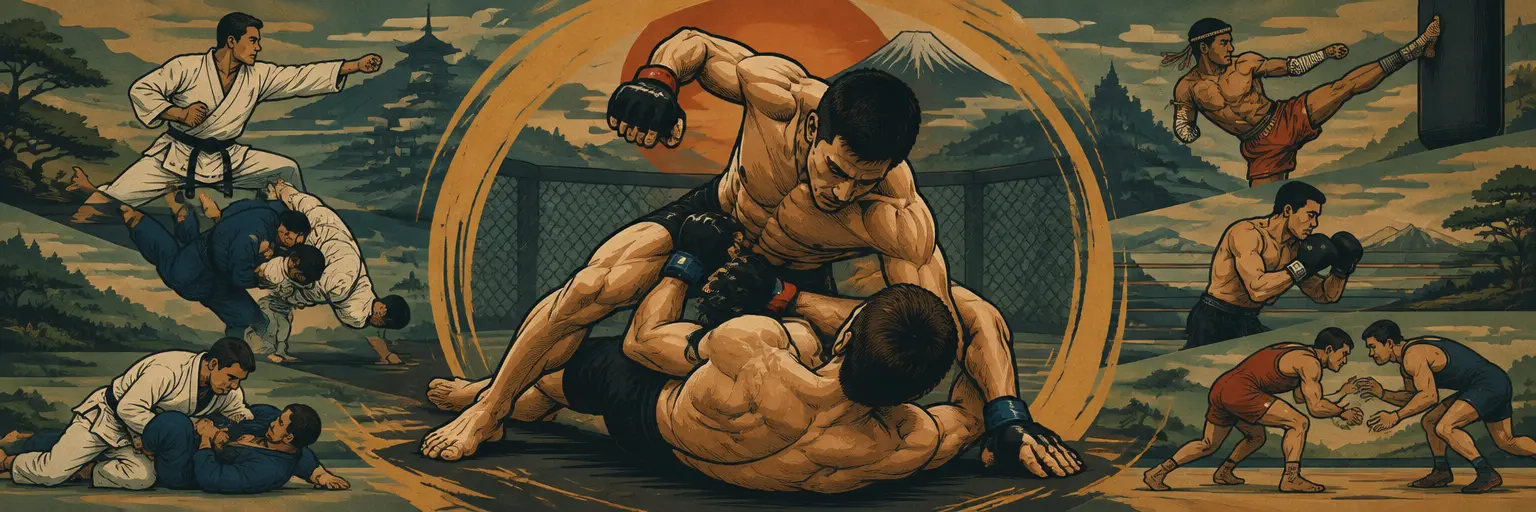
Mixed Martial Arts (MMA) has evolved from a raw, no-holds-barred spectacle into a refined combat sport that demands mastery across multiple fighting realms. This dynamic discipline seamlessly blends striking arts like Muay Thai and boxing with grappling systems such as Brazilian Jiu-Jitsu and wrestling, creating a holistic fighter capable of adapting to any situation. Its rapid evolution—from the early UFC days to today’s highly technical athletes—highlights a relentless pursuit of efficiency, athleticism, and strategic versatility. For practitioners, MMA is not just about learning separate techniques; it’s about synthesizing them into a fluid, unpredictable style. Explore how the key disciplines—from clinch work to ground control—interconnect, and discover why MMA remains the ultimate test of a well-rounded martial artist’s skill and mental fortitude.
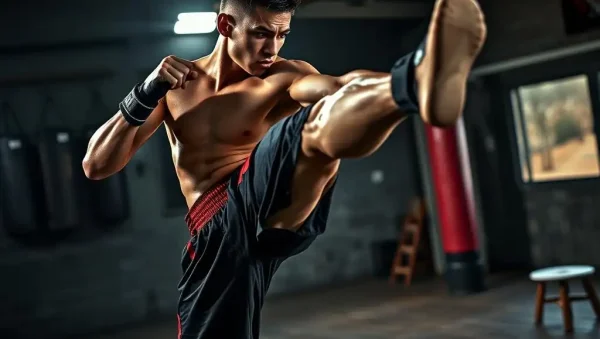
🥊 Discover how Dutch kickboxing MMA training tips blend Dutch agility with American power striking, enhancing fighters' versatility. Dive into the art's…
Read article
🥋 Discover how MMA cross training benefits fighters by enhancing versatility, strength, and adaptability. Unlock the secrets to success in the ring…
Read article
🤔 Explore the profound MMA philosophical application differences between sport combat and real-world survival. MartialArtsMastery.org dissects how disciplined octagon techniques contrast with…
Read article
🥋 Unlock the secrets of effective MMA sparring training techniques to prepare for unpredictable combat scenarios. MartialArtsMastery.org explores essential strategies, practical tips,…
Read article
🥋 In today's dynamic MMA landscape, mastering the MMA complete fighter strategy means integrating versatile skills, mental resilience, and adaptability—ensuring fighters excel…
Read article
🥋 Japan’s impact on MMA, exemplified by PRIDE FC, shaped the sport’s golden era with legendary fighters and innovative techniques, leaving a…
Read article
🥋 Discover the rich history of Brazilian Luta Livre MMA, Brazil's lesser-known grappling art that has significantly influenced MMA's evolution, blending technique,…
Read articleMixed Martial Arts (MMA) has transformed from underground spectacle into a global sport, blending striking, grappling, and wrestling into a seamless system. For practitioners and fans alike, understanding the evolution of MMA and its foundational key disciplines is essential to appreciating its depth and technical richness. This section on MartialArtsMastery.org breaks down the core components, historical milestones, and training philosophies that define modern MMA, offering actionable insights for beginners and advanced athletes.
Modern MMA traces its roots to ancient combat sports like Pankration, but its current form emerged in the 1990s with the Ultimate Fighting Championship (UFC), which pitted different styles against each other to find the most effective technique. This “style versus style” experiment quickly revealed that no single martial art is complete, leading to a hybridization of techniques. Over time, rule sets standardized, weight classes were introduced, and safety protocols improved, transforming no-holds-barred contests into a disciplined sport with global recognition. Today, MMA is governed by unified rules that prioritize fighter safety while preserving the raw competitive spirit.
For the modern athlete, understanding this evolution is not just historical—it directly impacts training. Early pioneers like Royce Gracie showcased Brazilian Jiu-Jitsu’s ground dominance, while later champions integrated boxing, Muay Thai, and wrestling. By studying how champions adapted their game plans, you learn to anticipate your opponent’s strengths and weaknesses. This subcategory will guide you through that timeline, explaining why certain techniques became staples and how rule changes have shaped current strategies. Whether you’re a spectator or a fighter, knowing the “why” behind MMA’s structure enriches every match you watch or train in.
Striking is the visible spectacle of MMA, encompassing punches, kicks, knees, and elbows. Boxing contributes head movement, footwork, and precise hand combinations, while Muay Thai—the “Art of Eight Limbs”—adds devastating elbows and knees from the clinch. Karate, particularly Shotokan and Kyokushin, offers long-range side kicks and counter-striking. These arts teach you to manage distance, feint, and set up powerful attacks. In MMA, effective striking is not just about power but about timing and angle creation, minimizing risk while maximizing damage. Fighters blend these systems seamlessly, often shifting between boxing stances and Muay Thai guards to confuse opponents.
Exploring striking disciplines in this subcategory reveals how each style’s core principles translate to MMA. You’ll learn why teep kicks from Muay Thai are crucial for controlling range, how shoulder rolls from boxing protect against takedowns, and why bladed stances from karate enable explosive spinning kicks. Practical drills, like shadow boxing with MMA gloves or Thai pad work, are broken down so you can safely integrate these techniques into your sparring. Understanding striking helps you read your opponent’s body language and time counters, making you a more versatile stand-up fighter—essential for any serious mixed martial artist.
Grappling is the hidden engine of MMA, determining where the fight takes place. Wrestling provides takedowns, sprawls, and top control, essentially dictating the fight’s location. Brazilian Jiu-Jitsu (BJJ), conversely, excels in submissions from the bottom or back, allowing smaller athletes to overcome larger opponents. Together, they form a complete ground game. Wrestling’s pressure and positional awareness set up ground-and-pound, while BJJ’s guard and sweeps create submission opportunities. In modern MMA, a fighter who lacks wrestling defense is vulnerable, as opponents will quickly exploit takedown deficiencies.
Within this subcategory, you’ll examine the symbiotic relationship between wrestling and BJJ. Key topics include double-leg takedown setups, hip escapes to regain guard, and submission chains like armbar to triangle transitions. We break down how legendary grapplers like Demian Maia and Khabib Nurmagomedov used positional dominance to neutralize strikers, proving that control is often more valuable than flashy finishes. For your training, we emphasize wrestling-based positionals first, then layer in BJJ submissions—mirroring how many modern camps structure their grappling curriculum. This foundation ensures you can dictate pace and recover effectively from disadvantaged positions.
MMA conditioning is not merely aerobic capacity; it’s a blend of explosive power, muscular endurance, and cardiovascular recovery. Traditional bodybuilding or long-distance running fails to mimic the high-intensity intervals of a fight. Instead, fighters incorporate kettlebell swings, battle ropes, sled pushes, and plyometrics. Strength training focuses on core stability, hip drive, and grip strength—critical for takedowns and clinch work. Recovery, including mobility work and sleep, is equally important to avoid overtraining injuries. This subcategory offers science-backed protocols to build the “fight engine” without sacrificing technique.
Here, you’ll find specific programs divided by phases: off-season base building, pre-fight power peaking, and in-camp maintenance. We explain the cardio vs. strength balance—how to avoid losing speed while gaining power. You’ll learn about interval training that mimics 5-minute rounds with 1-minute rest, plus drilling sessions that combine striking and grappling trigger points. Additionally, we highlight common mistakes like excessive static stretching before workouts, instead recommending dynamic warm-ups. By following our periodized plans, you’ll notice quicker recovery between rounds and more explosive output, directly translating to better performance in both sparring and competition.
Fight IQ separates elite MMA athletes from casual brawlers. It involves analyzing opponent tendencies, adjusting mid-fight, and managing energy reserves. Successful fighters study film, identify patterns like dropping hands after a jab, or predict takedown attempts based on stance shifts. Cage control is another layer, using the fence to trap opponents or create angles for escapes. Psychological toughness, including emotional regulation during high-stress moments, completes the strategic triad. Without strategy, even superior technique can be neutralized by a savvy opponent.
This subcategory dissects how to develop your own fight IQ. You’ll learn pre-fight scouting, including what to look for in an opponent’s stance, footwork, and previous losses. During training, we suggest sparring with a specific goal each round—like only throwing left kicks or forcing your opponent into the corner. We also cover in-fight adjustments, such as switching from pressure fighting to counter-punching when facing a longer reach. Mental drills, like visualization and breath control, are presented as practical tools. By sharpening your strategy, you’ll make better instinctive decisions, conserve energy, and exploit vulnerabilities effectively—making you a more dangerous and intelligent fighter.
Wrestling is often recommended first because it teaches you how to control the fight’s location and defend takedowns. A basic double-leg takedown and sprawl are high-value skills that protect you from most opponents. Start with wrestling fundamentals, then add BJJ and striking as you progress.
With consistent training (3-5 days per week), expect 1-2 years to feel comfortable in all ranges—striking, clinch, and ground. Real proficiency, where you can handle untrained attackers or win amateur bouts, typically takes 3-5 years. Progress depends on coaching, natural aptitude, and training quality.
Absolutely. Many gyms offer technique-focused classes with light or no sparring. You can drill techniques, work on pads, and learn self-defense scenarios without full-contact sparring. Always communicate your goals to your coach so they can modify intensity accordingly, ensuring a safe and enjoyable experience.
If you train for pure hypertrophy with heavy loads and slow reps, you might sacrifice speed. However, power-focused lifting—like olympic lifts, plyometrics, and explosive kettlebell work—enhances force production and actually increases striking speed, provided you include adequate sprint and movement drills to preserve neuromuscular coordination.
A majority overtrain by sparring every session without balancing skill drilling. This leads to burnout and bad habits. Another common error is neglecting defensive positioning, like covering your chin or keeping a high guard. Focus on sound defense, consistent drilling, and rest days to progress steadily without injury.







