Pioneering Masters of Japanese Martial Arts: Karate, Judo, and Aikido
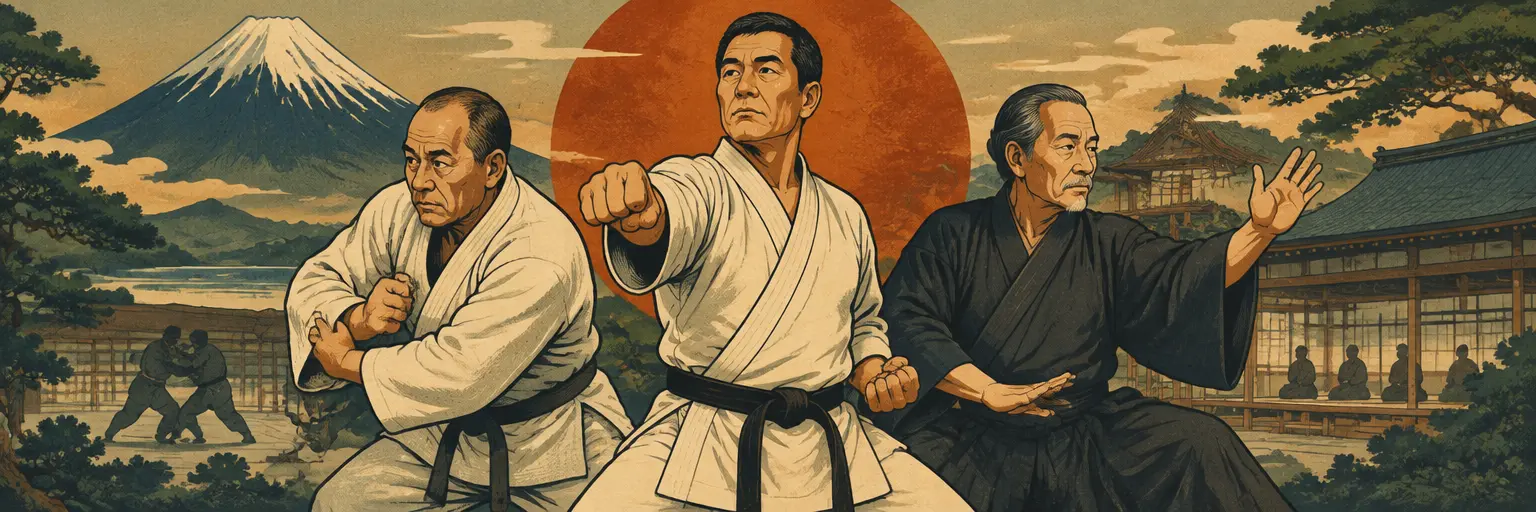
Step into the dojo of history and meet the visionary founders who shaped the three greatest Japanese martial arts. This subcategory celebrates the pioneering masters—from Gichin Funakoshi’s karate revolution to Jigoro Kano’s scientific judo and Morihei Ueshiba’s spiritual aikido. Here, we dive deep into their biographies, training philosophies, and enduring legacies, offering both beginners and seasoned practitioners a treasure trove of martial arts history, technical evolution, and philosophical insight. Discover how these icons transformed Okinawan and Japanese combat systems into global disciplines, and learn practical lessons you can apply to your own training journey today.
🥋 The Legacy of Gichin Funakoshi: Father of Modern Karate
Gichin Funakoshi is universally revered as the father of modern karate, bringing the art from Okinawa to mainland Japan in the early 20th century. His life’s work transformed a regional fighting style into a systematic discipline emphasizing character development, kata practice, and self-defense. Expect to explore his famous “Twenty Guiding Principles” and how he integrated Zen-like humility into every punch and block, making karate not just a combat system but a path to inner peace.
Under this profile, you’ll find detailed breakdowns of Funakoshi’s Shotokan style, including its low stances, linear techniques, and dynamic hip rotation. We also examine his role in standardizing grading systems and his famous refusal to profit from teaching, highlighting his dedication to martial arts ethics. Fans will gain actionable insights into how to apply Funakoshi’s teaching methods—such as “kihon, kata, kumite”—to modern training, ensuring his legacy lives on in every dojo worldwide.
⚡ Jigoro Kano: The Scientific Innovator of Judo
Jigoro Kano, a brilliant educator and founder of judo, revolutionized Japanese martial arts by stripping away lethal techniques and focusing on efficient movement and mutual welfare. Unlike the feudal jujutsu of his era, Kano’s Judo emphasized randori (free practice) and kata as tools for physical education and moral growth. Expect to uncover his comparative analysis of traditional combat systems, his creation of the belt ranking system, and his unyielding belief that mastery comes from maximum efficiency with minimum effort.
Our deep dive into Kano’s philosophy reveals how he harmonized Western educational theory with Japanese tradition, founding the Kodokan in 1882. You’ll learn how his innovations—such as yoko-shiho-gatame (side four-quarter hold) and seoi-nage (shoulder throw)—became Olympic-level techniques. Crucially, we show how Kano’s principles apply to modern self-defense and sport judo, including practical tips for improving your own ukemi (falling) and kuzushi (balance-breaking), making this profile a must-read for judoka of all ranks.
🌿 Morihei Ueshiba: The Spiritual Visionary of Aikido
Morihei Ueshiba, or O-Sensei, created aikido as a synthesis of martial combat, religious philosophy, and non-violent resolution. His journey from feared warrior to peacemaker is a testament to his radical belief that true victory is overcoming conflict without harming an opponent. Expect a profound exploration of his aiki-jujutsu roots, his study under Sokaku Takeda, and his later fusion with Omoto-kyo spirituality, resulting in techniques that blend irimi (entering) and tenkan (turning) with flowing, circular throws and pins.
This profile illuminates how Ueshiba’s philosophy shaped every aspect of aikido practice—from ukemi (receiving techniques) to kokyu-ho (breathing power). We dissect his iconic techniques like nikyo and kotegaeshi, explaining their biomechanical efficiency and psychological intent. More than a historical recap, our content provides modern practitioners with mental frameworks for blending with aggression, personal anecdotes from his students, and guidance on cultivating the agatsu (self-victory) mindset that defines true aikido mastery.
🔱 Cross-Impact: How These Masters Shaped Modern MMA & Self-Defense
While karate, judo, and aikido emerged from different eras and cultures, their pioneering masters collectively laid the groundwork for modern mixed martial arts and practical self-defense systems. Funakoshi’s striking transitions, Kano’s throws and grappling, and Ueshiba’s joint locks are all found in contemporary fighters’ arsenals. This section analyzes specific techniques from each master—such as gyaku-zuki (reverse punch), harai-goshi (sweeping hip throw), and shihonage (four-direction throw)—and shows their direct application in sport and street scenarios.
Our comparative study highlights surprising synergies, like how judo’s osoto-gari (major outer reap) complements karate’s kinteki (groin strike) and aikido’s atemi (vital point strikes). You’ll also learn how modern UFC fighters like Rhonda Rousey (judo) and Lyoto Machida (shotokan karate) openly credit these masters’ innovations. For self-defense enthusiasts, we provide scenario-based drills inspired by all three founders, emphasizing distance management, balance control, and escape techniques—bridge the ancient wisdom to today’s unpredictable encounters.
🏆 Preserving the Legacy: Training Tools, Biographies & Rare Archives
For those serious about authentic martial arts history, this subcategory offers a curated collection of primary-source biographies, rare training footage, and doctrine translations from each master’s personal notes. Expect to access timelines that map Funakoshi’s travels, Kano’s educational reforms, and Ueshiba’s spiritual retreats, giving you a factual backbone for your own practice. We also feature exclusive interviews with lineage holders—such as the descendants of these founders—who share untold stories and practical training corrections.
Additionally, our archive includes downloadable PDFs of original texts like “Karate-Do Kyohan,” “Kodokan Judo,” and “The Art of Peace,” accompanied by modern interpretations. You’ll find gear recommendations that honor tradition—like gi weights for judo and bokken for aikido—plus drill prescriptions for each style. Whether you’re a historian or a practitioner seeking deeper roots, this section ensures the pioneering spirit of these masters remains alive, accessible, and infinitely practical for 21st-century students.
Frequently Asked Questions
What is the difference between karate, judo, and aikido in terms of purpose?
Karate focuses on striking (punches, kicks) for self-defense and sport, using linear and angular movements. Judo emphasizes throws and ground grappling, teaching you to use an opponent’s force against them efficiently. Aikido is purely redirection and joint locking, aiming to neutralize aggression without causing harm. Each art stems from a different philosophy—karate seeks power, judo seeks control, and aikido seeks harmony.
Which master is considered the most influential globally?
Jigoro Kano is often considered the most globally influential because judo became an Olympic sport and has the largest practitioner base worldwide. His educational system of belts and ranks was adopted by karate, aikido, and even Brazilian jiu-jitsu. However, Gichin Funakoshi’s karate has enormous reach in America and Europe, while Morihei Ueshiba’s aikido deeply impacted martial arts philosophy.
Can I practice these arts today even if I’m a beginner?
Absolutely—all three schools welcome beginners. Karate requires minimal equipment (a gi), judo necessitates a thicker gi and a partner, and aikido works best with a pair for throws. Local dojos offer classes for all ages and fitness levels. Start with any, but focus on fundamentals like stances, falling, and ukemi to build a safe foundation.
Are there any modern self-defense applications from these ancient arts?
Yes, all three offer practical self-defense. Karate’s direct strikes and blocks work in street scenarios. Judo’s throws neutralize larger attackers by using leverage. Aikido’s joint locks and wrist escapes are excellent for close-quarters grabs. Cross-training in any combination enhances your ability to respond from standing and ground positions, making you more versatile.
What was the biggest contribution of each master to martial arts? (Simple)
Funakoshi standardized karate and introduced it to Japan, emphasizing character. Kano created judo with a scientific rank system and Olympic status. Ueshiba developed aikido as a peaceful but powerful martial art focused on spiritual development. Their combined contributions established modern martial arts education, competition, and philosophical growth.