
Achilles' Armor: Forged by Hephaestus, A Testament to Divine Craftsmanship

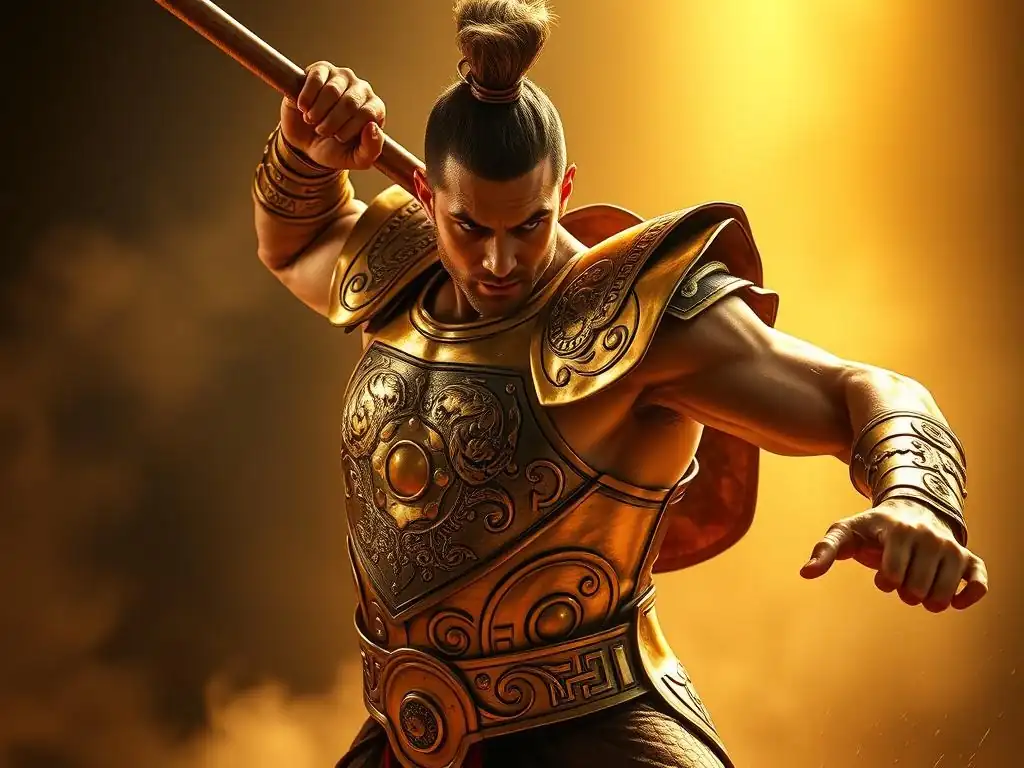
Welcome to Martial Arts Mastery, where we delve into the rich tapestry of combat traditions! Journey with us as we uncover the secrets and skills honed through centuries. Ever wondered how ancient warriors prepared for battle? Today, we unravel the mysteries behind Achilles' Armor: Forged by Hephaestus, A Testament to Divine Craftsmanship, exploring Ancient Greek bronze armor techniques and their impact on combat effectiveness and historical warfare.
Discover the ingenuity and artistry that armed these legendary figures and prepared them for the ultimate test. But that's just the beginning... what other secrets lie buried in the annals of martial arts history? Let's explore!
- The Katana: Forged in Fire, A Testament to Samurai Skill
- Introduction: The Legend of the Samurai and Their Iconic Blade
- The Historical Account of Katana Forging
- Decoding the Design of the Katana
- Japanese Swordsmithing Techniques: Reconstructing the Master's Craft
- The Impact of the Katana on Warfare and Culture
- The Katana's Role in Feudal Japan
- The Katana vs. Other Swords Throughout History
- Lessons from the Katana: A Martial Arts Perspective
- Conclusion: The Enduring Legacy of the Katana
-
Frequently Asked Questions
- What materials were typically used in Ancient Greek bronze armor?
- What were the key components of a complete set of Ancient Greek bronze armor?
- How did Ancient Greek bronze armor techniques evolve over time?
- What role did mythology, like the story of Hephaestus forging Achilles' armor, play in the perception of Ancient Greek armor?
- How effective was Ancient Greek bronze armor against different types of weapons?
- Final Reflection: The Enduring Legacy of Craft
- Unleash Your Inner Warrior: Take Action Now!
The Katana: Forged in Fire, A Testament to Samurai Skill
Introduction: The Legend of the Samurai and Their Iconic Blade
For centuries, the image of the Samurai warrior has been synonymous with honor, discipline, and the iconic curved sword known as the Katana. More than just a weapon, the Katana was the soul of the Samurai, a symbol deeply interwoven with their identity and way of life.
Its creation was not merely an act of craftsmanship but a sacred ritual, reflecting the profound connection between the warrior, the swordsmith, and the blade itself. Unlike the focus on protective gear seen in other historical military traditions, such as the emphasis placed on developing Ancient Greek bronze armor techniques to shield infantry, the Japanese path prioritized the offensive capability and spiritual significance embodied by their primary weapon.
The reverence for the Katana extended beyond its practical function in battle. It was an object of art, a spiritual artifact, and a potent symbol of the Samurai's status and commitment to their code. The intricate process of its creation, involving intense heat, precise shaping, and dedicated spirit, mirrored the rigorous training and mental fortitude required of the warrior who wielded it. This deep cultural significance elevates the Katana from a simple tool of war to a cultural icon, representing centuries of history, philosophy, and unparalleled metallurgical skill.
The Significance of the Katana in Bushido Philosophy
In the philosophy of Bushido, the Way of the Warrior, the Katana held a central and almost mystical position. It was considered an extension of the Samurai's spirit and a physical manifestation of their honor. A Samurai's life was often said to begin and end with the sword; it was their constant companion, present from birth ceremonies to death rituals.
The blade demanded respect, not just as a deadly weapon, but as a repository of the swordsmith's skill and the Samurai's own dedication to their path. Losing or breaking one's Katana in combat was not merely a tactical disadvantage but a profound personal and spiritual failure, potentially bringing shame upon oneself and one's lineage.
Bushido emphasized loyalty, self-discipline, and ethical conduct, and the Katana served as a tangible reminder of these principles. The sharpness and purity of the blade were seen as reflecting the clarity and integrity of the warrior's mind and spirit. The demanding maintenance of the Katana—requiring regular cleaning, oiling, and inspection—instilled patience and attention to detail in the Samurai, reinforcing the discipline central to their code. The sword was a teacher, a partner, and a moral compass, guiding the Samurai's actions both on and off the battlefield.
The Swordsmith: Master of Fire and Steel
The creation of a Katana was undertaken by a swordsmith, a craftsman whose status in feudal Japanese society was elevated far beyond that of a mere laborer. These masters were often viewed with reverence, their work imbued with spiritual significance.
The forging process was accompanied by rituals, prayers, and periods of purification, emphasizing the sacred nature of transforming raw materials into an object of immense power and beauty. Swordsmiths often lived ascetic lives, adhering to strict diets and abstaining from worldly distractions during the forging period to maintain purity of mind and spirit, essential for channeling their energy into the creation of a perfect blade.
The knowledge and techniques of swordsmithing were closely guarded secrets, typically passed down through generations within families or specific schools. Each master developed their own subtle variations in process, clay mixtures for tempering, and folding patterns, resulting in blades with unique characteristics and appearances.
The reputation of a swordsmith was paramount; their name on a blade ( mei) was a guarantee of quality, skill, and the culmination of years, often decades, of dedicated practice and mastery over fire and steel. The creation of a single Katana was a labor-intensive process, potentially taking several weeks or even months, involving multiple stages of heating, folding, shaping, and polishing, each step demanding absolute precision and unwavering focus.
The Historical Account of Katana Forging
The development of the Katana was a response to evolving warfare in feudal Japan. While earlier swords existed, such as the straight chokuto and the longer, more curved tachi primarily used by mounted cavalry, changes in battlefield tactics necessitated a new design optimized for infantry combat. The rise of massed infantry formations and the increasing importance of close-quarters fighting from the 14th century onwards created a demand for a sword that was both effective for cutting through armor and flesh and maneuverable in tighter spaces.
This practical need for a superior blade drove innovation in Japanese metallurgy and swordsmithing. Unlike the ancient focus on developing protective gear through techniques like Ancient Greek bronze armor techniques, the Japanese emphasis shifted towards creating a weapon capable of decisively ending confrontations. The Katana, with its specific curvature, length, and differential hardening, emerged as the ideal weapon for the foot soldier, capable of delivering devastating cuts with speed and precision. The historical context of constant internal strife and the need for reliable, high-performance weapons fueled the continuous refinement of the forging process.
The Need for Superior Blades: Warfare and Tradition
Feudal Japan was characterized by frequent conflicts, ranging from small skirmishes between rival clans to large-scale battles involving thousands of warriors. The Samurai were the professional military class, and their effectiveness depended heavily on the quality of their weapons and armor. While armor did evolve over time, the primary offensive weapon remained the sword, and its ability to perform reliably in the chaos of battle was paramount. The transition from earlier sword types to the Katana was not arbitrary but a direct result of adapting weapon design to the realities of battlefield conditions and fighting styles.
The tradition of carrying a sword was deeply ingrained in Samurai culture. The daisho, the pairing of a long sword (Katana) and a short sword ( wakizashi), became the symbol of the Samurai class. This tradition underscored the importance of the blade not just as a tool, but as a defining element of one's identity and readiness for combat at all times. The constant threat of warfare and duels necessitated blades that were not only sharp but also durable enough to withstand repeated impacts without breaking or losing their edge, pushing swordsmiths to perfect their craft.
The Smithy: A Sacred Space of Creation
The traditional Japanese smithy, or kajiya, was far more than just a workshop; it was considered a sacred space where the swordsmith engaged in a spiritual as well as a physical act of creation. Before beginning the forging process, the smithy would be purified, often with Shinto rituals, to ward off evil spirits and ensure the success of the endeavor. The swordsmith would wear ceremonial clothing and observe strict rules of conduct within the smithy, treating the process with the utmost respect and concentration.
The layout and elements of the smithy were designed to facilitate the intricate work. A central forge, powered by bellows ( fuigo), provided the intense heat necessary to work the steel. An anvil ( koban) served as the primary surface for shaping the metal.
Various hammers, tongs, and other specialized tools were meticulously maintained. The atmosphere was one of focused intensity and quiet dedication, reflecting the belief that the spirit of the smith was infused into the blade during its creation. The isolation and ritual within the smithy highlighted the profound respect for the materials and the process, ensuring that each blade was forged not just with technical skill but with purity of intent.
Decoding the Design of the Katana
The Katana's distinctive curved shape and single cutting edge are not merely aesthetic choices but are fundamental to its function as a cutting weapon. The curvature ( sori) allows the blade to slice more effectively through targets, drawing the edge through the material rather than simply pushing it.
The blade's length, typically between 60 and 73 centimeters (approximately 23.6 to 28.7 inches), provided a balance between reach and maneuverability suitable for both open battlefields and closer engagements. Every aspect of the Katana's design, from the tip ( kissaki) to the spine ( mune), was carefully considered and crafted for optimal performance.
The precise geometry of the blade varied slightly depending on the school of swordsmithing and the intended use, but all shared key features aimed at maximizing cutting power while maintaining structural integrity. The single edge allowed for a thicker, stronger spine compared to double-edged swords, increasing durability. The differential hardening process created distinct zones of hardness within the blade, a hallmark of the Katana's sophisticated design. This complex interplay of shape, size, and material properties makes the Katana a marvel of historical engineering.
The Blade: A Symphony of Hardness and Flexibility
The true genius of the Katana blade lies in its ability to be both incredibly hard and surprisingly flexible. This seemingly contradictory combination is achieved through the differential hardening process known as yaki-ire. The edge of the blade ( yakiba) is hardened to a much greater degree than the spine ( mune).
This results in an edge capable of holding a razor sharpness, while the softer spine can absorb the shock of impact without the blade snapping. The visible result of this process is the hamon, the wavy or irregular line along the edge of the blade where the hardened steel meets the softer steel. The pattern of the hamon is unique to each blade and swordsmith, adding to its artistic value.
Creating this duality requires precise control over temperature and cooling rates. The swordsmith applies a mixture of clay, ash, and other materials ( tsuchioki) along the blade before heating it. The clay is applied thinly along the edge and thickly along the spine. When the heated blade is quenched in water (or sometimes oil), the thinly coated edge cools rapidly, becoming very hard and brittle (martensite), while the thickly coated spine cools slowly, remaining tougher and more flexible (pearlite). This controlled thermal treatment is the secret behind the Katana's legendary performance characteristics.
The Hilt and Guard: Balance and Protection
While the blade is the heart of the Katana, the hilt ( tsuka) and guard ( tsuba) are crucial components that contribute to its functionality and aesthetics. The tsuka is typically made of wood, wrapped in ray or shark skin ( samegawa) to provide a textured grip. Over this, braided silk or cotton cord ( ito) is tightly wrapped in a specific pattern, securing the components and offering a comfortable, non-slip hold.
The length and shape of the tsuka influence the sword's balance and leverage, allowing for powerful two-handed cuts. It also houses the tang ( nakago), the part of the blade that extends into the hilt, secured by one or two bamboo pegs ( mekugi).
The tsuba, or sword guard, is a vital protective element, preventing the wielder's hand from sliding onto the sharp blade during thrusts and protecting the hand from an opponent's blade. Tsuba varied greatly in shape, size, and decoration, often becoming intricate works of art themselves. Made from various metals like iron, copper, or alloys, they could be simple and functional or highly elaborate, featuring detailed carvings or inlays depicting scenes from nature, mythology, or history. The tsuba, along with other metal fittings ( fuchi, kashira, menuki), contributed significantly to the overall balance and weight distribution of the Katana.
Japanese Swordsmithing Techniques: Reconstructing the Master's Craft
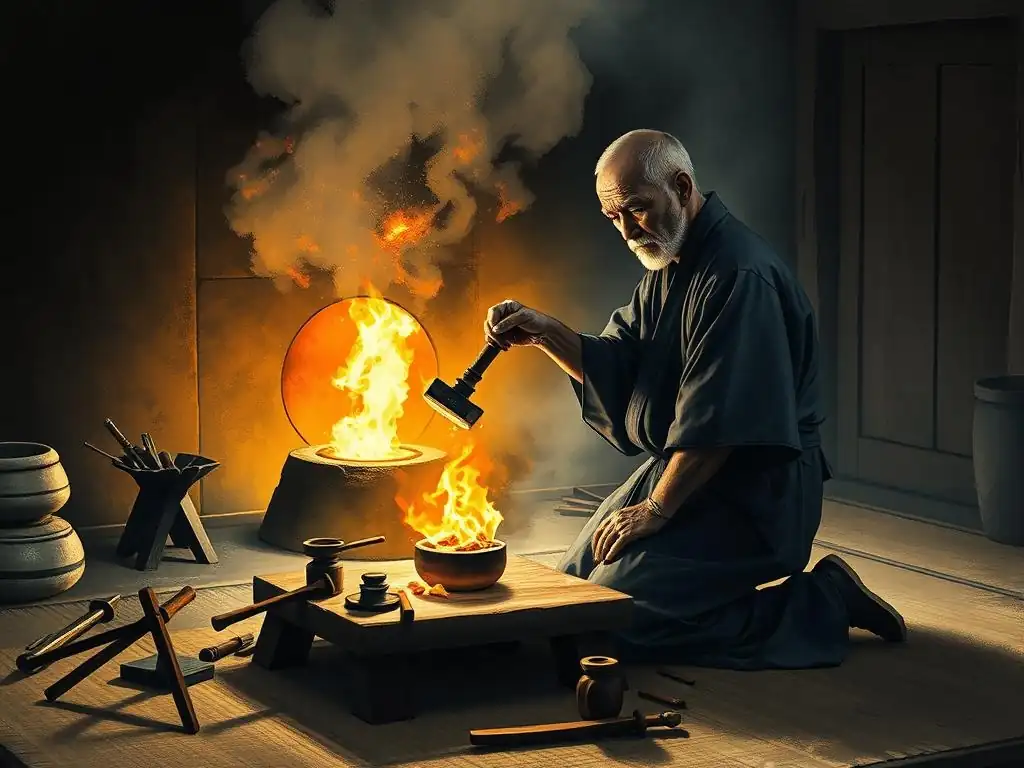
The process of forging a Katana is a complex, multi-stage endeavor that has been refined over centuries. It begins with the selection and preparation of the steel, progresses through repeated heating and folding, shaping, differential hardening, and finally, meticulous polishing and assembly. Each step requires immense skill, patience, and an understanding of metallurgy that was remarkably advanced for its time. The techniques employed were closely guarded secrets, passed down orally from master to apprentice, making a complete reconstruction challenging today, though modern smiths have achieved remarkable results.
Unlike the methods used for casting or hammering bronze armor, as seen in Ancient Greek bronze armor techniques, Japanese swordsmithing focused on manipulating high-carbon steel through heat, folding, and differential quenching to create a composite structure with varying properties. This approach was necessary due to the nature of the available iron ore and the desire to create a blade that was both incredibly hard at the edge and resilient overall. The process is a testament to the ingenuity and dedication of Japanese craftsmen.
Folding and Tempering: The Secrets of Strength and Sharpness
One of the most iconic techniques associated with Japanese swordsmithing is the folding of the steel. This process begins with a block of raw steel ( tamahagane) which is heated and hammered flat, then folded back upon itself. This is repeated numerous times.
A common practice involved folding the steel perhaps 8 to 16 times. Each fold roughly doubles the number of layers, resulting in a structure with tens of thousands of layers (e.g., 2^10 = 1024 layers, 2^15 = 32,768 layers). This repeated folding achieves several critical goals: it helps to evenly distribute the carbon content throughout the steel, removes impurities (which are squeezed out as slag during hammering), and creates the distinctive grain pattern ( hada) visible on the finished blade.
Following the folding and shaping, the blade undergoes differential tempering ( yaki-ire). As described earlier, a clay mixture is applied to the blade, thicker on the spine and thinner on the edge. The blade is then heated to a precise temperature (around 750-800°C) and quenched.
The rapid cooling of the thinly coated edge transforms its structure into hard martensite, while the slower cooling of the thickly coated spine results in tougher pearlite. This creates the hard edge for cutting and the flexible spine for durability, along with the visible hamon. Getting the temperature and timing exactly right during quenching is crucial and requires immense skill and experience, as a slight miscalculation can ruin the blade.
Materials and Methods: Tamahagane and Clay Tempering
The base material for traditional Japanese swords is tamahagane, a special type of high-carbon steel produced in a traditional clay furnace called a tatara. Iron sand ( satetsu) and charcoal are layered in the tatara and heated for several days. This process yields tamahagane in the form of a large bloom, which is then broken into pieces with varying carbon content.
The swordsmith carefully selects pieces with the appropriate carbon levels for different parts of the blade – higher carbon steel for the core and edge, and lower carbon steel for the outer layers. This laborious process of producing tamahagane is unique to Japanese swordsmithing and contributes significantly to the quality of the finished blade.
The clay tempering process ( tsuchioki) is another defining feature. The specific composition of the clay mixture (often a secret recipe involving clay, ash, and other organic materials) and the technique of applying it directly influence the resulting hamon pattern and the properties of the blade. After the clay is applied and dried, the blade is heated and quenched.
The sudden temperature change causes the steel to harden, but the clay acts as an insulator, slowing the cooling rate in the areas it covers thickly. This differential cooling is what creates the distinct zones of hardness and the beautiful hamon line, making each traditional Katana a unique work of metallurgical art.
The Impact of the Katana on Warfare and Culture
The Katana's impact on feudal Japanese warfare was profound. It was not just a powerful weapon but also a psychological force. The sight of a Samurai drawing his Katana, renowned for its sharpness and the skill of its wielder, could instill fear in opponents. The ability of a well-crafted Katana to cleanly sever limbs or cut through armor was well known, making direct confrontation with a skilled Samurai a daunting prospect.
Beyond its practical use in battle, the Katana permeated Japanese culture. It became a powerful symbol of the Samurai class, representing their authority, honor, and commitment to service. The care and handling of the Katana were governed by strict etiquette, reflecting the reverence in which it was held. This deep cultural integration meant the Katana was far more than just a tool; it was an integral part of the social, political, and spiritual fabric of feudal Japan.
Psychological Warfare: The Intimidation of Skill and Precision
The reputation of the Katana as an exceptionally sharp and deadly weapon contributed significantly to its psychological impact on the battlefield. Opponents knew that a single, well-placed cut from a Katana wielded by a skilled Samurai could be fatal. This was a stark contrast to the potential glancing blows or blunt force trauma associated with other historical weapons. The visible hamon on the blade was also recognized as a mark of quality and the swordsmith's mastery, further enhancing the weapon's mystique and the wielder's perceived prowess.
Furthermore, the Samurai's rigorous training in swordsmanship ( kenjutsu and later iaijutsu) meant they were masters of their weapon. Their fluid movements, precise strikes, and ability to draw and cut in a single motion were intimidating to less trained adversaries. The combination of a superior weapon and exceptional skill created a powerful psychological advantage. Tales of legendary swordsmen and their blades further fueled this mystique, making the Katana a symbol of deadly efficiency and unwavering resolve.
Symbolism and Status: The Katana as a Reflection of Samurai Honor
For the Samurai, the Katana was inextricably linked to their honor ( meiyo) and social status. Carrying the daisho (Katana and wakizashi) was a privilege reserved exclusively for the Samurai class from the late 16th century onwards. This distinction visually set them apart from commoners and other social classes. The sword was a constant companion, even carried indoors, symbolizing the Samurai's perpetual readiness to defend his lord, his honor, and himself.
The respect shown to the Katana was immense. It was considered impolite to touch another's sword without permission, and drawing one's sword without cause was a serious offense. The rituals surrounding the presentation, inspection, and cleaning of the Katana reinforced its symbolic importance. It was not just a weapon but an heirloom, passed down through generations, accumulating the history and honor of the family. The quality and craftsmanship of a Samurai's Katana could also be an indicator of his wealth and status within the warrior class, further cementing its role as a powerful symbol of identity and honor.
The Katana's Role in Feudal Japan
In the tumultuous period of feudal Japan, the Katana was a constant presence, shaping both the grand sweep of history and the personal lives of the Samurai. It was the primary weapon in countless battles that determined the fate of clans and the control of territories. From the Sengoku period's widespread conflicts to the more settled Edo period's occasional duels and uprisings, the Katana remained central to the exercise of military power and the maintenance of social order by the Samurai class.
Its role extended beyond open warfare. The Katana was essential for personal defense, enforcement of authority, and even as an instrument in rituals of justice and honor. Its presence in everyday life, carried openly by Samurai, served as a constant reminder of their power and their readiness to use force when necessary. The development and refinement of swordsmanship schools ( ryu) further highlight the importance placed on mastering the use of this iconic blade in various combat scenarios.
Battles and Duels: The Katana in Action
In the large-scale battles of feudal Japan, the Katana was used primarily as a cutting weapon against lightly armored or unarmored opponents, or for finishing off fallen foes. While spears ( yari) and polearms ( naginata) were often the primary weapons for mass combat formations, the Katana was essential in the chaotic close-quarters fighting that ensued once lines clashed or in skirmishes. Its ability to deliver swift, powerful cuts made it devastating in the hands of a trained warrior.
Beyond the battlefield, the Katana was the weapon of choice for duels ( shinken shobu), often fought to settle matters of honor or skill. Famous swordsmen like Miyamoto Musashi elevated dueling with the Katana to an art form, developing sophisticated techniques and strategies. These duels, sometimes fought to the death, showcased the deadly potential of the Katana and the pinnacle of individual swordsmanship skill, contributing to the legend surrounding both the blade and its masters.
The Ritual of Seppuku: A Blade of Honor and Sacrifice
One of the most profound and somber roles of the Katana (or more commonly, the shorter wakizashi) in feudal Japan was its use in the ritual of seppuku (also known as hara-kiri). This form of ritual suicide was an honorable alternative to capture, execution, or living with insurmountable shame. It was considered an act of courage and self-control, allowing a Samurai to die with his honor intact.
The ritual was highly formalized and often public, performed before witnesses. The Samurai would typically use a wakizashi or a smaller dagger ( tanto) to make an incision across his abdomen. A trusted second ( kaishakunin), usually a friend or comrade skilled in swordsmanship, would then perform a swift decapitation with a Katana to end the suffering quickly. The blade used in seppuku was thus not just a weapon but an instrument of ultimate sacrifice and a means to uphold the highest principle of Samurai honor, even in death.
The Katana vs. Other Swords Throughout History
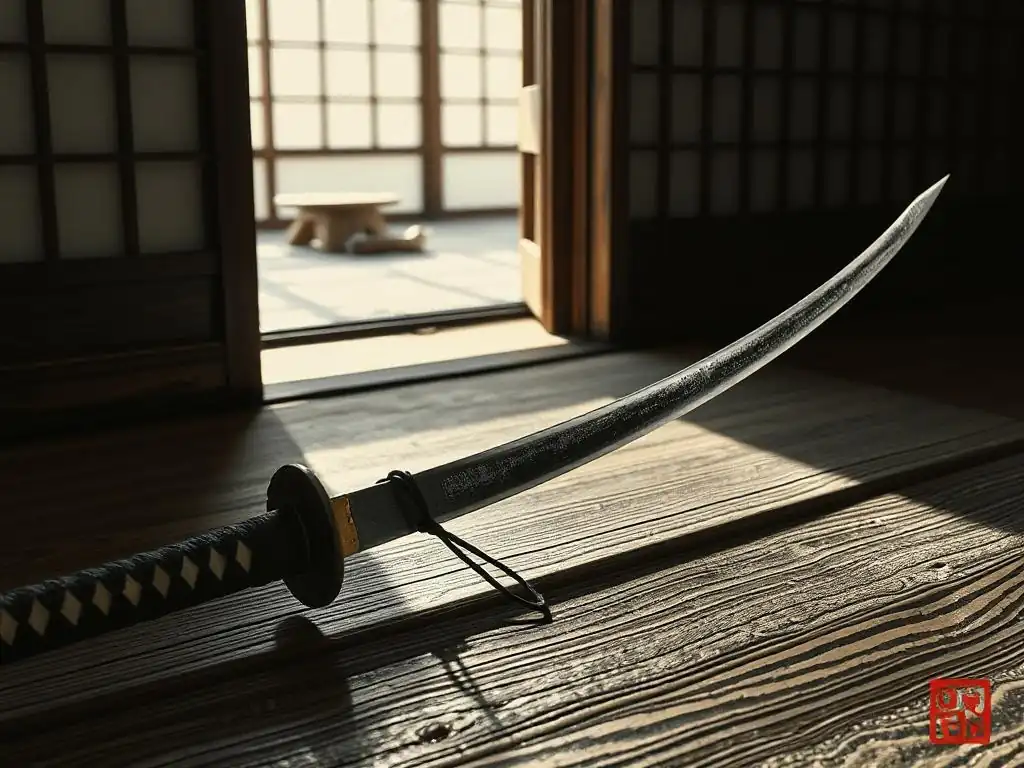
Comparing the Katana to swords from other cultures and historical periods reveals fascinating differences in design philosophy, materials, and intended use. While European swords, such as the longsword or rapier, evolved alongside plate armor and different fighting styles, the Katana was perfected in a context where armor varied and speed and cutting power were paramount. The metallurgical approach also differed; while cultures developed techniques for working with various metals, including the sophisticated Ancient Greek bronze armor techniques focused on creating robust defensive wear, Japanese smiths dedicated themselves to mastering the complex properties of high-carbon steel for offensive purposes.
This comparison highlights the fact that weapon design is not universal but is shaped by specific historical, cultural, and technological environments. There is no single "best" sword; effectiveness is relative to the context in which it is used. The Katana's distinct characteristics reflect the unique challenges and opportunities faced by the Samurai in feudal Japan.
Comparing Myth and Reality: Blade Geometry and Usage
Popular culture often portrays the Katana as capable of cutting through anything with ease. While it was undoubtedly a formidable weapon with exceptional cutting power, its capabilities were subject to the limitations of materials and physics. Comparing its geometry and optimal usage to other swords helps to ground the myths in reality. European swords, for instance, often had straighter blades suitable for thrusting through gaps in plate armor, or heavier blades designed for powerful chopping attacks against armored opponents. Sabers, with their curved blades, were excellent for cavalry charges and cutting from horseback.
The Katana's curvature and relatively light weight (compared to some European greatswords) made it highly effective for drawing cuts and rapid, fluid movements. Its design prioritized slicing over blunt force or thrusting (though thrusts were certainly possible). The differential hardening, while providing a sharp edge and durable spine, also meant the edge was susceptible to chipping if struck incorrectly against hard surfaces, particularly other hardened steel or heavy armor. Understanding the Katana's specific strengths and weaknesses relative to other historical blades provides a more accurate picture of its place in the history of weaponry.
The Evolution of Japanese Swords Throughout History
The Katana did not appear in its final form overnight but was the culmination of centuries of development in Japanese swordsmithing. The earliest Japanese swords, from around the 4th century, were straight, double-edged blades called chokuto. These were influenced by continental designs. As warfare evolved, particularly with the rise of mounted archery, the need for a curved sword that could be drawn and used effectively from horseback led to the development of the tachi in the Heian period (794-1185). Tachi were generally longer and had a more pronounced curvature than later Katanas.
The transition to the Katana occurred gradually from the Kamakura period (1185-1333) onwards, becoming the standard sword by the Muromachi period (1336-1573). This shift corresponded with changes in battlefield tactics, including the increasing importance of infantry. The Katana was designed to be worn edge-up through the belt ( obi), allowing for a faster draw into a cutting motion ( iaijutsu), compared to the tachi which was typically worn edge-down, suspended from the belt. This evolution reflects the continuous adaptation of weapon technology to meet the changing demands of warfare in Japan.
Lessons from the Katana: A Martial Arts Perspective
The legacy of the Katana extends far beyond the battlefields of feudal Japan. Its creation and use embody principles that are highly relevant to modern martial arts practice. The dedication and discipline required of the swordsmith mirror the commitment needed to master any martial art. The pursuit of perfection in forging the blade reflects the martial artist's quest for continuous improvement in technique, physical conditioning, and mental focus.
Studying the history and philosophy surrounding the Katana offers valuable insights into the mindset of the traditional warrior and the deeper meanings embedded in martial training. It underscores the importance of respect – for one's tools, one's teachers, one's training partners, and the art itself. The Katana serves as a powerful symbol of these enduring values, reminding practitioners that martial arts are about more than just physical technique; they are a path of self-cultivation and discipline.
Discipline, Dedication, and the Pursuit of Perfection: The Way of the Sword
The centuries-long tradition of Japanese swordsmithing is a profound example of dedication and the relentless pursuit of perfection. Each stage of the forging process, from selecting the steel to the final polish, demands meticulous attention to detail and unwavering discipline. Swordsmiths devoted their lives to mastering their craft, constantly seeking to improve their techniques and create blades of ever-higher quality. This level of commitment resonates strongly with the ethos of martial arts training.
Similarly, the path of the swordsman required immense discipline. Years were spent practicing forms, sparring, and honing techniques with the Katana. The pursuit of mastery was a lifelong journey, demanding physical endurance, mental fortitude, and an unyielding spirit. Modern martial artists can draw inspiration from this dedication, understanding that true progress comes from consistent effort, focused practice, and a commitment to refining one's skills over time, much like the swordsmith refines the steel.
The Importance of Respect for the Weapon: Then and Now
In feudal Japan, the Katana was treated with the utmost respect. It was cleaned regularly, stored properly, and handled with care and reverence. This respect stemmed from its vital role in the Samurai's life, its symbolic importance, and the recognition of the immense skill and effort that went into its creation. This attitude of respect for the weapon is a valuable lesson for martial artists today, even those who do not train with bladed weapons.
Respect for the weapon translates to respect for the art itself. It means treating training equipment with care, listening attentively to instructors, practicing techniques mindfully, and showing courtesy to training partners. Whether practicing with a wooden sword ( bokken), protective gear, or even just one's own body, approaching training with a sense of respect and seriousness honors the traditions and the effort that have shaped the martial art over time. The Katana serves as a powerful historical reminder of this fundamental principle in the martial way.
Conclusion: The Enduring Legacy of the Katana
The Katana remains one of the most recognized and admired swords in the world, a testament to the extraordinary skill of Japanese swordsmiths and the profound cultural impact of the Samurai. Its unique design, born from specific historical needs and refined through centuries of metallurgical innovation, resulted in a weapon of exceptional cutting power and aesthetic beauty. More than just a tool of war, the Katana became deeply embedded in Japanese philosophy, art, and social structure, symbolizing the core values of the Samurai class.
From the ritualistic atmosphere of the smithy where it was forged to its central role in battle, duels, and rituals like seppuku, the Katana's story is intertwined with the history of Japan itself. While the era of the Samurai has passed, the Katana's legacy endures, not only as a historical artifact but also as a powerful symbol within martial arts, representing discipline, honor, and the relentless pursuit of mastery.
Its creation involved sophisticated techniques, distinct from those used for other historical military equipment like the methods employed in Ancient Greek bronze armor techniques, highlighting the diverse paths of technological development across different civilizations.
A Symbol of Skill, Honor, and Tradition
The Katana stands as a powerful symbol of the qualities most associated with the Samurai: unparalleled skill in combat, unwavering honor, and a deep respect for tradition. Its existence is a direct result of generations of swordsmiths who dedicated their lives to perfecting their craft, embodying the principle of shokunin (mastery of one's profession). For the Samurai who wielded it, the Katana was a constant reminder of their duty, their code, and their place in society.
Its enduring appeal lies in this rich tapestry of meaning. It represents the fusion of practical effectiveness and spiritual significance, the product of intense labor and artistic vision. The Katana is more than just a curved piece of steel; it is a cultural icon that continues to inspire awe and respect around the world, embodying the spirit of an era defined by the warrior class and their iconic blade.
Further Exploration: Japanese Swordsmanship and History
For those interested in delving deeper into the world of the Katana, there are many avenues for further exploration. Studying traditional Japanese swordsmanship styles such as Kendo, Iaido, and Kenjutsu offers practical insight into how the Katana was used and the principles of movement and strategy associated with it. Learning about the history of specific swordsmithing schools and their unique techniques provides a greater appreciation for the artistry and science behind the blade.
Exploring the broader history of the Samurai, their culture, and their role in feudal Japan offers essential context for understanding the significance of the Katana. Museums around the world house exquisite examples of Katanas, allowing for close examination of their craftsmanship. Reading historical accounts, philosophical texts on Bushido, and academic studies on Japanese metallurgy can deepen one's understanding of this remarkable weapon and the enduring legacy it represents in the history of martial arts and beyond.
Frequently Asked Questions
What materials were typically used in Ancient Greek bronze armor?
Ancient Greek bronze armor was primarily constructed from bronze, an alloy of copper and tin. Other materials such as leather and linen were used for under padding and reinforcement.
What were the key components of a complete set of Ancient Greek bronze armor?
A complete set generally included a helmet, cuirass (chest and back plate), greaves (shin guards), and sometimes arm guards. They also carried a shield.
How did Ancient Greek bronze armor techniques evolve over time?
Early armor was heavier and less flexible. Over time, armor became lighter and more articulated, allowing for greater mobility on the battlefield.
What role did mythology, like the story of Hephaestus forging Achilles' armor, play in the perception of Ancient Greek armor?
Mythology elevated armor beyond mere protection, associating it with divine craftsmanship and heroic status, emphasizing its importance in battle and society.
How effective was Ancient Greek bronze armor against different types of weapons?
Bronze armor offered good protection against blunt force trauma and slashing weapons, but could be vulnerable to piercing attacks from arrows or spears at close range.
Final Reflection: The Enduring Legacy of Craft
The meticulous techniques of ancient Greek bronze armor, particularly as exemplified by Achilles' legendary armor, are not merely relics of the past; they represent a pinnacle of human ingenuity and artistic expression that continues to inspire artisans and historians today. The dedication to craftsmanship, the understanding of materials, and the sheer artistry involved in creating such protective and aesthetically stunning pieces speak volumes about the values and priorities of ancient Greek society.
The impact of these ancient techniques extends far beyond the battlefield. The principles of design, metallurgy, and artistic expression evident in Achilles' armor resonate through centuries of art, architecture, and engineering. The pursuit of excellence, the fusion of form and function, and the reverence for skilled craftsmanship are timeless ideals that continue to shape our world. The art of war is at once savage and beautiful; hence it must be performed with care and precision.
- Sun Tzu (adapted to reflect the craftsmanship aspect).
As we reflect on the legacy of ancient Greek bronze armor, let us not only admire the technical prowess of the artisans but also embrace the spirit of dedication and innovation that fueled their creations. Consider how you can apply this same commitment to excellence in your own endeavors, striving to create works of lasting beauty and enduring value. Let the story of Achilles' armor inspire you to forge your own path, armed with knowledge, skill, and a unwavering dedication to your craft.
Unleash Your Inner Warrior: Take Action Now!
Thank you for exploring the legendary craftsmanship behind Achilles' armor! Now that you've glimpsed the divine power imbued in its creation, it's time to channel that inspiration into your own journey.
- Forge Your Own Resilience: Emulate Achilles' unwavering spirit by pushing your limits in your next martial arts session. Focus on a technique you've been struggling with and dedicate extra time to mastering it.
- Delve Deeper: Research other legendary weapons and armor from mythology. How do their stories inspire different martial arts styles and philosophies?
- Share Your Inspiration: Discuss the article's insights with your fellow martial artists at martialartsmastery.org.
What's one small, but significant, step you can take today to embody the resilience and dedication exemplified by Achilles?