
Zanshin and Kime: Understanding Intent and Spirit in Form Performance

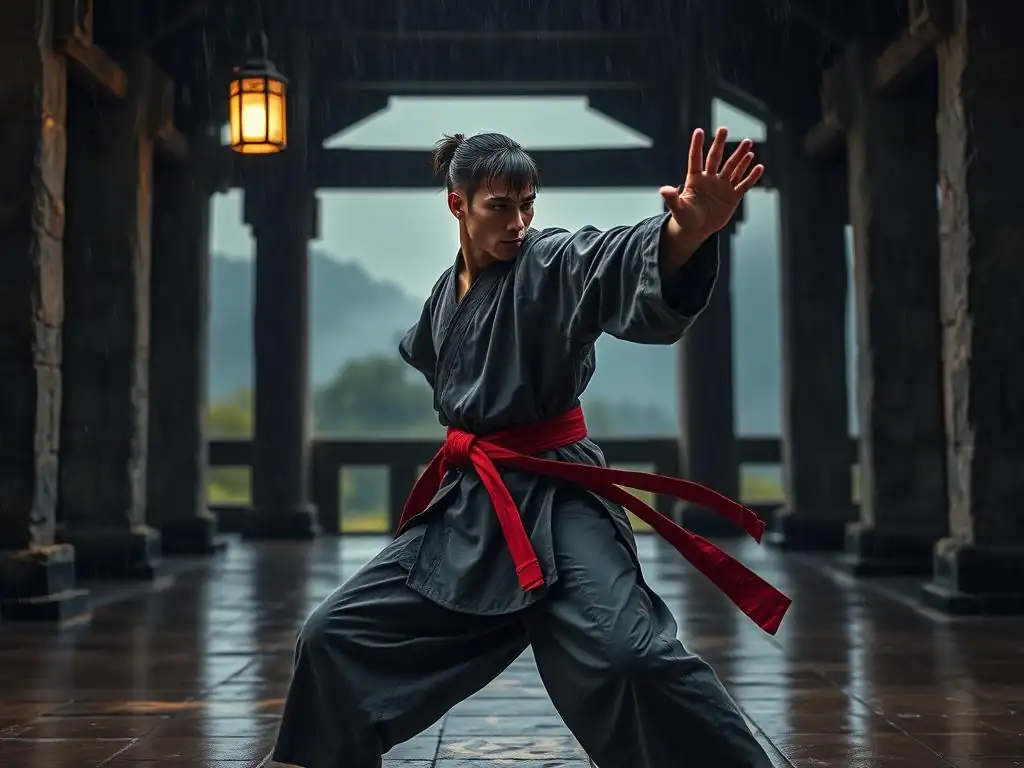
Welcome to Martial Arts Mastery, where we delve into the heart of combat disciplines! Are you ready to unlock the secrets behind truly powerful martial arts? In this article, we'll explore Zanshin Kime, a vital principle for mastering forms. But what exactly is the connection between unwavering focus ( Zanshin) and decisive execution ( Kime), and how can you integrate them into your own practice to elevate your performance? Prepare to discover the subtle nuances that separate a good form from a masterful one.
- Introduction to Zanshin and Kime in Martial Arts Forms
- Zanshin: Maintaining Awareness and Connection
- Kime: Focusing Power and Energy
- Integrating Zanshin and Kime: Awareness and Focus
- Applications Beyond Form Practice
- Examples in Various Martial Arts Styles
- Common Mistakes
- Advanced Training Techniques
- Conclusion: Mastering Zanshin and Kime
-
Frequently Asked Questions
- What is Zanshin and how does it relate to martial arts form?
- What is Kime and what role does it play in effective martial arts techniques?
- How do Zanshin and Kime work together to enhance a martial artist's performance?
- Why are Zanshin and Kime considered important philosophical elements in martial arts, beyond just physical technique?
- How can a martial artist improve their Zanshin and Kime in their training?
- Final Reflection: The Enduring Spirit of Zanshin and Kime
- Unleash Your Inner Powerhouse!
Introduction to Zanshin and Kime in Martial Arts Forms
Defining Zanshin and Kime: Essential Concepts
In the intricate world of martial arts, particularly within the practice of forms (kata, poomsae, taolu), two concepts stand paramount for transforming mere physical movement into potent expression: Zanshin and Kime. While often discussed in Japanese martial arts contexts, the underlying principles of Zanshin and Kime are universal to effective martial arts form execution across disciplines.
Zanshin, often translated as "remaining mind" or "awareness," refers to a state of continuous alertness and readiness, maintained throughout the form and critically, even after a technique is completed. It's about being fully present, aware of one's surroundings, potential threats, and one's own physical and mental state.
Kime, on the other hand, translates roughly to "decision" or "focus," and in a martial context, signifies the sharp, focused power applied at the moment of impact or completion of a technique. It's the convergence of physical energy, breath, and mental intent into a single, explosive point. Think of it as the "snap" or "whip" that gives techniques their penetrative force.
While Zanshin is about expansive, continuous awareness, Kime is about intense, concentrated power. Both are indispensable for giving life, effectiveness, and authenticity to a martial arts form, elevating it beyond a choreographed dance to a dynamic simulation of combat. Understanding and integrating Zanshin Kime martial arts form principles is key to advanced practice.
The Significance of Intent and Spirit in Forms
The true purpose of practicing martial arts forms extends far beyond memorizing sequences of movements. Forms are living repositories of technique, strategy, and physical conditioning, but their effectiveness hinges entirely on the practitioner's intent and spirit. Without Zanshin and Kime, a form is devoid of martial application; it becomes a series of disconnected movements lacking power and purpose. The significance lies in how these concepts imbue each technique with meaning and potential effectiveness.
Consider a basic block followed by a punch in a martial arts form. Physically executing the movements correctly is foundational. However, applying Zanshin means maintaining awareness of the imaginary opponent's potential follow-up attack and being ready to react, even after your punch has landed.
Applying Kime means focusing all your physical energy—from your feet rooted to the ground, through your core, to the point of impact—into that single punch, making it maximally effective. This integration of Zanshin Kime martial arts form elements transforms the practice from rote memorization into a dynamic exercise in combat readiness, physical control, and mental discipline, reflecting the deep spirit of the art.
Zanshin: Maintaining Awareness and Connection
What is Zanshin? A State of Total Awareness
Zanshin is more than just looking around; it's a profound state of total, continuous awareness that permeates every moment of martial arts practice and, ideally, daily life. In the context of a martial arts form, Zanshin means being fully present throughout the entire sequence, from the initial bow or ready stance to the final return to the starting position. It involves maintaining peripheral vision, being attuned to sounds, and possessing an internal awareness of one's own body mechanics and balance. It's the 'lingering mind' that remains watchful and prepared even after a technique is seemingly finished.
This state of total awareness is crucial because combat situations are fluid and unpredictable. A form, though structured, simulates these conditions. By practicing Zanshin within a form, a practitioner trains their mind to remain vigilant. This vigilance isn't tense or anxious; rather, it's a calm, centered readiness. For example, in many karate kata, after executing a powerful technique against an imagined opponent in one direction, Zanshin requires the practitioner to maintain awareness of other potential threats that might appear from different angles, preparing for the next movement not just physically, but with a fully engaged mind.
Zanshin Beyond the Physical: Mental and Spiritual Dimensions
While Zanshin manifests physically as alertness and readiness, its roots extend into the mental and spiritual dimensions of martial arts. Mentally, Zanshin is about focus without fixation – being aware of everything without getting tunnel vision on one point. It's a state of 'mushin' (no mind) in the sense of being free from distracting thoughts or emotions, allowing for instantaneous, unhindered reaction. Spiritually, Zanshin connects the practitioner to the present moment and the broader context of their practice, embodying humility, respect, and a deep commitment to the principles of the art.
This deeper aspect of Zanshin is what prevents martial arts forms from becoming purely mechanical exercises. It infuses them with life and purpose. It's the difference between someone merely going through the motions and someone embodying the spirit of the warrior. A practitioner demonstrating strong Zanshin in their martial arts form performance communicates control, confidence, and a profound understanding that the practice extends beyond the dojo floor into a way of being. This mental and spiritual presence is palpable and is a hallmark of truly advanced practitioners.
Practicing Zanshin: Drills and Exercises
Developing Zanshin requires dedicated practice, both within and outside of formal training. Simple drills can significantly enhance this vital awareness. One fundamental exercise involves practicing forms slowly, pausing after each technique to consciously scan the imaginary environment and assess one's own balance and readiness before moving to the next step. This deliberate pace allows the mind to catch up with the body and cultivate that 'remaining mind'.
Another effective drill involves practicing forms in different environments, paying close attention to how surroundings change and maintaining awareness of potential obstacles or distractions. Sensory awareness exercises, such as walking while focusing on peripheral vision or identifying sounds without turning one's head, can also build the foundation for Zanshin. Many instructors incorporate unexpected cues during form practice, like a sudden clap or verbal command, requiring students to pause their movement and immediately demonstrate a state of readiness, reinforcing the Zanshin Kime martial arts form connection.
Zanshin in Form: Maintaining Vigilance
Within the structure of a martial arts form, Zanshin is demonstrated not just at the end of the form, but continuously between techniques and movements. It's the vigilant pause, the focused transition, the awareness that persists even as one movement flows into the next. A practitioner with strong Zanshin doesn't relax completely after executing a block or strike; their body remains poised, their eyes scan, and their mind is ready for whatever comes next, whether it's the next prescribed movement in the form or a perceived threat in a real scenario.
This continuous vigilance gives the form a sense of dynamic flow and purpose. It prevents movements from appearing disjointed or final. For instance, after a powerful punch, the hand might recoil slightly, but the body's structure and the practitioner's gaze remain engaged, ready to block, evade, or strike again. This subtle, ongoing state of readiness is the physical manifestation of Zanshin within the form's choreography, indicating that the practitioner is not just performing steps but actively engaging with an imagined combat scenario.
Zanshin and the Enduring Connection: Awareness After the Technique
Perhaps the most emphasized aspect of Zanshin is the awareness maintained after a technique has been completed. This is often symbolized by the final few seconds of a form, where the practitioner stands still, maintaining their posture, gaze, and internal readiness before returning to the starting position or bowing. This isn't just a ceremonial pause; it's a critical demonstration of Zanshin. It signifies that even though the immediate "attack" or "defense" has been executed, the encounter is not necessarily over.
In a real self-defense situation, an opponent might have backup, feign defeat, or launch a counter-attack. Zanshin trains the practitioner to anticipate these possibilities. In the context of a martial arts form, this post-technique awareness ensures that the practice isn't just about delivering power (Kime), but about surviving the entire encounter. This enduring connection to the moment and the potential threat is a hallmark of true martial mastery and a vital component of effective Zanshin Kime martial arts form practice.
Kime: Focusing Power and Energy
Defining Kime: The Art of Concentrated Power
Kime is the explosive focus of physical and mental energy into a single point or moment, typically at the culmination of a technique. It's the difference between merely moving a limb and striking with devastating force. While Zanshin is expansive awareness, Kime is concentrated power. It involves the coordinated effort of the entire body, channeled through the technique, to achieve maximum impact and penetration. This is achieved through a combination of proper body mechanics, breath control, and intense mental focus.
Think of Kime as the 'snap' in a whip or the 'crack' in a well-thrown punch. It's not about brute strength applied throughout the entire movement, but rather a sudden, sharp tensing of muscles precisely at the point of impact or completion, followed by immediate relaxation to allow for the next movement. This momentary tension, often accompanied by a sharp exhalation or kiai, generates a shockwave of energy. Mastering Kime is fundamental to making techniques effective and is a core principle when discussing Zanshin Kime martial arts form application.
The Importance of Proper Body Mechanics
Achieving effective Kime is inextricably linked to proper body mechanics. Power in martial arts techniques doesn't originate solely from the striking limb; it's generated from the ground up, utilizing the large muscle groups of the legs and core. A stable stance, proper alignment of joints, and efficient transfer of energy through the kinetic chain are essential prerequisites for Kime. Without solid mechanics, attempts at Kime will be weak, inefficient, and potentially injurious.
For example, delivering a powerful punch requires rooting through the feet, twisting the hips and core, and transferring that rotational energy through the shoulder, arm, and fist. The final 'snap' of Kime occurs as all these elements converge at the moment the fist reaches its target or extension point. Similarly, kicks require balance, hip drive, and a focused snap of the leg. Proper mechanics ensure that the body acts as a unified system, maximizing the force that can be concentrated at the point of Kime.
Generating Kime: Breath Control, Posture, and Focus
Generating powerful Kime is a multi-faceted process involving breath, posture, and mental focus. Breath control is paramount; a sharp, forceful exhalation (often a kiai) at the moment of Kime helps to tense the core muscles, stabilize the body, and release energy. This synchronized breath and movement amplifies power and reinforces mental resolve.
Posture and alignment are equally critical. A strong, grounded posture allows the practitioner to effectively utilize their body weight and leverage. The spine should be aligned, and the core engaged to act as a stable platform for generating and transferring power. Finally, intense mental focus is required. Kime isn't just physical; it's the projection of intent. The practitioner must mentally 'will' the power to converge at the target, focusing all their energy and concentration into that single moment. This combination of physical, respiratory, and mental elements is what creates true Kime in a martial arts form.
Kime in Form: Delivering Power with Precision
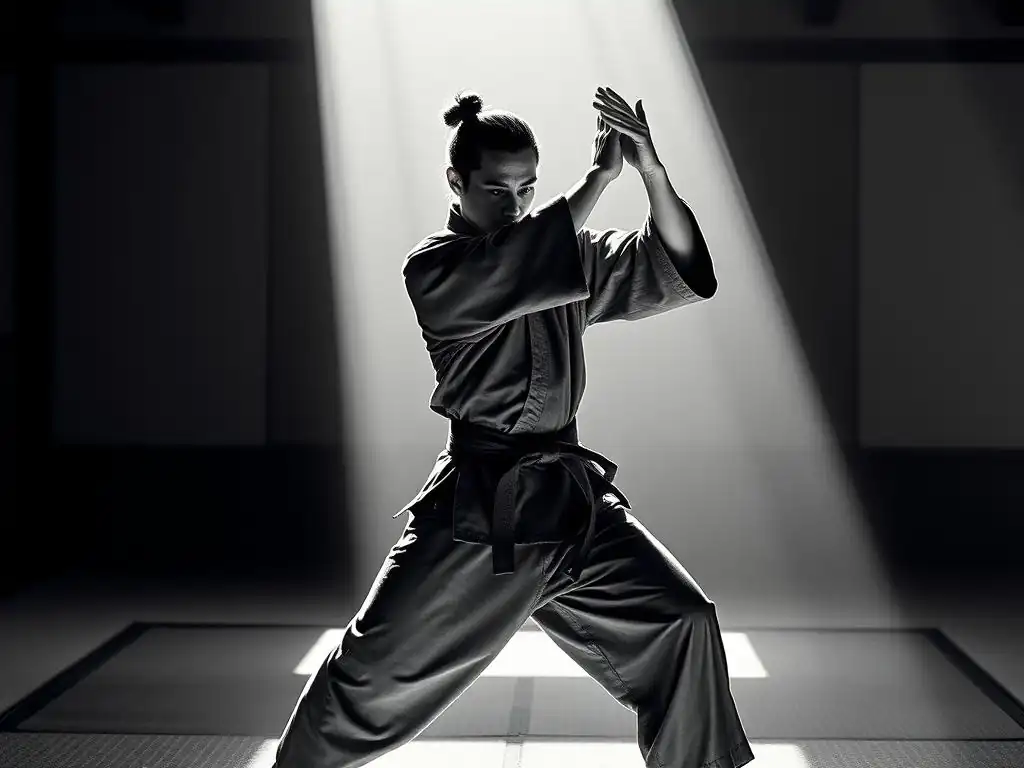
Within the context of a martial arts form, Kime is demonstrated at the end-point of each significant technique – a punch, a block, a strike, a kick. It's the sharp, focused tension that punctuates the movement. It's not about sustained muscular tension, which would slow down the technique and waste energy, but rather a brief, explosive contraction followed immediately by relaxation, preparing for the next movement. This precision in timing is key to effective Kime.
Observing a skilled practitioner perform a form, you can often hear or see the Kime: the sharp kiai, the slight vibration of the body, the sudden stillness at the technique's completion before movement resumes. This application of Kime gives the form its dynamic quality, highlighting the potential power contained within each movement. It transforms a sequence of actions into a series of powerful, purposeful strikes and blocks against imaginary opponents, underscoring the combat effectiveness trained by Zanshin Kime martial arts form practice.
Achieving Maximum Impact: The Role of Kime
Ultimately, the role of Kime is to ensure maximum impact and effectiveness for each technique. Whether blocking an attack or delivering a strike, Kime ensures that the energy generated by the body is efficiently transferred to the target. Without Kime, even perfectly executed movements can lack penetrative power, resembling pushes or shoves rather than sharp, decisive blows.
In self-defense, achieving maximum impact can be crucial for quickly neutralizing a threat. In a martial arts form, demonstrating strong Kime proves that the practitioner understands how to generate and focus power for practical application. It's a key indicator of technical proficiency and martial understanding. Developing powerful Kime requires thousands of repetitions, focusing on the precise coordination of body, breath, and mind at the critical moment of impact.
Integrating Zanshin and Kime: Awareness and Focus
Integrating Zanshin and Kime: A Holistic Approach
While often discussed separately, Zanshin and Kime are two sides of the same coin, representing the dynamic interplay between expansive awareness and focused power. True mastery in martial arts forms involves integrating these concepts into a holistic approach. It's not enough to have powerful Kime without Zanshin (leading to techniques delivered with force but without awareness of consequences or follow-up), nor is it sufficient to have Zanshin without Kime (resulting in techniques that are aware but lack the necessary power to be effective). The Zanshin Kime martial arts form synergy is essential.
Integrating Zanshin and Kime means practicing each technique with both focused power and continuous awareness. As Kime is applied at the completion of a technique, Zanshin immediately takes over, maintaining readiness for the next action. This creates a continuous cycle of focused action and vigilant awareness that permeates the entire form. This integrated approach reflects the reality of combat, which requires simultaneous awareness of the environment and the ability to deliver decisive techniques.
How Zanshin Enhances Kime: Anticipating and Responding
Zanshin significantly enhances Kime by providing the necessary context and timing for its application. Awareness allows the practitioner to perceive threats and opportunities, anticipating movements and positioning themselves optimally to deliver Kime effectively. If Zanshin is strong, the practitioner is better able to judge distance, timing, and angle, ensuring that when Kime is applied, it is done so with maximum precision and against the most vulnerable point.
For example, maintaining Zanshin during a form allows the practitioner to mentally track the imaginary opponent and anticipate their reactions. This awareness informs the precise timing and direction of the Kime-filled technique that follows. It prevents techniques from being delivered into empty space or at the wrong moment. Zanshin provides the 'why' and 'when' for Kime, ensuring that the focused power is applied intelligently and effectively within the simulated combat scenario of the form.
How Kime Reinforces Zanshin: Projecting Power and Maintaining Control
Conversely, Kime reinforces Zanshin by demonstrating the practitioner's ability to project power and maintain control. Executing techniques with strong Kime builds confidence and a sense of capability, which in turn strengthens the practitioner's mental state of readiness (Zanshin). The physical act of focusing energy through Kime also requires and refines body control, which is fundamental to maintaining balance and readiness for subsequent movements.
A technique delivered with powerful Kime leaves no doubt about its intent and potential effectiveness, both to an external observer and to the practitioner themselves. This decisive execution, born of Kime, solidifies the practitioner's presence and control within the simulated engagement, reinforcing the calm, centered awareness of Zanshin. The ability to generate and control significant force through Kime is a physical manifestation of the mental and spiritual discipline cultivated by Zanshin.
Drills to Develop Zanshin and Kime Simultaneously
Training to develop Zanshin and Kime together is crucial. One effective drill involves practicing forms at a moderate pace, consciously applying Kime at the end of each technique, and then immediately pausing for a few seconds to fully engage Zanshin – scanning, checking balance, and preparing mentally for the next movement. This drill isolates the transition and reinforces the connection between focused power and subsequent awareness.
Another drill involves partner work (non-contact), where a partner provides unpredictable cues or movements after the practitioner executes a technique from a form. The practitioner must apply Kime to their technique and then immediately react with Zanshin to the partner's cue, demonstrating their continuous readiness. Practicing forms blindfolded, focusing on internal sensation and spatial awareness (Zanshin), while still applying Kime to techniques, can also enhance the integrated feel of Zanshin Kime martial arts form performance.
The Zanshin-Kime Cycle: Continuous Refinement
The relationship between Zanshin and Kime is cyclical and mutually reinforcing, driving continuous refinement in martial arts practice. Strong Zanshin leads to better timing and targeting for Kime. Effective Kime builds confidence and control, enhancing Zanshin. This ongoing cycle encourages practitioners to constantly refine both their awareness and their power generation.
As a practitioner advances, their Zanshin becomes more subtle and pervasive, and their Kime becomes more precise and efficient. The integration becomes seamless, with the transition from focused power to expansive awareness happening instantaneously. This Zanshin-Kime cycle is at the heart of developing true proficiency in martial arts forms, moving beyond mechanical repetition to embody the dynamic spirit of the art.
Applications Beyond Form Practice
Zanshin and Kime in Sparring: Enhancing Combat Effectiveness
While Zanshin and Kime are foundational to martial arts form performance, their practical application extends directly into sparring and actual combat scenarios. In sparring, Zanshin is the constant awareness of your opponent's movements, intentions, and position, as well as your own openings and balance. It's the peripheral vision that spots an incoming attack or an opportunity to counter. This heightened awareness allows for quicker reactions and better strategic decisions in the dynamic environment of sparring.
Kime in sparring is the ability to deliver techniques with focused power at the critical moment of impact. It's the difference between a push and a knockout blow, or a weak block and a solid deflection. Applying Kime ensures that strikes are effective and blocks are decisive. The integration of Zanshin (awareness of the situation) and Kime (focused execution of the technique) is what allows a practitioner to effectively anticipate, react, and counter in sparring, demonstrating the direct transferability of Zanshin Kime martial arts form principles.
Transferable Skills: Improving Focus and Awareness
The skills cultivated through Zanshin and Kime practice are not confined to the dojo; they are highly transferable to daily life, improving overall focus and awareness. Practicing Zanshin trains the mind to be present and observant, enhancing situational awareness in everyday environments – whether walking down the street, driving, or even during conversations. This improved awareness can lead to greater safety and a deeper engagement with one's surroundings.
Developing Kime, which requires intense focus and coordination, improves concentration and the ability to apply oneself fully to a task. The discipline required to generate and control this focused energy translates into improved performance in other physical activities or tasks requiring precision and mental application. The mental fortitude and physical control honed through Zanshin Kime martial arts form training contribute significantly to overall personal development.
Zanshin and Kime in Self-Defense: Maintaining Awareness and Delivering Power
In real-world self-defense situations, Zanshin and Kime are absolutely critical for survival. Zanshin is the initial and ongoing awareness that helps one avoid dangerous situations in the first place. It's the intuition and observation that alerts you to potential threats before they escalate. Maintaining Zanshin during an encounter means being aware of multiple attackers, escape routes, and improvised weapons, constantly assessing the environment.
If physical confrontation becomes unavoidable, Kime is essential for delivering techniques with sufficient power to defend oneself effectively. A strike or block delivered with Kime is far more likely to deter an attacker or create an opportunity for escape than a weak or unfocused movement. The combination of Zanshin (staying aware and calm under pressure) and Kime (delivering decisive, powerful actions) represents the pinnacle of practical martial arts application, demonstrating how Zanshin Kime martial arts form training prepares individuals for real-world challenges.
Examples in Various Martial Arts Styles
Zanshin and Kime in Karate Kata
In Karate, the concepts of Zanshin and Kime are explicitly taught and are fundamental to kata performance. Kata begin and end with a demonstration of Zanshin – the practitioner stands with focused awareness before starting and maintains readiness after finishing. Throughout the kata, Kime is applied at the end of each technique, whether it's the sharp snap of a punch (like in a Gedan Barai followed by an Oi Tsuki in Heian Shodan) or the solid tension of a block.
Instructors often emphasize the 'snap' or 'vibration' that signifies proper Kime, and the continuous, watchful gaze and poised body that demonstrate Zanshin between movements and at the kata's conclusion. The Zanshin Kime martial arts form principles are seen in the crisp transitions and the powerful, decisive completion of techniques that characterize high-level karate kata. The practice aims to integrate these two forces seamlessly.
Zanshin and Kime in Taekwondo Poomsae
While the terminology differs, the principles of Zanshin and Kime are equally vital in Taekwondo poomsae (forms). Zanshin is demonstrated through the practitioner's focused gaze, balanced transitions, and readiness throughout the sequence, particularly in the final stance before returning to the starting position. The awareness extends beyond the immediate technique to encompass the entire training space and the imagined opponent.
Kime in Taekwondo poomsae is seen in the sharp, impactful execution of techniques, such as the focused power in a strong front kick (Ap Chagi) or a decisive block (Makki). The sharp snap of the uniform and the focused breath often accompany Kime. Mastering Zanshin Kime martial arts form principles in Taekwondo poomsae means performing techniques with explosive power while maintaining continuous awareness and readiness for the next action, embodying the dynamic spirit of the art.
Zanshin and Kime in Kung Fu Taolu
In the diverse world of Chinese Kung Fu, while terms like Zanshin and Kime might not be used directly, the underlying concepts are integral to effective taolu (forms) practice, particularly in traditional styles. Zanshin is present as the practitioner's 'shen' or spirit – the alert, watchful presence that imbues movements with intelligence and intent. It's the awareness of space, timing, and potential threats that guides the flow of the form.
Kime is expressed through the concept of 'Fa Jin' (explosive power release) – the sudden, focused projection of energy at the culmination of a technique, often originating from the core and expressed through strikes, pushes, or joint locks. This focused energy release gives techniques their penetrating force. Effective Kung Fu taolu demonstrates the seamless integration of awareness (Zanshin) and explosive power (Kime), showcasing the internal harmony and external projection that define high-level Zanshin Kime martial arts form performance in these styles.
Common Mistakes
Neglecting Awareness: The Pitfalls of Mechanical Execution
One of the most common mistakes in martial arts form practice is neglecting Zanshin, leading to mechanical execution. This occurs when a practitioner focuses solely on the sequence of movements and physical technique without engaging their mind in the simulated combat scenario. The result is a form that looks like a choreographed dance rather than a dynamic martial exercise. Movements may be physically correct but lack intent, awareness, and readiness for follow-up actions or unexpected changes.
Performing forms mechanically, without Zanshin, defeats a primary purpose of form training: to cultivate a vigilant and responsive mind. It leads to a disconnect between the physical actions and their martial application. Techniques are completed without consideration for the 'what comes next,' leaving the practitioner exposed and unprepared. This highlights why integrating Zanshin Kime martial arts form principles is crucial; ignoring Zanshin makes even powerful Kime less effective in a real context.
Failing to Focus Power: The Consequences of Weak Kime
Another frequent error is failing to generate or focus power effectively, resulting in weak Kime. This can stem from poor body mechanics, lack of breath control, or insufficient mental focus. Techniques might be performed with the correct trajectory but lack the explosive snap and penetrative force necessary for effectiveness. This is often visible as movements that appear soft, pushing, or incomplete.
Weak Kime diminishes the martial value of the form. Techniques that should be decisive strikes or blocks become ineffective gestures. This not only reduces the practical self-defense value of the training but also indicates a lack of understanding of how to generate and transfer power through the body. Overcoming weak Kime requires diligent practice focused on fundamental principles of body mechanics, core engagement, and the precise timing of muscle tension and relaxation, crucial elements for strong Zanshin Kime martial arts form practice.
Overemphasizing Speed at the Expense of Zanshin and Kime
A third common mistake is prioritizing speed over the quality of Zanshin and Kime. While speed is important in martial arts, executing techniques quickly without proper focus and awareness results in rushed movements that lack power and purpose. Techniques become blurred, Kime is sacrificed for momentum, and Zanshin is neglected as the practitioner hurries through the sequence.
Training should initially focus on accuracy, power (Kime), and awareness (Zanshin) at slower speeds before gradually increasing pace. A form performed slowly with strong Zanshin and Kime is infinitely more valuable for martial development than one rushed through with weak or absent intent and focus. Finding the right balance between speed and the quality of Zanshin Kime martial arts form execution is a mark of maturity in practice.
Advanced Training Techniques
Visualization Techniques
Advanced practitioners often utilize visualization techniques to deepen their Zanshin and Kime. This involves mentally rehearsing forms or techniques, vividly imagining the opponent, the environment, and the precise feeling of applying Zanshin (maintaining awareness) and Kime (focusing power). Visualization can help refine timing, improve mental focus, and strengthen the mind-body connection necessary for effective Zanshin Kime martial arts form performance.
Practitioners might visualize applying Kime to break a board or penetrate a target, focusing on the energy transfer. They might also visualize maintaining Zanshin in a chaotic environment, mentally scanning for threats and maintaining composure. This mental training complements physical practice, allowing for deeper integration of these concepts even when not actively performing the form.
Partner Drills for Reactive Zanshin and Kime
Partner drills are invaluable for developing reactive Zanshin and Kime. These drills move beyond the solo form to introduce external stimuli. For instance, a partner might hold a focus mitt or pad, requiring the practitioner to apply Kime with precision and power upon contact. The partner can also provide unexpected movements or feints after the strike, forcing the practitioner to immediately engage Zanshin and react appropriately.
Other drills involve the partner simulating attacks from different angles after a technique, requiring the practitioner to maintain Zanshin and respond with the next appropriate action from the form or a defensive technique. These drills bridge the gap between static form practice and dynamic application, reinforcing the practical necessity of integrated Zanshin Kime martial arts form principles.
Meditation Practices
Meditation practices, particularly mindfulness meditation, can significantly enhance Zanshin by cultivating present-moment awareness and focus. Training the mind to remain calm, observant, and free from distraction through meditation directly supports the development of the vigilant and expansive awareness characteristic of Zanshin. A calm mind is a sharp mind, better able to perceive and react.
Meditation can also indirectly support Kime by improving mental focus and control, allowing the practitioner to better concentrate their intent and energy during technique execution. The discipline gained through consistent meditation practice contributes to the mental fortitude required for both sustained awareness (Zanshin) and explosive focus (Kime), demonstrating the deep connection between mental training and physical performance in mastering Zanshin Kime martial arts form principles.
Conclusion: Mastering Zanshin and Kime
The Path to Deeper Understanding
Mastering Zanshin and Kime is a lifelong journey that goes beyond simply executing physical movements. It requires a deep understanding of the underlying principles of awareness, intent, power generation, and control. This path involves diligent physical practice, mental conditioning, and a continuous effort to integrate these concepts into every aspect of training. It's about transforming the external form into an internal experience, where the body, mind, and spirit move as one.
Achieving a deeper understanding means recognizing that Zanshin and Kime are not isolated techniques but interconnected states of being that define true martial presence. It involves constant self-assessment, seeking feedback, and refining one's practice based on the principles, not just the choreography. This dedication to the nuances of Zanshin Kime martial arts form practice is what separates the technician from the true martial artist.
Zanshin and Kime: Elevating Performance
The successful integration of Zanshin and Kime dramatically elevates martial arts form performance. A form performed with powerful Kime shows technical proficiency and physical power. A form performed with pervasive Zanshin shows mental discipline and strategic awareness. A form performed with both demonstrates a high level of mastery, embodying the dynamic readiness and focused power essential for effective martial arts.
This elevated performance is not just for demonstrations or competitions; it translates directly into improved self-defense capabilities, enhanced focus in sparring, and greater overall physical and mental control. The synergy of Zanshin Kime martial arts form principles brings the forms to life, making them potent tools for training both the body and the warrior spirit.
The Enduring Legacy of Intent and Spirit
Zanshin and Kime represent the enduring legacy of intent and spirit in martial arts forms. They are the intangible qualities that breathe life into the physical techniques passed down through generations. They remind practitioners that martial arts is not just about learning to fight, but about cultivating discipline, focus, awareness, and a powerful, indomitable spirit.
By focusing on Zanshin and Kime, practitioners honor the deeper purpose of forms and connect with the martial spirit that transcends style or origin. These principles are universal markers of effective and meaningful practice, ensuring that the ancient traditions of martial arts forms remain relevant and potent in the modern world. Mastering Zanshin Kime martial arts form concepts is truly the path to unlocking the full potential within oneself and the art.
Frequently Asked Questions
What is Zanshin and how does it relate to martial arts form?
Zanshin is a state of relaxed alertness and mindful awareness. In form performance, it emphasizes maintaining constant vigilance even after a technique's completion, preventing vulnerability.
What is Kime and what role does it play in effective martial arts techniques?
Kime refers to the focus of all mental and physical energy at a single point. It's crucial for delivering maximum power and precision in a technique, ensuring its effectiveness.
How do Zanshin and Kime work together to enhance a martial artist's performance?
Zanshin provides the awareness and readiness, while Kime delivers the focused power. Together, they create a harmonious blend of alertness and impact, essential for effective self-defense.
Why are Zanshin and Kime considered important philosophical elements in martial arts, beyond just physical technique?
They embody the principles of mindfulness and discipline. Zanshin promotes present moment awareness, and Kime cultivates focused intention, extending beyond the dojo into everyday life.
How can a martial artist improve their Zanshin and Kime in their training?
Consistent practice focusing on mindful movement and precise execution is key. Drills emphasizing controlled breathing and focused intent will improve both Zanshin and Kime.
Final Reflection: The Enduring Spirit of Zanshin and Kime
The principles of Zanshin and Kime, often relegated to the technical aspects of martial arts forms, are in reality, powerful metaphors for living a more intentional and present life. Understanding and embodying these concepts transcends the dojo, offering a framework for approaching any challenge with unwavering focus and decisive action. Their relevance today lies in their ability to cultivate mindfulness and purpose in a world often characterized by distraction and superficiality.
The impact of Zanshin and Kime extends far beyond the physical realm, influencing how we approach our relationships, our work, and our personal growth. The ability to maintain awareness and control, even after the initial action, is a skill that resonates deeply in all aspects of life. As Bruce Lee eloquently stated: Absorb what is useful, discard what is not, add what is uniquely your own.
This sentiment perfectly encapsulates the spirit of Zanshin and Kime – a continuous refinement of intent and execution, leading to a more authentic and powerful self.
Now, consider how you can integrate the essence of Zanshin and Kime into your daily life. Cultivate a heightened awareness of your surroundings, approach your tasks with unwavering focus, and strive for decisive action in all that you do. Embrace the enduring spirit of these principles, and you will discover a newfound sense of purpose, power, and presence in every moment.
Unleash Your Inner Powerhouse!
Thank you for diving deep into the concepts of Zanshin and Kime. We hope you’ve gained valuable insights into elevating your form performance. Now, let’s put that knowledge into action!
Here are a few powerful steps you can take today:
- Record yourself performing a form, focusing intently on Zanshin and Kime, and critically analyze your intent and focus. This is the most direct way to translate theory into practice.
- Share one key takeaway from this article with a training partner and discuss how you can both improve your mental focus during forms.
- Research the historical context of Zanshin in Zen Buddhism and reflect on how those principles might apply to your everyday life.
What specific drill will you use to practice Kime in your next training session?