
ITF Tul JoongGun: RealWorld SelfDefense Applications Decoded

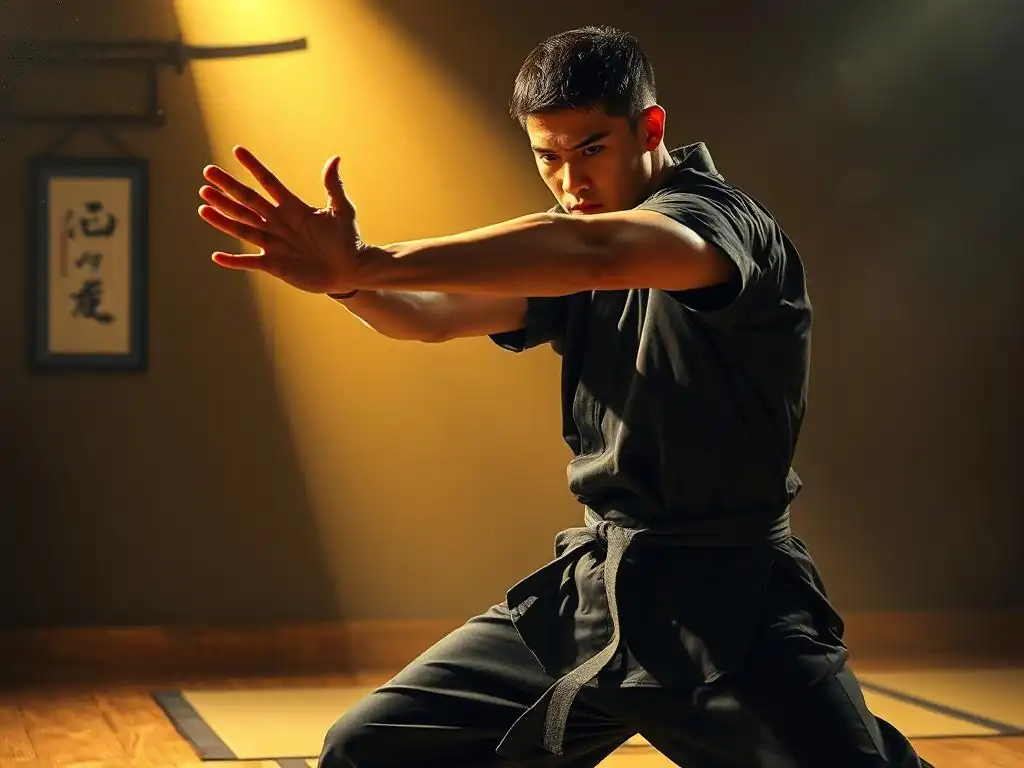
Welcome to Martial Arts Mastery, where we delve deep into the world's fighting arts! Are you ready to unlock the secrets of ITF Tul JoongGun and discover its surprisingly effective applications in real-world self-defense scenarios? This seemingly complex form holds practical techniques waiting to be unleashed. Prepare to decode its movements and elevate your understanding of practical martial arts. Let's begin!
- Introduction to ITF Tul JoongGun and Self-Defense Relevance
- Analyzing the Techniques of JoongGun for Self-Defense Scenarios
- JoongGun Techniques and Their Application in Common Attack Scenarios
- Practical Drills for Mastering JoongGun Self-Defense Applications
- Comparing JoongGun's Self-Defense Effectiveness to Other Taekwondo Tuls
- Case Studies: Real-World Examples of JoongGun-Inspired Self-Defense
- Optimizing Your Taekwondo Training for JoongGun Self-Defense Proficiency
- Common Mistakes to Avoid When Applying JoongGun in Self-Defense
- Conclusion: Mastering JoongGun for Enhanced Self-Defense Capabilities
-
Frequently Asked Questions
- What is ITF Tul Joong-Gun and what martial art does it belong to?
- How can ITF Tul Joong-Gun be used for self-defense?
- What are some of the key principles underlying Joong-Gun's self-defense applications?
- Does learning Tul Joong-Gun directly translate into immediate self-defense proficiency?
- Where can I find resources to learn more about ITF Tul Joong-Gun and its self-defense applications?
- Final Reflection: Embracing the Legacy of Self-Defense
- Unleash Your Inner Defender!
Introduction to ITF Tul JoongGun and Self-Defense Relevance
Understanding the History and Philosophy of JoongGun
JoongGun is the seventeenth pattern in the International Taekwon-Do Federation (ITF) system, named after the patriot An Joong Gun, who assassinated the first Japanese Resident-General of Korea, Ito Hirobumi, in 1909. The pattern comprises 32 movements, symbolizing the age of An Joong Gun when he was executed at Lui-Shung prison in 1910.
Studying JoongGun involves understanding not just the physical techniques but also the historical context and the spirit of resistance and conviction it represents. This historical grounding imbues the pattern with a sense of purpose beyond mere physical exercise, linking it to principles of justice and self-determination, which are foundational to the ethical application of self-defense.
The philosophy embedded within JoongGun emphasizes precision, power, and strategic movement. Each stance, block, and strike is designed with efficiency in mind, reflecting principles that are highly relevant to real-world self-defense. The movements are not merely aesthetic but functional, derived from the practical needs of combat and protection. Understanding this underlying philosophy helps practitioners see the pattern not just as a sequence of movements for grading but as a comprehensive system for handling conflict, making the study of ITF Tul JoongGun SelfDefense a practical endeavor.
JoongGun as a Foundation for Practical Taekwondo Self-Defense
While often practiced in a formal setting, the techniques within JoongGun provide a robust foundation for practical self-defense. The pattern introduces a variety of stances (like L-stance, walking stance, and sitting stance), hand techniques (such as knife-hand guarding block, flat fingertip thrust, and high side front snap kick), and footwork that are directly applicable to defending oneself. Unlike some martial arts forms that may have become highly stylized, the ITF patterns, including JoongGun, retain a strong link to their combative origins, making their application in a self-defense context quite intuitive once the underlying principles are understood.
The structure of JoongGun encourages dynamic transitions between defensive and offensive postures, teaching practitioners how to absorb or deflect an attack and immediately counter. This fluid transition is crucial in real-world confrontations where actions happen rapidly. By diligently practicing JoongGun, students develop muscle memory for effective blocks, powerful strikes, and evasive movements. This internalization makes these techniques accessible under pressure, providing a practical toolkit for ITF Tul JoongGun SelfDefense situations.
Analyzing the Techniques of JoongGun for Self-Defense Scenarios
Breakdown of JoongGun Movements: A Self-Defense Perspective
Analyzing JoongGun's 32 movements reveals a systematic approach to various self-defense challenges. For instance, the initial movements involving a knife-hand guarding block followed by a walking stance middle punch demonstrate a classic block-and-counter strategy essential for self-protection. The knife-hand block, performed with the outer edge of the hand, is effective against incoming strikes to the midsection, while the subsequent punch targets a vulnerable area. This sequence, practiced repeatedly in the pattern, builds the necessary coordination and timing for such a response.
Later in the pattern, techniques like the sitting stance side strike with reverse knife-hand offer powerful close-quarters options. The low stance provides stability, while the reverse knife-hand strike can target areas like the neck or temple. Similarly, the high side front snap kick, a signature Taekwondo technique featured in JoongGun, provides a powerful long-range weapon capable of incapacitating an assailant or creating distance. Each movement, when viewed through the lens of practical application, contributes a specific tool to the practitioner's ITF Tul JoongGun SelfDefense capabilities.
Identifying Key Defensive and Offensive Techniques in JoongGun
JoongGun incorporates a balance of defensive and offensive techniques crucial for effective self-defense. On the defensive side, the pattern features various blocks:
- Knife-hand guarding block: Used against middle section attacks.
- Twin vertical block: Effective against two simultaneous high attacks or potentially trapping limbs.
- Rising block: Defends against overhead or high-line attacks.
These blocks teach practitioners not only how to stop an incoming force but also how to maintain balance and position.
Offensive techniques in JoongGun are varied and powerful:
- Middle punch (walking stance): A fundamental straight-line attack.
- Flat fingertip thrust (walking stance): Targets soft tissue areas like the eyes or throat.
- Side strike (sitting stance, reverse knife-hand): A powerful, often unexpected, strike from a stable base.
- High side front snap kick: A potent long-range weapon.
The combination of these defensive and offensive movements within the pattern teaches practitioners to transition seamlessly from protection to counter-attack, a vital skill in any self-defense situation. Mastering the execution and application of these techniques is key to leveraging ITF Tul JoongGun SelfDefense principles effectively.
Adapting JoongGun Techniques for Real-World Self-Defense Situations
While JoongGun movements are performed with strict adherence to form, their application in self-defense requires adaptation. The stances may need to be shorter or more dynamic, the techniques adjusted based on the attacker's distance, angle, and momentum, and the sequence of movements altered to fit the unpredictable nature of a real confrontation. For example, a knife-hand guarding block in a real situation might be less rigid and incorporate more body evasion. A walking stance punch might become part of a rapid combination rather than a single, isolated strike.
Adaptation also involves understanding the principle behind the movement, not just the exact execution shown in the pattern. The principle of a knife-hand guarding block is to deflect an incoming force with the outer edge of the hand and forearm; this principle can be applied using different body mechanics or angles depending on the specific attack.
Similarly, the principle of a flat fingertip thrust is targeting a vulnerable spot; this could be adapted to an eye gouge or throat strike using slightly different hand shapes or angles depending on opportunity. Effective ITF Tul JoongGun SelfDefense relies heavily on this ability to extract the core principle from the formal movement and apply it flexibly.
JoongGun Techniques and Their Application in Common Attack Scenarios
Defending Against Punches: JoongGun Blocking Techniques in Action
JoongGun provides several blocking techniques that are highly effective against common punches. The knife-hand guarding block (Sonkal Daebi Maki), performed in a guarding stance, is designed to deflect middle-section punches, such as straight jabs or hooks to the ribs. The use of the knife-hand edge and forearm creates a strong barrier that can redirect the incoming force. Imagine an assailant throwing a right cross towards your chest; a well-executed knife-hand guarding block with your left hand, stepping slightly offline, can effectively neutralize the attack while positioning you for a counter.
For higher punches, such as hooks to the head or overhead strikes, the rising block (Chookyo Maki) is utilized. While often practiced in a walking stance, in self-defense, it might be performed from a more dynamic or rooted stance depending on the situation. This block uses the outer forearm to deflect attacks aimed at the head or upper body.
For instance, if someone attempts a haymaker punch, a swift rising block can protect your head. The pattern also includes twin vertical blocks (Sangbong Vertical Maki), which could potentially be adapted to trap or deflect simultaneous attacks or control an opponent's arms during a close-quarters exchange, adding layers to your ITF Tul JoongGun SelfDefense repertoire against punches.
Countering Grabs: JoongGun Releases and Evasions
While JoongGun primarily focuses on striking and blocking, the movements inherently teach principles of body mechanics, balance, and movement that are crucial for countering grabs. Techniques involving shifts in weight, hip rotation, and arm movements can be adapted as releases. For example, the transition from a walking stance to an L-stance or vice-in-versa, combined with a hand technique, can generate rotational force that can help break a wrist or arm grab. A sudden, sharp movement like the motion for a middle punch, if delivered with intent while twisting the body, can disrupt a grab.
Evasion is also a key component. JoongGun's footwork, including stepping and shifting, teaches practitioners how to move out of the line of attack. If grabbed, stepping back sharply (as seen in transitions between movements) or shifting your weight rapidly can destabilize the aggressor's grip. The principle of using leverage and body weight, inherent in executing JoongGun's powerful techniques, can be applied to escape holds. For example, dropping your weight suddenly while twisting can make it difficult for an opponent to maintain a firm grip, demonstrating the subtle but effective ITF Tul JoongGun SelfDefense applications against grabs.
Responding to Kicks: Utilizing JoongGun Footwork and Blocks
Defending against kicks requires effective footwork, timing, and appropriate blocking. JoongGun incorporates various stances and transitional movements that improve a practitioner's ability to manage distance and evade incoming kicks. Shifting from a walking stance to an L-stance, for instance, changes your lead leg and profile, potentially making you a smaller target or positioning you to block. Stepping back or sideways, as practiced during pattern execution, is a fundamental evasion tactic against linear or roundhouse kicks.
While JoongGun doesn't feature explicit low blocks designed solely for powerful leg kicks (like a traditional low block in some systems), the principles of using forearms or knife-hands for defense can be adapted. A well-timed knife-hand block or even a reinforced forearm block could potentially deflect or absorb a mid-level kick.
More importantly, the footwork allows you to move inside or outside the range of a kick, disrupting its power or causing the attacker to overextend. The high side front snap kick itself, while offensive, also teaches the balance and body control needed to execute a kick while potentially defending with the hands, highlighting the integrated nature of ITF Tul JoongGun SelfDefense.
Practical Drills for Mastering JoongGun Self-Defense Applications
Partner Drills to Enhance Reaction Time and Technique Execution
Training partners are invaluable for translating JoongGun's static movements into dynamic self-defense skills. Simple partner drills can involve one person simulating a basic attack (like a middle punch) while the other responds with the corresponding JoongGun block (knife-hand guarding block) followed by a counter (middle punch). This progresses from pre-arranged sequences to more spontaneous reactions. For example, the attacker might throw random strikes (punch, kick to the body), and the defender must react with the most appropriate technique drawn from JoongGun principles – perhaps a knife-hand block for a punch or stepping out of range for a kick.
More advanced drills can focus on specific sequences within JoongGun. For instance, practicing the transition from a rising block to a twin vertical block and a punch with a partner who provides resistance can simulate breaking a hold or dealing with multiple threats. The key is to perform these drills with increasing speed and power, focusing on timing, distance management, and the seamless flow between defense and offense, directly improving practical ITF Tul JoongGun SelfDefense capability.
Solo Training Methods for Refining JoongGun's Self-Defense Principles
Solo practice of JoongGun is fundamental and can be enhanced with a self-defense focus. Beyond simply memorizing the sequence, practitioners should visualize realistic scenarios for each movement. When performing a knife-hand guarding block, imagine the angle and force of an incoming punch. When executing a flat fingertip thrust, visualize the target area and the potential impact. This mental rehearsal makes the techniques more than just physical movements; they become responses to imagined threats.
Shadowboxing, incorporating JoongGun movements, is another effective solo method. Move around your training space, performing techniques as if reacting to an unseen opponent. Practice stepping offline during blocks, generating power from your core during strikes, and maintaining balance during kicks. Use a mirror to check your form and angle, ensuring your techniques are not only powerful but also correctly aligned for maximum effectiveness in a self-defense context. This dedicated solo work sharpens the application aspects of ITF Tul JoongGun SelfDefense.
Integrating JoongGun into Sparring and Free Fighting (Matsogi)
Integrating JoongGun techniques into sparring (Matsogi) is the ultimate test of their practical application. Start with light, controlled sparring focusing on applying specific JoongGun movements. For example, dedicate a round to only using blocks and counters derived from the first half of the pattern. As proficiency grows, move to semi-free sparring where partners agree to use a limited set of techniques, allowing for more dynamic application of JoongGun principles without the full unpredictability of free fighting.
In free fighting, the literal execution of pattern movements is unlikely, but the underlying principles and trained reflexes from JoongGun become invaluable. The ability to instinctively block, evade, and counter with power and precision, developed through countless repetitions of the pattern and drills, is what translates to effective self-defense. A sudden side strike or a well-timed snap kick, executed with the power and balance refined through JoongGun practice, can be decisive. Sparring provides the crucial feedback and pressure testing needed to make your ITF Tul JoongGun SelfDefense skills reliable under duress.
Comparing JoongGun's Self-Defense Effectiveness to Other Taekwondo Tuls
JoongGun vs. Toi-Gye: A Comparative Analysis of Self-Defense Strategies
Comparing JoongGun to other Tuls like Toi-Gye (the 19th pattern, 37 movements) highlights different strategic emphases. Toi-Gye, named after the scholar Yi Hwang, introduces more complex footwork and a greater variety of hand techniques, including U-shape blocks and pressing blocks, as well as advanced kicks like the jumping side kick. From a self-defense perspective, Toi-Gye offers a broader range of defensive options against different angles of attack and introduces dynamic airborne techniques that can be used offensively or defensively to create distance or surprise.
JoongGun, in contrast, focuses more on foundational power generation, robust stances, and direct, powerful strikes and blocks from stable bases. While Toi-Gye adds complexity and dynamism, JoongGun solidifies the core principles of blocking, countering, and maintaining strong posture under pressure. For a beginner or intermediate practitioner focusing on fundamental ITF Tul JoongGun SelfDefense, JoongGun provides a more accessible and perhaps more immediately applicable set of core techniques for common threats, whereas Toi-Gye builds upon this foundation with more advanced responses.
JoongGun vs. Hwa-Rang: Evaluating Practical Applications
Hwa-Rang, the 9th pattern (29 movements), named after the youth group of the Silla Dynasty, is encountered much earlier in the ITF curriculum than JoongGun. Hwa-Rang introduces fundamental movements like rising block, knife-hand guarding block, and various punches and kicks. Its focus is on establishing basic coordination, power, and understanding of stances. From a practical application standpoint, Hwa-Rang teaches the absolute basics of blocking and striking that are essential for any form of self-defense.
JoongGun builds upon Hwa-Rang's foundation by introducing more complex sequences, dynamic transitions, and techniques like the flat fingertip thrust and sitting stance side strike, which offer more specific targeting options. While Hwa-Rang provides the essential building blocks, JoongGun develops these into more integrated, powerful combinations and introduces more nuanced defensive postures. Therefore, while Hwa-Rang is fundamental, JoongGun offers a more developed and varied toolkit for practical ITF Tul JoongGun SelfDefense, combining basic principles with more advanced applications.
Understanding the Strengths and Limitations of JoongGun in Self-Defense
The primary strengths of JoongGun in self-defense lie in its emphasis on strong stances, powerful core techniques, and clear block-and-counter sequences. The pattern reinforces the importance of generating power from the hips and maintaining balance, which are critical under the stress of an attack. The techniques taught, such as knife-hand blocks, punches, and snap kicks, are versatile and applicable against a range of common unarmed assaults. The pattern's structure also encourages developing muscle memory for rapid transitions between defensive and offensive actions.
However, JoongGun, like any single pattern, has limitations when viewed in isolation for self-defense. It doesn't explicitly cover defenses against weapons, ground fighting, or defenses against multiple attackers in detail. While principles learned can be adapted, the pattern itself is designed for a single, unarmed opponent in a standing position.
Relying solely on JoongGun's literal movements without adaptation and integration with techniques from other patterns (which might include grabs, joint locks, or more complex evasions) and other training methods would limit its effectiveness. True ITF Tul JoongGun SelfDefense proficiency comes from understanding its place within the broader Taekwondo system and complementing it with diverse training.
Case Studies: Real-World Examples of JoongGun-Inspired Self-Defense
Analyzing Successful Self-Defense Scenarios Using JoongGun Principles
While specific documented cases attributing success solely to executing JoongGun movements in a street fight are rare (as real self-defense is rarely a performance of a pattern), we can analyze scenarios where the principles and techniques found within JoongGun have proven effective. Consider a scenario where an individual is confronted by an aggressor throwing a wild punch.
A reaction based on the knife-hand guarding block principle – a sharp, angled deflection with the forearm and hand, coupled with a slight body shift – could easily neutralize the attack. This isn't performing the pattern movement perfectly, but applying the core concept of using a strong forearm structure to redirect force, a skill honed through JoongGun practice.
Another example involves creating distance. The powerful high side front snap kick in JoongGun teaches balance and explosive hip power. In a real situation, a practitioner could use a similar, albeit perhaps lower or faster, snap kick to the knee or groin to stop an attacker's forward momentum or create space to escape. This application draws directly from the power generation and targeting principles embedded in the pattern's kicking techniques. These scenarios, while hypothetical in terms of precise execution, reflect how the fundamental mechanics and strategic ideas within JoongGun contribute to effective ITF Tul JoongGun SelfDefense outcomes.
Disarming an Aggressor: How JoongGun Techniques Enabled Effective Self-Protection
While JoongGun does not explicitly teach weapon disarms, the movements can develop attributes and provide principles applicable to such situations. Techniques requiring precise hand placement and timing, like the flat fingertip thrust or even certain blocking motions, build fine motor control under pressure. The ability to generate sudden, explosive power from a stable stance, as practiced throughout JoongGun, is crucial for disrupting an attacker's balance or grip on a weapon.
Consider a situation involving a knife threat. While direct disarms are complex and risky, the evasive footwork and the principle of redirecting force taught in JoongGun are vital. Stepping offline rapidly (similar to transitional movements in the pattern) can take you out of the line of the attack.
If a struggle ensues, the strong grip and forearm strength developed from practicing techniques like guarding blocks or twin vertical blocks could potentially be used to control an arm or wrist holding a weapon, even if not a formal disarm technique from the pattern itself. Thus, JoongGun contributes indirectly by developing foundational physical attributes and reactive principles for complex ITF Tul JoongGun SelfDefense situations, including those involving weapons.
Escaping a Restraint: Lessons Learned from JoongGun Applications in Defensive Situations
Escaping restraints often involves using leverage, generating sudden force, and disrupting an opponent's balance. JoongGun movements, particularly those involving body rotation and shifting weight between stances, provide practical insights into these principles. The sharp turn and shift from a walking stance to an L-stance, for example, utilizes powerful hip rotation. This same rotational force can be applied to break a grab on the arm or shoulder by twisting the body suddenly against the direction of the hold.
Techniques like the upward block or even the chambering motion for a punch involve raising the arms sharply, potentially useful for breaking certain types of holds from behind. The emphasis on maintaining a strong core and rooted stance (like the sitting stance) in JoongGun provides stability, which can be used to resist being moved or dragged, or to anchor oneself while attempting a release.
While JoongGun doesn't offer a step-by-step guide to escaping specific holds, the dynamic body mechanics and power generation techniques ingrained through its practice are highly transferable skills for breaking free in various ITF Tul JoongGun SelfDefense scenarios involving physical restraints.
Optimizing Your Taekwondo Training for JoongGun Self-Defense Proficiency
Focusing on Speed, Power, and Precision in JoongGun Practice
To make JoongGun truly effective for self-defense, practice must go beyond mere sequence memorization. Each movement needs to be performed with speed, generating realistic power, and executed with precision aimed at vulnerable targets. Speed is crucial for reacting quickly to an unexpected attack; practice transitions between movements rapidly, focusing on minimizing wasted motion. Power comes from proper body mechanics – hip rotation, weight transfer, and core engagement – which must be consciously applied to every strike and block, not just when practicing breaking techniques.
Precision involves understanding the intended target area for each technique and aiming for it even in solo practice. A knife-hand block isn't just blocking; it's blocking at a specific angle and point relative to the perceived attack. A punch isn't just extending the fist; it's driving it towards a specific point on the attacker's body. Integrating these three elements – speed, power, and precision – into your JoongGun practice transforms it from a ritualistic form into a dynamic self-defense drill, significantly enhancing your ITF Tul JoongGun SelfDefense capabilities.
Cross-Training to Enhance JoongGun's Practicality (e.g., grappling, close-quarters combat)
While JoongGun provides a strong foundation in striking and blocking, real-world self-defense encounters can involve grappling, close-quarters clinches, or even ground fighting – areas not directly covered in the pattern. To maximize the practicality of your JoongGun training for self-defense, integrating cross-training is highly beneficial. Practicing basic grappling escapes, learning how to maintain balance and posture in a clinch, or understanding fundamental breakfalls and ground positions can complement your standing Taekwondo skills.
Exploring principles from arts focused on close-quarters combat can also enhance your ability to apply JoongGun techniques in confined spaces where full stances or long-range kicks are impractical. This might involve adapting strikes to be effective at very close range or learning how to create space to utilize your Taekwondo techniques. Cross-training doesn't dilute your JoongGun practice; it provides context and fills gaps, making your overall ITF Tul JoongGun SelfDefense proficiency more well-rounded and adaptable to the unpredictable nature of real confrontations.
Mental Preparation and Awareness for Effective Self-Defense
Effective self-defense is as much mental as it is physical. Training your mind for self-protection is crucial for making your JoongGun skills applicable when needed. This involves developing situational awareness – constantly observing your surroundings, identifying potential threats, and avoiding dangerous situations whenever possible. A significant percentage of potential confrontations can be avoided through vigilance and smart decision-making, rendering physical techniques unnecessary.
Mental rehearsal is also key. Regularly visualize yourself applying JoongGun principles and techniques successfully in various stress-inducing scenarios. This helps to desensitize you to the fear and adrenaline rush that can paralyze action during a real attack. Training in controlled, high-stress environments (like realistic self-defense seminars) can further prepare your mind and body to function under pressure. Combining physical mastery of JoongGun with strong mental preparation significantly elevates your overall ITF Tul JoongGun SelfDefense effectiveness.
Common Mistakes to Avoid When Applying JoongGun in Self-Defense
Misinterpreting JoongGun Movements as Purely Forms-Based
One of the most significant errors practitioners make is viewing JoongGun solely as a set of movements to be performed perfectly for grading or competition, without understanding their combative purpose. This leads to executing techniques in a stiff, robotic manner, lacking the adaptability and power required for self-defense. For example, performing a rising block with a fixed, high elbow position might look correct in the pattern but could be easily bypassed or grabbed in a real fight.
Avoiding this mistake requires a constant focus on the "why" behind each movement. Ask yourself: "What is this technique designed to defend against?" and "How would I apply this principle against a non-compliant attacker?" Training with a self-defense mindset during pattern practice helps bridge the gap between the formal movement and its practical application, ensuring that your ITF Tul JoongGun SelfDefense skills are functional, not just aesthetic.
Over-Reliance on Traditional Techniques Without Adaptation
While the traditional techniques in JoongGun are powerful, over-reliance on their textbook execution in a dynamic self-defense situation can be detrimental. Real attacks are messy, unpredictable, and rarely occur at the perfect angle or distance for a standard pattern movement. Attempting to perform a full, deep walking stance middle punch, for instance, might be too slow or leave you off-balance against a rapidly moving aggressor in a confined space.
Effective self-defense requires adapting the traditional techniques. This means shortening stances, modifying angles, combining movements in ways not seen in the pattern, or using principles (like redirection of force or targeting vulnerable areas) with different body mechanics. Recognize that JoongGun provides a foundation and a powerful toolkit, but you must be willing to modify and combine these tools creatively based on the specific threat you face. Adaptation is key to making your ITF Tul JoongGun SelfDefense truly effective.
Neglecting the Importance of Footwork and Distance Management
JoongGun incorporates various stances and steps, but practitioners can sometimes become too focused on the hand and leg techniques, neglecting the crucial role of footwork and distance management. In self-defense, controlling the distance between you and an attacker is paramount. Being too close can limit your options and expose you to grabs or rapid close-range strikes, while being too far away can render your techniques ineffective.
JoongGun's steps (like stepping back, stepping sideways, or shifting) and stances (which dictate your range and stability) are integral to managing distance. Practice executing the pattern focusing specifically on the footwork – how it changes your position, creates angles, and generates power. In self-defense drills, emphasize moving into and out of effective range for your techniques and evading attacks by smart positioning rather than just static blocking. Strong footwork, honed through mindful JoongGun practice, is a cornerstone of practical ITF Tul JoongGun SelfDefense.
Conclusion: Mastering JoongGun for Enhanced Self-Defense Capabilities
JoongGun as a Valuable Tool in Your Taekwondo Self-Defense Arsenal
ITF Tul JoongGun, while a formal pattern, is far more than just a sequence of movements for performance. It is a repository of practical self-defense techniques and principles developed from combative experience. The pattern systematically trains practitioners in fundamental blocking, striking, and movement skills that are directly applicable to defending against common unarmed attacks. Its emphasis on strong stances, power generation, and transitioning between defense and offense provides a solid foundation for handling physical confrontations.
By studying JoongGun not just as a form but as a practical guide to combat, practitioners can unlock its full potential. The knife-hand blocks, powerful punches, strategic kicks, and dynamic footwork contained within its 32 movements form a valuable toolkit. While it doesn't cover every possible self-defense scenario, mastering JoongGun significantly enhances a Taekwondo student's ability to protect themselves, making it an indispensable part of their overall ITF Tul JoongGun SelfDefense arsenal.
Continuous Learning and Adaptation for Effective Self-Protection
Achieving proficiency in ITF Tul JoongGun SelfDefense is an ongoing process that requires continuous learning and adaptation. Simply knowing the pattern is not enough; consistent practice focused on speed, power, and precision is essential. Furthermore, understanding how to adapt the techniques to the unpredictable nature of real-world situations is crucial. This involves training with partners in realistic scenarios, practicing against varying speeds and forces, and being willing to modify the textbook movements.
The principles embedded in JoongGun – such as using body rotation for power, maintaining balance, and transitioning rapidly between actions – are universally applicable in self-defense. Continuously seeking opportunities to apply and test these principles, whether in controlled sparring, self-defense seminars, or through cross-training, ensures that your skills remain sharp and relevant. Effective self-protection is about being prepared, adaptable, and constantly refining your abilities based on the solid foundation provided by Tuls like JoongGun.
Further Resources for Exploring JoongGun and Taekwondo Self-Defense
To deepen your understanding of ITF Tul JoongGun SelfDefense, consult authoritative resources on ITF Taekwondo patterns, including technical manuals and instructional videos by recognized masters. These resources often provide detailed explanations of the intended application of each movement. Seek out instructors who emphasize the practical self-defense aspects of pattern training and offer specific drills for applying techniques in realistic scenarios.
Participate in seminars or workshops focused specifically on Taekwondo self-defense applications, where you can practice techniques from JoongGun and other patterns in a dynamic, pressure-tested environment. Discuss the self-defense relevance of specific movements with experienced practitioners and instructors. By combining diligent solo practice of JoongGun with practical application drills, expert guidance, and continuous learning, you can truly master its potential for enhancing your self-protection capabilities.
Frequently Asked Questions
What is ITF Tul Joong-Gun and what martial art does it belong to?
ITF Tul Joong-Gun is a specific pattern or form (Tul) within International Taekwon-Do Federation (ITF) Taekwon-Do. It's a series of predetermined movements designed to develop technique and power.
How can ITF Tul Joong-Gun be used for self-defense?
Tul Joong-Gun contains techniques and stances that can be adapted for real-world self-defense. Analyzing the movements allows practitioners to understand their practical applications in combative scenarios.
What are some of the key principles underlying Joong-Gun's self-defense applications?
Key principles include understanding angles of attack, developing power generation through body mechanics, and utilizing techniques for effective blocking and striking.
Does learning Tul Joong-Gun directly translate into immediate self-defense proficiency?
While it provides a foundation, direct translation requires dedicated sparring and practical application training. Tul Joong-Gun builds a base skill set that needs to be honed through realistic drills.
Where can I find resources to learn more about ITF Tul Joong-Gun and its self-defense applications?
MartialArtsMastery.org provides resources on ITF Taekwon-Do, including historical overviews, training techniques, and self-defense strategies related to various Tuls, including Joong-Gun.
Final Reflection: Embracing the Legacy of Self-Defense
The exploration of ITF Tul JoongGun reveals more than just a series of choreographed movements; it unveils a profound system of self-defense principles applicable even in today's complex world. The true essence of JoongGun lies not just in its historical roots, but in its potential to empower individuals with practical skills and a heightened sense of awareness. Understanding these applications allows us to appreciate the depth and relevance of this martial art beyond mere tradition.
This journey into JoongGun's self-defense applications has underscored its enduring influence on martial arts philosophy and practical combat techniques. It reminds us that true self-defense is not merely about physical prowess, but about cultivating mental fortitude and strategic thinking. As Bruce Lee famously stated: Adapt what is useful, reject what is useless, and add what is specifically your own.
This sentiment perfectly encapsulates the spirit of applying JoongGun's principles to modern self-defense scenarios.
Now, as you step away from this exploration, consider how you can integrate the lessons of JoongGun into your own life. Reflect on the importance of discipline, awareness, and the unwavering pursuit of self-improvement. Embrace the legacy of JoongGun, not just as a martial art form, but as a pathway to personal empowerment and a deeper understanding of your own potential.
Unleash Your Inner Defender!
Thank you for exploring the real-world applications of Tul JoongGun with us. We hope you've gained valuable insights into how these forms can enhance your self-defense capabilities. Now, it's time to put knowledge into action!
- Commit to practicing JoongGun's movements and techniques at least three times a week, focusing on realistic application and flow.
- Explore supplementary resources on Martial Arts Mastery to delve deeper into the nuances of each movement.
- Share your newfound understanding with a fellow martial artist and discuss potential self-defense scenarios.
How will you adapt JoongGun's principles to enhance your personal self-defense strategy?