Karate: Okinawan Roots and Early Masters – A Journey to the Birthplace of Empty-Hand Combat
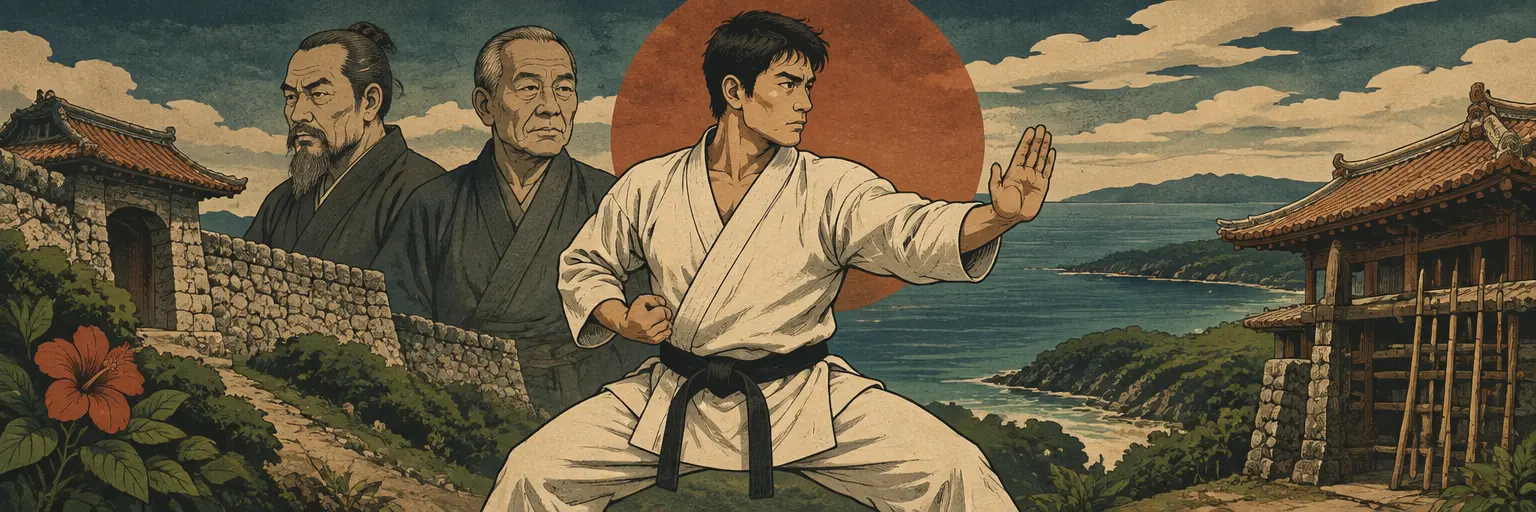
Welcome to the foundational chapter of karate’s history, where we trace its evolution from clandestine self-defense practices in the Ryukyu Kingdom to the globally revered martial art it is today. Here, you’ll uncover the deep cultural and philosophical currents that shaped early karate, explore the lives of the pioneering masters who codified its techniques, and understand how Okinawan roots continue to influence modern training. This subcategory is your gateway to the origins of te, tode, and karate-jutsu—a must-read for practitioners, historians, and enthusiasts seeking authentic knowledge beyond flashy modern adaptations. Delve into the historical context, weaponry connections, and the social fabric that made these early masters legends.
🥋 The Origins: From "Te" to "Tode" – The Precursors of Karate
Before karate bore its iconic name, Okinawan warriors practiced indigenous grappling and striking systems collectively called te (hand). This unarmed combat evolved under Chinese influence, particularly from Fujian province’s White Crane and Monk Fist styles, transforming into tode (Chinese hand). The synthesis of native Okinawan techniques with Chinese martial principles created a unique hybrid focused on practical efficiency, low stances, and devastating close-range strikes. Expect to learn how these early systems were shaped by the Satsuma domain's weapon bans, forcing civilians to develop empty-hand counters against armed samurai.
This foundational period also saw the rise of kata as a mnemonic device, encoding combat sequences for solo practice. Early masters like Kanga Sakukawa and Matsumura Sokon traveled to China, bringing back not just forms but philosophical attitudes toward combat and discipline. Understanding these roots reveals why karate today emphasizes hip rotation, tension-release dynamics, and natural breathing—elements directly inherited from its agrarian and aristocratic origins. For the modern student, this context enriches every kata practiced, turning each movement into a living repository of history.
🏯 The Social and Political Crucible: How the Ryukyu Kingdom Shaped Karate
The Ryukyu Kingdom’s strategic position as a maritime trade hub made Okinawa a melting pot of martial cultures. Chinese military attachés, Japanese swordsmen, and Southeast Asian fighters all contributed to the island’s combative knowledge. This period saw the formalization of training within noble classes, particularly the Peichin (warrior-scholars) who guarded royal officials. The political climate—alternating between Chinese tributary status and Japanese occupation—forged a culture of secrecy, where karate was taught only to trusted initiates, often in hidden groves or at dawn. Learn how this clandestine environment fostered practical self-defense over sport, prioritizing joint locks, throws, and vital point strikes.
Economic constraints also played a role, as commoners used everyday tools (sai, tonfa, nunchaku) as improvised weapons. These farming and fishing implements became extensions of the empty-hand system, and early masters integrated their handling into unified training. By understanding the socio-political pressures, you’ll appreciate why Okinawan karate emphasizes distance management and counters to weapons—a direct response to facing armored warriors. This context is vital for any practitioner seeking to apply karate’s techniques realistically in modern self-defense scenarios.
👴 The Foundational Masters: Itosu, Matsumura, and Higaonna
Three towering figures—Ankoh Itosu, Sokon Matsumura, and Kanryo Higaonna—are credited with systemizing early karate. Itosu, often called the “Grandfather of Modern Karate,” created simplified kata like Pinan (Heian) to teach karate to public school children, preserving techniques in an accessible format. Matsumura, a bodyguard to the Ryukyu king, traveled to China and blended Shaolin methods with indigenous te, refining the explosive Shorin-ryu style. Higaonna, meanwhile, traveled to Fuzhou to study Chinese Kenpo, developing deep breathing and heavy, powerful stances that formed Goju-ryu. Each master’s biography reveals distinct training methodologies, from Matsumura’s postal bojutsu to Itosu’s emphasis on repetitive solo drills.
These masters also codified the kihon (basics) that modern schools rely upon—proper stance alignment, chambering, and power generation. Their students later branched into famous styles like Shotokan (via Gichin Funakoshi) and Uechi-ryu (via Kanbun Uechi), proving that understanding the founders’ intent is crucial for authentic practice. By studying these early masters’ lives, you gain insight into their core philosophies: Itosu’s emphasis on discipline for youth, Matsumura’s pragmatic combat focus, and Higaonna’s internal strength development. This foundation enriches your appreciation of your own style’s lineage.
⚔️ Early Karate Kata: The Hidden Encyclopedias of Combat
Kata are more than choreographed sequences—they are living archives of self-defense applications (bunkai) against multiple attackers, grappling, and weapon defenses. Early Okinawan masters embedded practical techniques into these forms, using movements that were often misunderstood as mere dance. For example, the Sanchin kata of Goju-ryu focuses on isometric tension and deep breathing to build internal power, while Naihanchi of Shorin-ryu emphasizes horse stance and side-to-side movement for close-quarters fighting. Discover the hidden meanings behind stances, hand positions, and timing, and learn how each kata was a complete training system for its era.
Practicing these early kata with historical awareness transforms your understanding from simple repetition to combative interpretation. You’ll learn to spot joint manipulations within flowery hand movements, throws disguised in circling footwork, and strikes masked in deflections. This subcategory offers breakdowns of core kata’s origins, variations across styles, and documented bunkai from surviving lineages. Whether you practice Shotokan, Goju-ryu, or any derivative, recognizing these roots will elevate your ground-level technique and strategic thinking, making every session historically informed.
🌏 The Spread Beyond Okinawa: From Secret Practice to Global Phenomenon
Early 20th-century migration and cultural shifts brought karate from Okinawa’s shores to mainland Japan and beyond. Key figures like Gichin Funakoshi introduced karate to Tokyo in 1922, promoting it as a “Japanese” martial art to gain acceptance, while Chojun Miyagi traveled to China and Hawaii, spreading Goju-ryu internationally. This exportation required adaptation—sport-style rules, safer training, and political alignment—which sometimes diluted the original combat focus. Understand these transitions to distinguish between traditional Okinawan karate and later Japanese extrapolations, noticing differences in stance width, breathing cadence, and emphasis on makiwara punching vs. modern fitness.
The global expansion also sparked new innovations, such as Kyokushin’s full-contact sparring and Wado-ryu’s blending with jujutsu. However, the Okinawan roots remain the cornerstone, with styles like Uechi-ryu preserving closer to the original Chinese-influenced methods. This subcategory provides a timeline of this migration, including key tournaments, associations, and cross-cultural exchanges. For practitioners, understanding this spread answers common questions about why their style differs from another’s—and how to locate authentic Okinawan training if desired.
Frequently Asked Questions
What is the difference between Okinawan karate and Japanese karate?
Okinawan karate emphasizes natural stance, short power generation, and direct self-defense, often with higher hips and circular movements. Japanese karate, influenced by Funakoshi, is more linear, with deep stances and a sportive focus. Okinawan styles retain older kata names and bunkai, while Japanese reorganized them into standardized, educational forms.
Who is considered the father of modern karate?
Gichin Funakoshi is often called the father of modern karate for bringing it to Japan and establishing Shotokan style. However, Ankoh Itosu is equally credited for systemizing kata and promoting karate in Okinawan schools. Both are foundational, but their contributions differ—Itosu for content, Funakoshi for dissemination.
Why did Okinawans practice karate in secret?
Under Satsuma samurai rule (1609-1879), Okinawans were banned from carrying weapons. Karate developed as a covert self-defense system, taught only to trusted students to avoid suppression. Secrecy protected practitioners from persecution and preserved the art’s effectiveness against armed attackers.
What is the significance of Sanchin kata?
Sanchin kata builds isometric tension, correct posture, and abdominal breathing to develop internal power (ki). It was central to Goju-ryu and Uechi-ryu, promoting mental focus and structural integrity. Practicing Sanchin enhances striking stability, body conditioning, and resilience against blows.
How can I find authentic Okinawan karate training?
Seek dojos that explicitly identify as “Okinawan,” often under styles like Shorin-ryu, Goju-ryu, or Uechi-ryu. Look for lineage to known masters such as Itosu or Higaonna. Authentic training emphasizes kata bunkai, makiwara striking, and conditioning—rather than sport sparring—and often includes history in regular classes.