LongRange Fajin Techniques and Training in Chen Style Tai Chi
🌟 Discover the secrets of Chen style fajin range, a powerful aspect of Tai Chi that combines explosive energy with deep internal…
Read article

Unlock the hidden power of Chen Style Tai Chi Chuan through the transformative practices of Silk Reeling (Chan Si Jin) and Fajin (explosive power)—the very essence of this dynamic internal art. Unlike the slow, flowing movements seen in other styles, Chen Style’s coiling, spiraling body mechanics generate a continuous, whole-body connection that feels like winding thread through silk, yet delivers devastating, whip-like strikes on demand. By mastering Silk Reeling, you train every joint to open and close in a precise, sequential wave, building a flexible yet rooted structure that channels energy from the ground up. Then, Fajin transforms that relaxed, gathered energy into sudden, explosive bursts—a signature of Chen Style that blends deep relaxation with ferocious, penetrating force. Whether you’re a seasoned martial artist or a curious practitioner, these core principles improve balance, coordination, and internal power while offering a profound path to mind-body unity. Dive into the intricate footwork, waist-led turns, and spiraling torque that make Chen Style both a meditative practice and a formidable combat system.
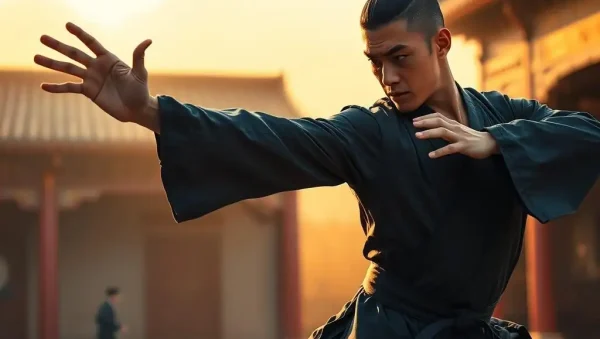
🌟 Discover the secrets of Chen style fajin range, a powerful aspect of Tai Chi that combines explosive energy with deep internal…
Read article
🌟 Discover the dynamic world of Fajin Chen Tai Chi movements, exploring how shake, stamp, and explode techniques embody the martial art’s…
Read article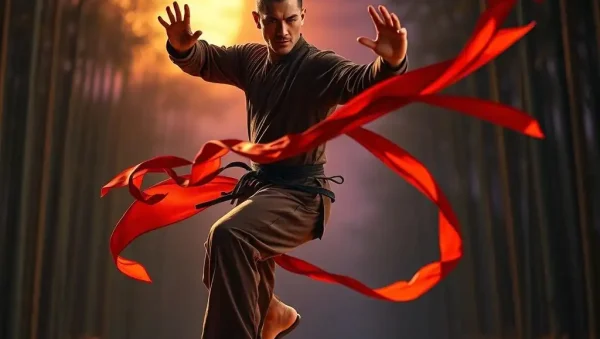
🌟 Unlock the secrets of Double Hand Silk Reeling to enhance your Chen Tai Chi power flow, integrating smooth, coordinated movements that…
Read article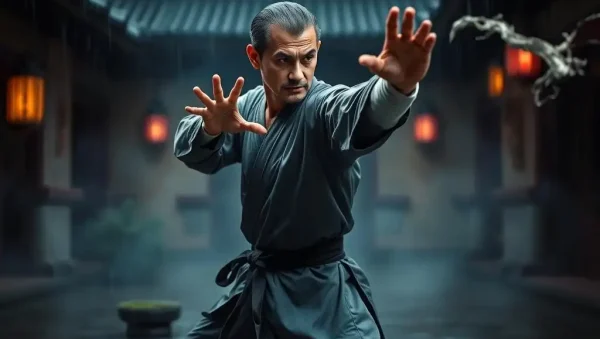
💥 Unlock potent self-defense with Chen style silk reeling fajin. This article explores how integrating these powerful techniques creates devastating yet controlled…
Read article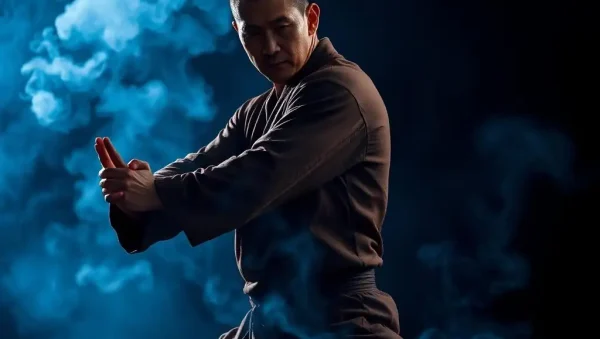
🌟 Discover the wisdom of legendary Chen Tai Chi masters as they reveal profound insights into Chen Tai Chi silk reeling and…
Read article
🔥 Discover how Chan Si Jin (Silk Reeling) directly enhances the Chen style fajin technique, unlocking explosive power and fluidity. This foundational…
Read article
🌟 Explore the fascinating world of Chen Tai Chi spiraling energy, a core concept that unlocks the transformative power of martial arts.…
Read article
🌟 Discover how Chen Tai Chi's silk reeling embodies more than just circular motions—it's the core of connected power, emphasizing Chen Tai…
Read articleWelcome to the definitive guide on Chen Style Tai Chi Chuan, focusing on the twin pillars of this ancient martial art: Silk Reeling (Chan Si Jin) and Fajin (explosive power). This subcategory dives deep into the biomechanics, historical context, and practical applications that distinguish Chen from other Tai Chi styles. Whether you are a beginner curious about internal power or an advanced practitioner refining your strikes, this page equips you with the knowledge to transform slow, meditative movements into devastating, lightning-fast force—while preserving the art’s core principles of relaxation and precision.
Silk reeling is the continuous, spiral-like rotation of the entire body—from feet to waist to fingertips—that generates and transmits internal force. In Chen Style Tai Chi, every movement is a combination of concentric and eccentric spirals, mimicking the twisting of silk threads from a cocoon. This technique trains coordination of the whole body, ensuring that power originates at the ground and flows upward without interruption, creating a whip-like effect in the limbs.
Practicing silk reeling improves joint mobility, tendon strength, and proprioception, making it essential for health and martial efficiency. You will learn to distinguish between obvious external movement and the subtle internal rotation of the dantian (energy center). Expect drills that build a foundation for more advanced grappling, joint locks, and strikes, as these spirals are the core mechanism behind Chen’s agility and adaptability in combat.
Fajin is the sudden, focused discharge of stored kinetic energy, culminating in a short, sharp strike, throw, or push. Unlike brute muscle force, Chen’s fajin relies on relaxation, body alignment, and the explosive coordination of the entire frame. The power is generated by a rapid contraction of the legs and waist, driven by the ground reaction force, and transmitted through the spine to the strike point—often accompanied by a distinctive “kua” (hip) drop and a hissing exhale.
This subcategory breaks down the six types of fajin (e.g., up, down, forward, backward, left, right) and teaches you how to practice safely. You will explore partner drills to test your power distribution, learn to accelerate and decelerate quickly, and master the crucial recoil phase that prevents injury. Expect practical guidance on integrating fajin into forms and applications, transforming sluggish movements into explosive, combat-ready techniques.
Silk reeling is the engine, and fajin is the spark. Without continuous spiral rotations, fajin becomes stiff and easily countered. Conversely, without fajin, silk reeling lacks martial application. This section outlines step-by-step training protocols that link the two: starting with slow, relaxed silk reeling loops to build internal pathways, then gradually adding speed and power until explosive release is smooth and effortless.
You will learn drill progressions such as single-hand silk reeling, double-hand figures, and stepping variations. Emphasis is placed on breathing synchronization—inhale during gathering, exhale during release—and on maintaining the “sung” (loose) state even under tension. The guidelines also include common mistakes to avoid, like over-tensing the shoulders or collapsing the knees. By the end, you will have a self-correcting framework to refine your practice daily.
The efficacy of silk reeling and fajin rests on precise biomechanics. This H3 section demystifies the structural alignment of the feet (weight distribution), knees (soft but stable), pelvis (tucked or neutral), and head (suspended upward). You will understand how the spiral chain of movement—from the sole of the foot through the tibia, femur, sacrum, vertebrae, and scapula—creates a seamless torque that multiplies force exponentially.
We dissect the role of the kua (hip crease) as a central pivot, explaining how to open and close it for maximum power transfer. Additionally, you’ll explore fascial elasticity and how the body’s connective tissues store and release energy like a coiled spring. This knowledge is not just theoretical; it prevents chronic injuries common to high-impact training. Expect actionable cues for real-time adjustments during form practice.
Beyond solo forms, these skills translate directly into self-defense, push hands, and sparring. This section provides practical scenarios where silk reeling neutralizes an opponent’s force by redirecting it into spirals, and fajin delivers a decisive counterattack. You will learn how to “stick and adhere” (Zhan Nian) to an attacker, using the spiral reeling to unbalance them, then apply fajin into a joint, a vital point, or a throw.
We include partner drills that simulate real encounters, such as resisting a straight punch, deflecting a grab, or countering a body slam. Attention is given to timing—knowing when to sink and absorb versus when to explode—and to distance management to maximize strike efficiency. The goal is to show that Chen’s slow façade belies a viciously effective martial system, applicable for both classic forms and modern street defense.
Chen style Tai Chi originates from the Chen Village, Henan Province, with a lineage tracing back to Chen Wangting (1580–1660), who combined martial arts with Daoist meditation and traditional Chinese medicine. Unlike other Tai Chi styles that emphasize pure relaxation, Chen Wangting integrated fast and slow movements, explosive fajin, and sophisticated silk reeling to create a martial art suited for battlefield survival. This section explores the philosophical underpinnings—Yin-Yang balance, the water-like yielding, and the concept of “four ounces deflecting a thousand pounds.”
We profile key masters from Chen Fake (1887–1957) to Chen Zhenglei, who codified modern teaching methods. Understanding this heritage helps practitioners respect the art’s roots while adapting to modern contexts. The historical context enriches your practice, transforming abstract movements into a living tradition. Expect an inspiring narrative that connects internal power to spiritual cultivation.
In Chen style, silk reeling is more pronounced, involving full-body spirals with dynamic changes in speed and tension. Other styles, like Yang, use smaller, subtler rotations embedded in slower movements. Chen emphasizes concentric and eccentric torque for martial application, whereas others may prioritize health and relaxation, though the underlying principles are shared.
Yes, but it’s crucial to start with basic silk reeling and stationary body alignment. Fajin requires a relaxed structure to safely generate explosive force. Begin with low-impact, guided drills under a qualified instructor, and advance gradually. Practice daily for 10-15 minutes to develop neuromuscular coordination before attempting full-speed releases.
Most practitioners notice foundational fajin in 6-12 months of consistent practice, but refined, applicable power often takes 3-5 years. Progress depends on training frequency, body awareness, and quality of feedback. The key is patience—never force power; instead, focus on relaxation and mechanical efficiency, letting the speed emerge naturally from silk reeling.
Yes, if done improperly. Common risks include knee strain from misalignment, shoulder impingement from tensing, and lower back injuries from incorrect hip movement. Always warm up, keep joints soft, and avoid hyperextension. Practice under supervision initially, and listen to your body—sharp pain is a warning sign to adjust technique.
Absolutely. Silk reeling redirects an attacker’s momentum, enabling you to unbalance larger opponents. Fajin strikes target soft tissue and joints, delivering devastating, short-range power without telegraphing. However, effective use requires live scenario training. Combine these skills with footwork and awareness to handle realistic threats, rather than assuming forms alone will suffice.







