The Risky Business of HighFlying Kicks: A Strategic Kyorugi Analysis
💥 Master the art of the aerial assault. Our strategic highflying kick analysis reveals the calculated risks and rewards, offering vital insights…
Read article

Master the art of Olympic-style combat with Taekwondo sparring (Kyorugi) techniques and strategy, where explosive speed meets tactical precision. This dynamic discipline transforms raw athleticism into devastating kicks, lightning-fast counters, and ring control that outsmarts opponents before they even strike. From the classic roundhouse (dollyo chagi) to the back kick (dui chagi), learn how to chain combinations, manage distance, and read your rival’s footwork to seize every scoring opportunity. Whether you’re a beginner building your first pattern or an advanced competitor refining your clinch escapes and angle attacks, this guide breaks down footwork drills, head-hunting setups, and point-fighting psychology used by world champions. Unlock the secrets to dominating the ring with agility, timing, and relentless pressure—perfect for tournament fighters, fitness enthusiasts, and self-defense practitioners alike. Elevate your game with proven strategies for counter-attacking, faking, and closing the gap, while mastering the sport’s unique scoring rules to maximize every bout. Step onto the mat with confidence and make every move count.
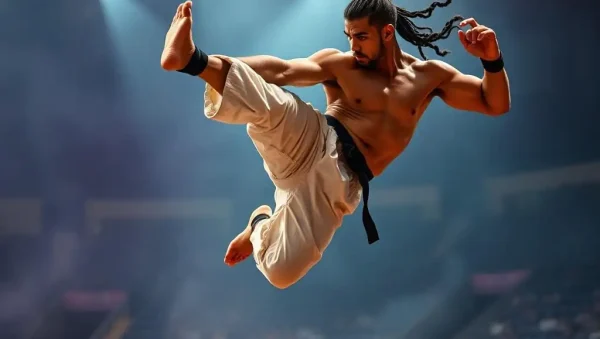
💥 Master the art of the aerial assault. Our strategic highflying kick analysis reveals the calculated risks and rewards, offering vital insights…
Read article
🥋 Elevate your combat skills with advanced Taekwondo sparring footwork techniques, essential for gaining agility, timing, and precision. Mastering these patterns unlocks…
Read article
🥋 Selecting the right Hogu chest protector kyorugi is crucial for optimal safety and performance. Explore key factors like fit, material, and…
Read article
🥋 Mastering effective defensive footwork techniques martial arts enhances your ability to evade attacks and seize counterattack opportunities. Explore proven strategies to…
Read article
🥋 Discover essential Taekwondo sparring counterpunching techniques that can turn the tide in your matches. Mastering these tactics enhances your defensive skills…
Read article
🥋 Master the art of Kyorugi with precise counter timing techniques. Learn how the perfect moment can turn defense into decisive victory,…
Read article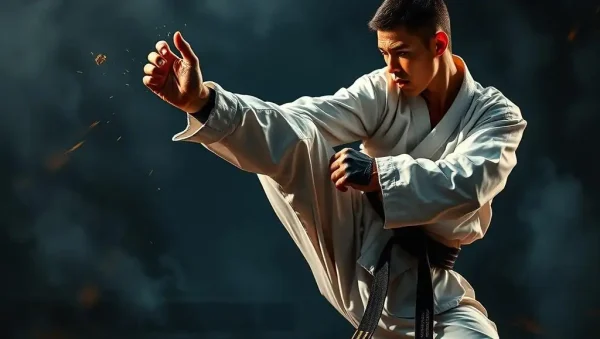
🥋 Master the art of Taekwondo kick defense techniques with our comprehensive guide, designed to help practitioners effectively counter specific kicks, enhance…
Read article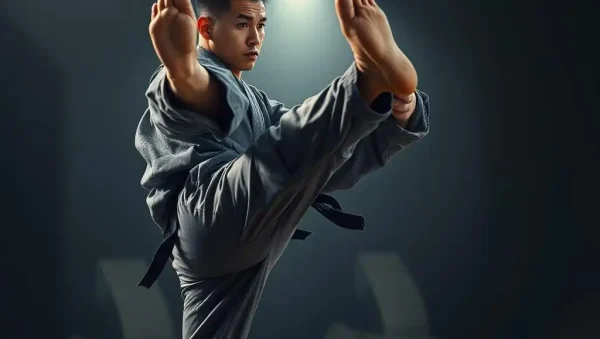
🎯 Master effective Taekwondo sparring targeting techniques. Learn where to aim your kicks for maximum impact, ensuring victory by understanding the art…
Read articleWelcome to the dynamic world of Taekwondo Sparring (Kyorugi), the competitive heartbeat of this Korean martial art. At MartialArtsMastery.org, we break down the fast-paced, point-based combat system into digestible, actionable insights. Whether you are a white belt preparing for your first match or a black belt refining tournament tactics, this subcategory delivers a cornerstone of practical application. Here, you will move beyond patterns (poomsae) and discover the explosive footwork, timing, and counter-attacking mindset that defines Olympic and traditional sparring. Expect a deep dive into scoring rules, distance management, and the psychological edge needed to outmaneuver any opponent.
In Kyorugi, not every strike earns points. You must master exact legal targets and scoring values to maximize every exchange. The trunk protector (hogu) awards one point for a valid punch, two for a basic kick, and three for a turning kick like a back kick or spinning hook kick. A head kick scores three points, while a turning head kick scores four. Punches to the head are prohibited, so your hands are for targeting the torso and breaking opponent balance.
Your training regimen must prioritize chambering mechanics and hip rotation to generate power for roundhouse (dollyo chagi), push (mireo chagi), and axe kicks. Accuracy is non-negotiable: a kick that grazes the hogu often yields a warning, not a point. Practice shadow-sparring with focus mitts, emphasizing clean contact and immediate snap-back. Veteran coaches stress that a slight angle change—stepping off the center line—creates the opening for a high-scoring rear-leg head kick.
Before throwing a single technique, elite sparring is won with positional dominance. The ring is a chessboard, and your footwork dictates control. Use constant lateral movement (skipping, shuffling, and sliding) to prevent your opponent from setting a stable stance. Control the center of the ring for superior angles, force them into corners, and attack their lead leg’s blind spots. Master the "step-back” and “step-in” rhythms to bait attacks and then close distance instantly.
Distance is measured in three zones: out of range (safety), closing range (where you can land a cut kick), and pocket range (where hand techniques and short kicks work). A cutting side kick to the hip disrupts an opponent’s timing, allowing you to transition to a rear-leg roundhouse. Never stay static; even a half-second of stillness invites a flying back kick. Drill ladder drills and cone patterns to build reflexive foot speed that feels second nature under pressure.
The highest-level Kyorugi is a game of provocation and punishment. Instead of charging in, elite fighters use feints (head and foot fakes) to draw a reaction, then exploit that committed motion. The classic counter is a slide-back cut kick to the hogu as your opponent steps forward with a roundhouse. Alternatively, practice the "switch kick" counter: when they attack with a lead-leg kick, you pivot and land your rear-leg roundhouse to their exposed ribs. Timing beats speed—perfect the pause after their miss.
Combination chains are your offensive backbone. Beginner combos like lead leg cut kick → rear roundhouse → clinch are reliable, but advanced patterns mix levels: low roundhouse (to leg) → mid-roundhouse (hogu) → high head kick. Crucially, every combination must end with an explosive exit, either via a push kick or a lateral skip, to avoid being caught in a trap. Use partner drills where one person attacks, and the other focuses solely on counter sequences, then swap roles to internalize both workflows.
Sparring is a psychological war of attrition. Before engaging, analyze your opponent’s stance—are they orthodox, southpaw, or bladed? Do they favor head kicks, or do they rely on punches? Early rounds are for data collection: throw probing attacks to see their panic response. If they tend to close their eyes and backpedal, press with high kicks. If they counter aggressively, bait them into overcommitting. The strategic principle of economy of motion means you never waste energy on showy moves; every step serves a purpose.
Ringcraft also involves playing the rules. Know that world taekwondo requires at least one kick attempt every five seconds, and passive fighting earns a "Gam-jeom" (deduction). Learn to use the tie-breaker rule: if scores are equal, the competitor with the most technical points wins. Thus, prioritize quality over quantity. During the final round, if you lead, shift to defensive counter-attacking; if you trail, increase volume and target the head for bonus points. Visualization before the match—rehearsing your top three combos—calms nerves and primes muscle memory.
Effective Kyorugi training blends live sparring, reaction drills, and conditioning. Begin every session with partner-based "tap drills" where one holds a glove and attacks without power while the other practices counters. Add a timer to simulate round pressure. Condition your legs for high kicks through resistance band work and high-rep kicks on each side. For endurance, perform 3-minute rounds of continuous footwork with 1-minute rests, mirroring actual match intervals. Plyometrics (box jumps and hurdle hops) build the explosive power needed for jumping and spinning kicks.
Sparring etiquette is non-negotiable. Always bow to your partner and the referee before engagements. Control your power—in class, the goal is technical precision, not injury. Wear full protective gear: mouthguard, hand and foot pads, shin guards, and a head protector when training. In competition, never touch your opponent after the bell, and respect the referee’s decisions. Post-match, review video footage to identify patterns—did you drop your hands after a kick? Did you fail to exit after a combo? Honest self-analysis is the fastest route to advancement.
Most dojangs require at least a yellow or green belt (8th–6th geup) before entering simulated or low-contact sparring. For sanctioned tournaments, you typically need a blue belt (4th geup) and above, plus proof of safe sparring experience. Adults and children have separate weight and age divisions, and all competitors must pass a physical and equipment check. Always consult your instructor’s syllabus and local federation rules for exact thresholds.
Under traditional World Taekwondo (WT) rules, Olympic-style matches consist of three two-minute rounds with a one-minute rest between rounds. If scores are tied after three rounds, a fourth "Golden Point" round is held, where the first point scored wins. Some local or junior tournaments modify this to two rounds of 90 seconds or use a continuous single round for time efficiency. Always check the specific ruleset for your event before competing.
Yes, but with restrictions. A straight punch to the trunk protector (the covered torso area) awards one point. However, arm strikes to the head are strictly prohibited, as are various grappling techniques like joint locks and throws. Effective hand techniques are used to set up kicks, stagger an opponent, or create distance. Be sure to close your fist properly and make contact with the front two knuckles only for legal scoring.
Mandatory gear includes a WT-approved hogu (trunk protector), head protector (for events sanctioning head contact), mouthguard, shin guards, forearm guards, and optional hand and foot pads (if allowed by the promotion). A groin protector for men and a chest protector for women are typically required. In training, similar gear is used but may exclude the head protector in light-contact drills. Ensure all equipment fits snugly to avoid penalties for loose attire.
Nervousness is a sign of readiness—your body is priming for action. Channel that energy through breathing exercises (4-second inhale, 6-second exhale) and dynamic stretching to release tension. Visualize your opening combination, repeating it mentally until it feels boring. During the first 10 seconds of the match, focus on your footwork only, not on your opponent’s threats. Remember that referees prioritize safety, and every point you land builds confidence. Consistent pre-match routines, like listening to a specific song or wearing a lucky talisman, also anchor calmness.







