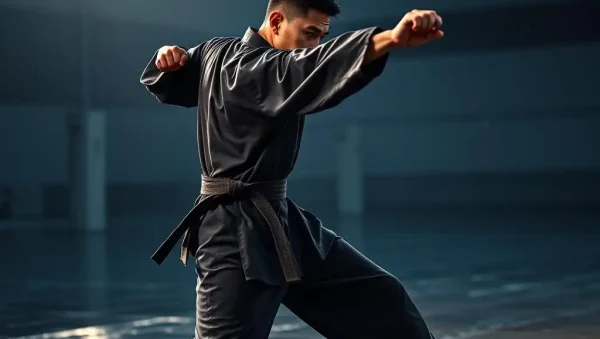
Hapkido: The Art of Coordinated Power – Joint Locks, Throws, and Strikes
Hapkido is a dynamic and comprehensive Korean martial art that emphasizes fluid, circular movements to redirect an opponent’s energy, blending powerful joint locks, sweeping throws, and precise strikes into a seamless self-defense system. Unlike rigid linear styles, Hapkido trains practitioners to adapt instantly, using an attacker’s momentum against them. For those exploring Individual Martial Arts Styles, Hapkido offers a practical, holistic path that integrates grappling, striking, and even pressure-point techniques, making it ideal for real-world scenarios and personal mastery.
🔒 The Core of Joint Locks: Precision and Control
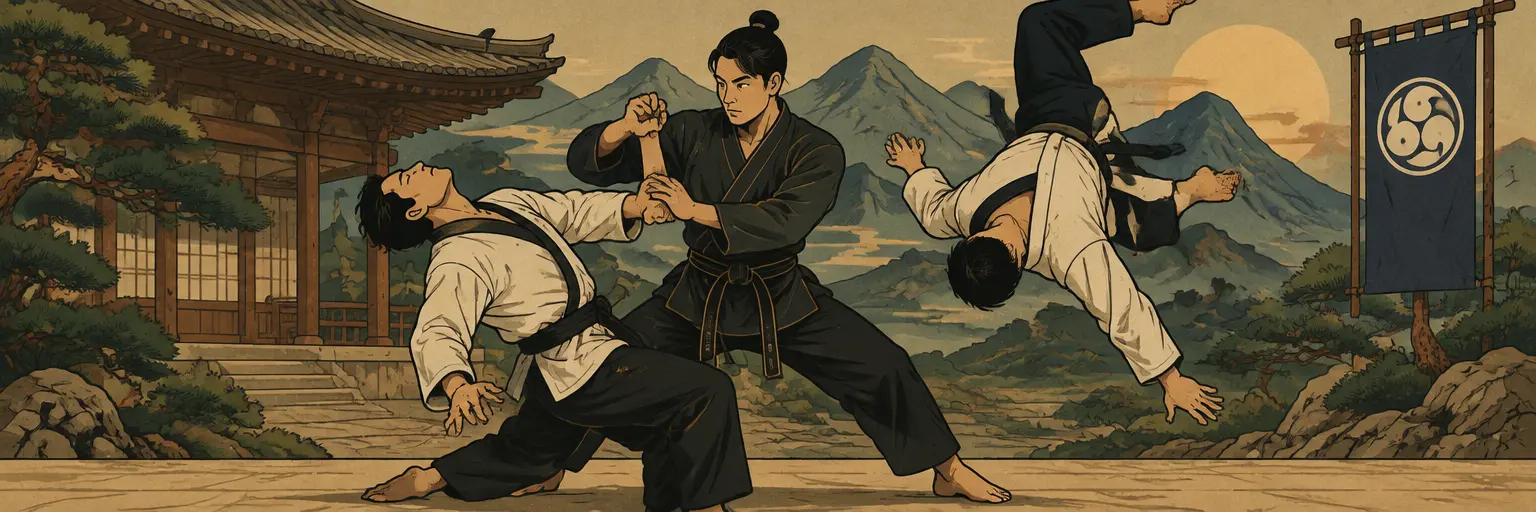
Joint locks in Hapkido are not just about pain compliance; they are about anatomical leverage, controlling an opponent’s wrist, elbow, shoulder, or knee through precise angles and rotational pressure. These techniques, known as kwanjul kki, teach you to neutralize aggression without causing permanent damage, making them perfect for law enforcement or civilian defense. You’ll learn to apply locks from standing, kneeling, or even lying positions, often transitioning directly into throws or follow-up strikes for full tactical superiority.
What sets Hapkido’s joint locks apart is their dependency on circular motion, not brute strength. A smaller practitioner can effortlessly subdue a larger attacker by flowing with the limb’s natural range of motion and then locking it into an unnatural angle. Expect to drill wrist rolls, elbow spirals, and shoulder manipulations repeatedly, developing a tactile sensitivity that lets you “feel” the break in balance before your opponent does. These skills translate directly into other grappling arts like Aikido or Jujitsu, enriching your overall martial arts vocabulary.
🌀 Throws and Sweeps: Redirection and Momentum
Hapkido throws, or deonjigi, are a beautiful blend of physics and timing, using the attacker’s forward momentum to unbalance them and send them crashing to the mat. Unlike Judo’s hip throws, Hapkido prefers foot sweeps, leg reaps, and body drops that require minimal effort and maximal efficiency. You’ll practice entry steps that place you safely off the line of attack, then use a hip or shoulder as a fulcrum to rotate your opponent’s entire body weight into the ground. This isn’t about strength but about precision placement of your feet and hips.
Each throw is designed to end with a controlling pin or an immediate finishing strike, because Hapkido never assumes the fight ends at the floor. Expect to learn falling techniques (nakbeop) first, ensuring you can break fall safely before executing full-speed throws. From wrist grabs to bear hugs or even knife attacks, your throwing repertoire will become a defensive shield, turning any physical confrontation into a controlled, decisive event. This section is crucial for self-defense practitioners who want practical, no-nonsense takedowns.
👊 Strikes: The Brutal Efficiency of Hapkido’s Offense
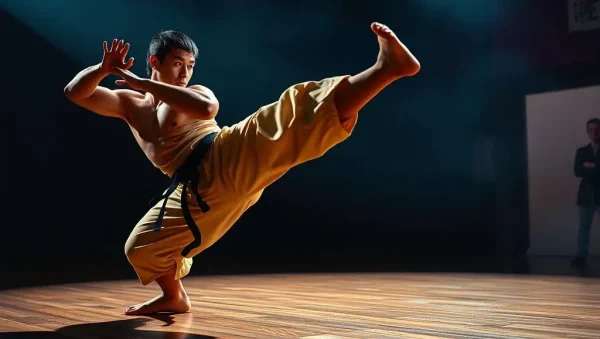
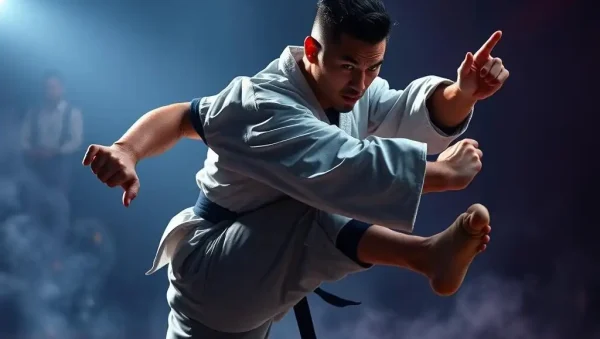
While locks and throws are signature, Hapkido’s strikes (jireugi and chagi) are brutally efficient, targeting vital points like the eyes, throat, groin, and knees with short, explosive movements. Unlike karate’s linear punches or taekwondo’s high kicks, Hapkido strikes often originate from the same circular motion as its locks, making them unpredictable and hard to block. You’ll learn palm-heel strikes, knife-hand chops, elbow smashes, and low, snapping kicks aimed at destabilizing rather than showboating.
What makes Hapkido striking unique is its integration with grappling: a punch can immediately morph into a wrist lock, or a kick can set up a throw. Training includes heavy focus on muscle memory for close-quarter combat, where fists and feet are used to create openings for the clinch. Over time, you’ll develop explosive power through hip rotation and breath control (hohup), enabling you to deliver devastating blows that are still controlled enough for sparring with safety gear. For athletes transitioning from striking styles, this adds a critical new layer of offensive and defensive responses.
🌀 Circular Motion and the Principle of Non-Resistance
At its philosophical heart, Hapkido teaches non-resistance (yu) and water-like adaptability, echoing Taoist principles of yielding to overcome. Every joint lock, throw, and strike begins with circular deflection—instead of blocking a punch, you redirect it with a spiral wrist motion or a subtle body shift, using the attacker’s own energy to unbalance them. This principle, known as won (circle), is visually apparent in techniques like the “eight-directional throw” or “circling wrist lock,” making Hapkido one of the most elegant martial arts to watch and practice.
Training your mind to think in circles rather than straight lines changes how you approach conflict entirely. You’ll start noticing that pressure points align naturally with a circular twist, and that a linear kick can be turned into a sweeping arc. The breath work (danjeon breathing) used in Hapkido enhances this fluidity, keeping your body relaxed yet explosive. This holistic approach not only improves physical skill but also builds mental calmness, teaching you to stay centered under chaos—a vital trait for any martial artist or life in general.
🛡️ Practical Self-Defense: Integrating Locks, Throws, and Strikes
Hapkido self-defense (hoshinsul) is the ultimate test of your combined skills, covering realistic scenarios like wrist grabs, chokeholds, headlocks, and knife or club attacks. Unlike sport-focused arts, Hapkido has zero rules in application, encouraging strikes to eyes or groin followed by a lock or throw to escape quickly. You’ll practice “what-if” drills in pairs, learning to respond instinctively within fractions of a second, often ending with a wrist lock that forces the weapon to drop or an elbow control that leads to a takedown.
Each defense technique is modular, meaning you can swap a strike for a lock or a throw for a sweep depending on momentum. This adaptability is key, because real attacks are chaotic and unpredictable. Your curriculum will include defense against grabs from behind, multiple attackers, and even ground survival, ensuring you are never caught off guard. By mastering the blend of offense and defense, Hapkido empowers you with unshakable confidence, knowing that your body has become a versatile tool for safety—both for yourself and your loved ones.
Frequently Asked Questions
Is Hapkido effective for real street self-defense?
Yes, Hapkido is highly effective because it trains for unpredicted attacks, including grabs, weapon threats, and multiple opponents. Its core philosophy of redirecting an attacker’s energy works regardless of size or strength, and you’ll practice realistic scenarios regularly. However, like any martial art, effectiveness depends on consistent training and sparring, but the techniques are battle-tested.
Do I need to be flexible or strong to start Hapkido?
No, Hapkido accommodates all fitness levels. Joint locks and throws rely on leverage, not brute force, so beginners learn proper body mechanics first. Flexibility improves gradually through stretching routines, and striking strength develops with technique. Many instructors adapt techniques for older or less athletic students, making it accessible for everyone.
How long does it take to earn a black belt in Hapkido?
Typically, it takes 3 to 5 years of consistent practice (training 2–3 times weekly) to reach first-degree black belt. Progression depends on your instructor’s curriculum and your own dedication. Unlike some schools, Hapkido black belts demonstrate practical competence in locks, throws, strikes, and self-defense, not just memorization of forms.
Can Hapkido be combined with other martial arts like BJJ or Muay Thai?
Absolutely. Hapkido’s strikes and throws complement ground arts like BJJ by helping you avoid being taken down, and its joint locks you to transition into submissions. Muay Thai’s clinch can feed into Hapkido’s throws. Many mixed martial artists use Hapkido for self-defense and fluidity, though sport rules require adaptation.
What is the difference between Hapkido and Aikido?
Both use circular motion and joint locks, but Hapkido includes much stronger striking (punches, kicks, knees) that Aikido lacks. Hapkido also emphasizes fast, aggressive counterattacks, while Aikido often focuses on peaceful resolution and pinning. Hapkido is more “street-ready,” while Aikido is more philosophical and movement-based.