The Impact of Armor on Longsword Techniques: A HEMA Deep Dive
🛡️ Discover how HEMA longsword armor techniques transformed combat, emphasizing adaptability and precision. This deep dive reveals the historical significance and practical…
Read article
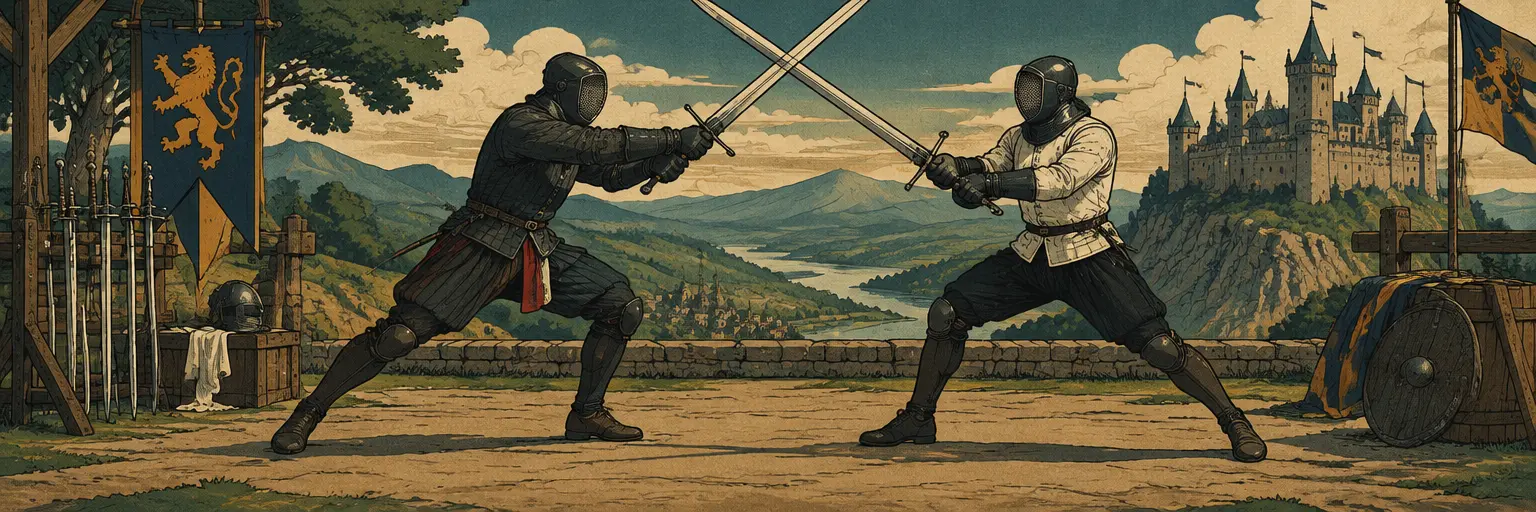
Step into the world of Historical European Martial Arts (HEMA), where the longsword reigns supreme as the quintessential weapon of medieval and Renaissance Europe. This isn’t just about swinging steel—it’s a living history that revives centuries-old fighting systems from master manuals like those of Johannes Liechtenauer and Fiore dei Liberi. Through meticulous study, you’ll learn precision footwork, timing, and wrestling-style close-quarters techniques that make longsword fencing both an athletic challenge and an intellectual puzzle. Whether you’re a complete beginner or a seasoned martial artist, the art teaches you to blend attack, defense, and counter seamlessly, using the weapon’s unique two-handed leverage for devastating cuts, thrusts, and guards. Beyond physical skill, HEMA offers a deep dive into medieval history, dueling culture, and the philosophy of honor and restraint encoded in each play. With modern, safe training gear and a global community of enthusiasts, you’ll engage in full-contact sparring that tests your reflexes and decision-making under pressure—all while preserving an authentic European martial heritage.
🛡️ Discover how HEMA longsword armor techniques transformed combat, emphasizing adaptability and precision. This deep dive reveals the historical significance and practical…
Read article
🗡️ Discover what awaits you at your first HEMA longsword tournament with our comprehensive beginner guide, designed to introduce new practitioners to…
Read article
🗡️ Explore the fascinating world of longsword tournaments, where Pas d'Armes and judicial duels showcased martial prowess and chivalry, highlighting the long…
Read article
⚔️ Master HEMA historical defensive techniques to dominate the bind. Learn crucial counter-attacks and parries to survive the nach, turning your opponent's…
Read article
⚔️ Dive into the heart of historical combat with MartialArtsMastery.org's exploration of Liechtenauer longsword fencing principles. Discover the foundational techniques and strategic…
Read article
🥋 Mastering the HEMA longsword footwork technique is essential for effective offense and defense. A solid foundation in footwork enhances mobility, balance,…
Read article
⚔️ Unlock the secrets of authentic combat. Our guide meticulously reconstructs historical longsword drills from fechtbücher, offering precise techniques to master this…
Read article
🗡️ Explore how medieval longsword fencing tactics shaped modern martial arts, revealing strategic principles and techniques that continue to influence contemporary swordsmanship,…
Read articleWelcome to the definitive resource for Historical European Martial Arts (HEMA), specifically focusing on the iconic longsword fencing. This subcategory of Individual Martial Arts Styles is your gateway to understanding the sophisticated combat systems of medieval and Renaissance Europe. Here, we transcend Hollywood myths to explore the documented techniques of masters like Johannes Liechtenauer and Fiore dei Liberi. Prepare to dive into a world of precise footwork, powerful strikes, and tactical grappling, all rooted in historical treatises. Whether you are a beginner or a seasoned fencer, this guide provides essential knowledge for your martial journey.
The German school, epitomized by the Liechtenauer tradition, is the most widely practiced longsword system today. Originating in the 14th century, it emphasizes versatility, aggression, and the concept of "Vor" (initiative). You will learn the "Five Master Cuts" (Oberhau, Unterhau, Zornhau, Schielhau, and Krumphau), which serve as the core offensive and defensive actions. This system is not about brute force; it’s about using leverage, timing, and geometric angles to defeat an opponent. Expect to study the "Zettel" (the cryptic mnemonic verses) and their practical interpretations, which form the backbone of modern HEMA practice.
Our content goes beyond basic movements, breaking down the philosophy of the "Fechtschule" (fencing school). You will discover how guards like Vom Tag (from the roof) and Ochs (ox) set up defensive and offensive opportunities. We analyze historical manuals, comparing translations and interpretations to help you understand the context of each technique. This foundation is crucial for anyone serious about authentic historical combat, as it connects physical practice with the intellectual study of primary sources.
Shifting south to Italy, we explore the Fior di Battaglia (Flower of Battle) by Fiore dei Liberi, a 15th-century master-at-arms. Unlike the German focus on cutting, Italian longsword emphasizes set plays, grappling, and a defensive posture with the "posta" (guards). You will learn the "Four Masters" of defense and the intricate "remedies" (counter-techniques) that follow every action. This system is highly adaptive, teaching you to flow between striking, binding, and throwing your opponent to the ground, reflecting a more holistic view of personal combat.
We dissect Fiore's detailed illustrations, explaining the cross-guard binds (e.g., "bicorno") and leverage points that make his system so effective. Expect practical breakdowns of "plays" (technique sequences) that start from a specific guard and conclude in a disarm or a lethal strike. Our tutorials focus on the transition from swordplay to close-quarters combat, a defining feature of Italian longsword. By understanding the "tutte le arti" (all the arts), you gain a comprehensive skill set that is both historical and brutally effective.
Proper equipment is non-negotiable in HEMA. Our guides cover everything from fencing masks with back-of-head protection to heavy-duty gloves that safeguard your hands, which are prime targets. We recommend using steel feder swords for sparring, designed to flex upon impact, and synthetic trainers for drilling. You will learn how to choose the right gear based on your budget and training intensity, ensuring safety without sacrificing mobility. We also emphasize the importance of a good gambeson (padded jacket) and groin protection, as they are essential for absorbing heavy blows.
Beyond equipment, we instill critical safety protocols for solo and partner drills. This includes establishing "bouts" with clear control, using calibrated striking force, and always checking your gear before engaging. Our content addresses common training injuries—like wrist sprains and bruises—and how to prevent them through proper warm-ups and technique. By prioritizing safety, you can train consistently for years, enjoying the rich practice of longsword without risking long-term damage. We are your partners in creating a sustainable, injury-free martial arts hobby.
The heart of HEMA lies in interpreting original manuscripts. We provide step-by-step methodologies for reading and deconstructing these documents. This involves identifying the key terminology—such as "zornhau" (wrath cut) or "punta falsa" (false point)—and cross-referencing multiple translations to clarify ambiguous techniques. You will learn to visualize the movements from static images and understand the importance of context clues, like foot positioning and weapon orientation. Our tutorials teach you how to recreate a play from a manual, test it in sparring, and refine your interpretation based on historical plausibility.
We also highlight the challenge of historical interpretation, discussing how different scholars and clubs approach the same source. By comparing the "glosses" (commentaries) of later masters like Joachim Meyer (16th century), you see how longsword evolved over time. This critical thinking skill is what separates a HEMA practitioner from a mere martial artist. Our goal is to empower you to become an independent researcher, capable of unlocking the secrets of any manual you encounter. Start with the classics and grow your library with confidence.
Longsword is a game of distance and tempo, not just blade clashes. We break down the fundamental footwork patterns—the "passing step," "changing step," and the "gathering step"—that allow you to control the engagement zone. You will learn how to create "measure" (distance) to strike safely, and how to "break measure" to escape a bind. Our drills emphasize smooth weight transfer and maintaining your guard position while moving, which is critical for both attack and defense. Mastering these fundamentals transforms you from a static striker into a fluid, dynamic fencer.
Timing is the invisible weapon. We teach you how to recognize and exploit phases of the exchange—the "preparation," "execution," and "recovery" of an opponent's action. By practicing "tempo drills", you learn when to strike (during their preparation) and when to counter (after their missed blow). This deep understanding of proactive vs. reactive fencing is what allows you to overcome physically stronger opponents. Our content transforms the abstract concept of "fencing in turns" into concrete, trainable actions for your sparring sessions.
For beginners, we recommend a steel feder with a blunt tip and flexible blade, weighing between 1.4 to 1.8 kg. Brands like Regenyei or Sigi Forge are popular. A safe, low-maintenance synthetic polypropylene longsword is also excellent for first drills. Avoid overly heavy swords, as they cause fatigue and bad habits. Focus on a balanced blade that allows you to learn proper technique before upgrading.
No, you can start at any fitness level, but basic conditioning improves your experience. HEMA involves explosive bursts, stamina for sparring, and joint mobility. We encourage beginners to integrate strength training and cardio into their routine, but the practice itself will build functional fitness. Start slow, prioritize good posture, and rest when tired to prevent injury.
Proficiency varies, but with consistent practice (2-3 sessions weekly), you can achieve solid fundamental control in 6-12 months. Sparring readiness often comes after learning guards and basic cuts, usually within 3 months. Reaching a high, competitive level takes 3-5 years of dedicated study, including tournament experience and deep manual analysis.
With proper safety gear, the risk is low, similar to other contact sports. Wearing a certified fencing mask, heavy gloves, and a padded jacket significantly reduces injury. Sparring under supervision with calibrated intensity is crucial. Our guides emphasize control; you never aim for "killing blows." Most injuries are minor bruises or blisters, not serious trauma.
Absolutely. Tournaments are a core part of HEMA culture. Major events like Swordfish or Longpoint offer various divisions (open, beginner, and female). Competitions follow rulesets emphasizing control and historical accuracy, using a point system for clean hits. We provide competition guides, from ruleset anticipation to gear preparation, ensuring you enter the ring with confidence and honor.







