Judo: History and Philosophy (Jigoro Kano's Teachings)
Discover the profound legacy of Judo, a martial art founded by Jigoro Kano in 1882, which transcends mere combat to embody a philosophy of personal growth, mutual welfare, and efficient use of energy. This subcategory delves into the historical evolution of Judo from Japanese jujutsu, Kano’s revolutionary educational vision, and the timeless principles of Seiryoku Zen'yo (maximum efficiency) and Jita Kyoei (mutual welfare and benefit). Whether you are a practitioner seeking deeper meaning or a historian exploring martial arts' philosophical roots, this guide offers authoritative insights into how Judo shaped modern martial culture and remains a path for lifelong development.
📜 The Origins of Judo: From Jujutsu to a Modern Art
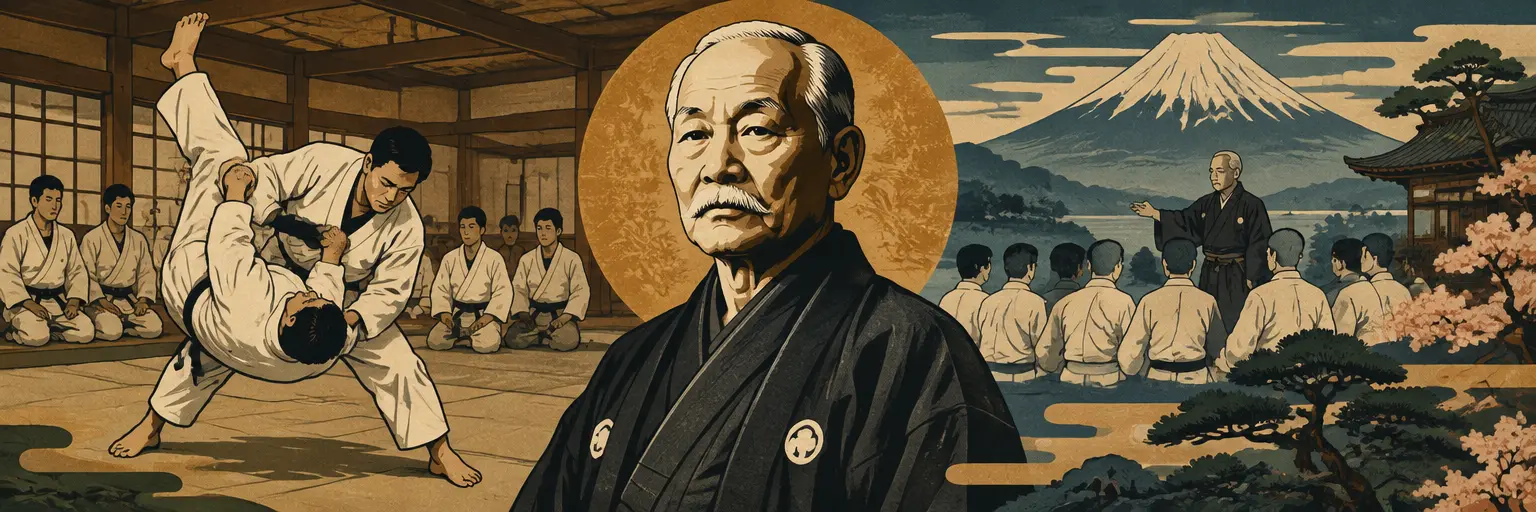
Judo’s history begins in the late 19th century when Jigoro Kano, a scholar and martial artist, synthesized the most effective techniques of classical jujutsu schools, particularly Tenjin Shin'yo-ryu and Kito-ryu, into a new system. Kano aimed to create a martial art that was not only practical for self-defense but also intellectually and morally enriching, suitable for modern Japanese society. He renamed it Judo, meaning “the gentle way,” to emphasize its philosophical focus over mere physical combat.
This subcategory explores the cultural and social context of Meiji-era Japan, where rapid modernization threatened traditional martial arts. Kano’s genius was to reformulate jujutsu into a sport and discipline that could be taught in schools, fostering character development alongside physical prowess. By establishing the Kodokan in 1882, Kano systematized techniques, ranking systems, and ethical guidelines, creating a blueprint that influenced countless martial arts worldwide. Learn how these early decisions continue to shape Judo’s global practice today.
🧠 Jigoro Kano’s Core Teachings: Seiryoku Zen'yo and Jita Kyoei
At the heart of Kano’s philosophy are two foundational principles: Seiryoku Zen'yo, or “maximum efficiency with minimum effort,” and Jita Kyoei, “mutual welfare and benefit.” These concepts are not just tactical advice but a comprehensive life philosophy, urging practitioners to apply Judo’s logic to daily challenges, from conflict resolution to personal productivity. Kano believed that mastering these principles leads to individual improvement and societal harmony.
In this section, you will find detailed explanations of how these teachings manifest both on and off the mat. For instance, in randori (sparring), yielding to an opponent’s force demonstrates efficiency, while in life, it encourages adaptability and respect. The philosophy also emphasizes self-cultivation as a continuous journey, where black belts are not endpoints but milestones. Explore how modern instructors integrate these ideals into curriculum, ensuring Kano’s vision remains relevant for personal development, stress management, and ethical leadership.
🥋 The Evolution of Judo: Sport, Self-Defense, and Olympic Glory
Judo’s trajectory from a niche Japanese discipline to an Olympic sport is a remarkable chapter in martial arts history. Officially included in the Tokyo 1964 Olympics, Judo’s competitive format has standardized rules, weight classes, and international governance under the International Judo Federation (IJF). However, this sporting evolution has sparked debates about preserving Kano’s original educational and self-defense values versus performance-driven training.
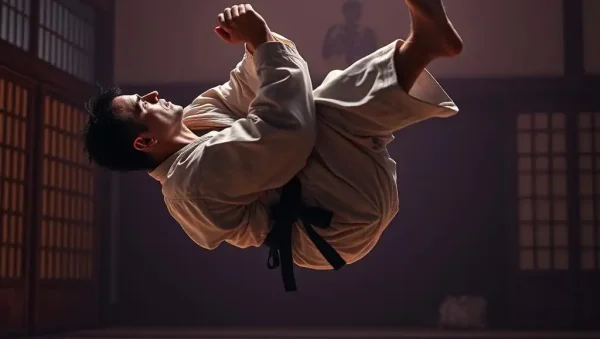
This subcategory unpacks those tensions, examining how techniques like nage-waza (throwing techniques) and katame-waza (grappling techniques) are adapted for competition versus real-world scenarios. You’ll also learn about the role of kata (prearranged forms) in preserving traditional principles, and how many dojos balance Olympic preparation with goshin-jutsu (self-defense) applications. Discover how Judo’s global expansion has created diverse interpretations while staying rooted in Kano’s ethical framework, making it a unique blend of sport, art, and philosophy.
📖 Philosophical Underpinnings: The Way of the Gentle Art
Beyond technique, Judo is a do, or “way,” that aligns with broader Eastern philosophies, including Confucianism and Zen Buddhism, but Kano reframed these ideas into a practical, rational system. Central to Judo philosophy is the concept of Kuzushi (balance breaking), which symbolizes not only physical balance but also mental equilibrium. Kano taught that by understanding and adapting to change, one can overcome obstacles without brute force, a lesson applicable to business, relationships, and self-mastery.
Explore how Judo’s philosophy encourages practitioners to cultivate calmness under pressure, humility in victory, and grace in defeat. This section also addresses modern reinterpretations, such as how Judo principles are used in educational programs for youth development, conflict resolution training, and even corporate team-building. By viewing Judo as a lifelong study of ethical action, practitioners gain tools to navigate complexity with clarity and purpose, reflecting Kano’s original vision of a martial art that improves both the individual and society.
🌐 Global Impact and Modern Interpretations of Kano’s Legacy
From Brazil’s Judo-based groundwork influencing BJJ to French and Russian Judo schools adding dynamic throws, Kano’s system has transcended cultural boundaries. This subcategory examines how Judo has been adapted to local martial arts scenes, leading to innovations like Sambo’s crossover or the rise of disabled Judo (Paralympic classification). The IJF’s global programs have also promoted Judo for children, women, and senior citizens, emphasizing mental health and social inclusion, all echoing Kano’s enduring belief in Jita Kyoei.
Here, you’ll find profiles of legendary Judoka—from Kyuzo Mifune to Teddy Riner—whose interpretations of Kano’s teachings have shaped training methods worldwide. We also analyze the philosophical debates about competitive success versus personal growth, and how modern coaches integrate mindfulness and resilience training into their pedagogy. By examining Judo’s adaptability, you’ll appreciate how Kano’s principles remain a living legacy, continuously reinterpreted while maintaining their core emphasis on efficiency, mutual benefit, and character formation.
Frequently Asked Questions
What is the difference between Judo and Jiu-Jitsu?
Judo, created by Jigoro Kano, focuses primarily on throws and takedowns, with less emphasis on ground fighting compared to Brazilian Jiu-Jitsu (BJJ). While Judo includes groundwork (newaza), its competition rules favor quick submissions, whereas BJJ prioritizes prolonged ground control and submissions. Both share historical roots in classical jujutsu, but Judo emphasizes the principles of maximum efficiency and mutual welfare in every technique.
How did Jigoro Kano develop Judo’s philosophy?
Kano drew from multiple jujutsu schools and applied modern educational theories, like psychological principles, to create a system that developed both body and mind. He synthesized techniques he deemed most effective, then framed them within two overarching ideas: Seiryoku Zen'yo (maximum efficiency) and Jita Kyoei (mutual welfare). These principles were intended to guide practitioners toward ethical living, not just combat success.
Is Judo effective for self-defense in real-life situations?
Yes, Judo’s throws, foot sweeps, and ground control teach practical responses to surprise attacks, especially when you lack space or weapons. The focus on using an attacker’s momentum rather than brute strength works for smaller individuals. However, traditional Judo dojos may emphasize sport rules, so supplementing with self-defense-specific drills (goshin-jutsu) and scenario training is recommended to adapt techniques for street encounters.
What are common Judo ranks and belts?
Judo uses a kyu (novice) and dan (expert) ranking system. Beginners start at white (6th kyu), progressing through yellow, orange, green, blue, and brown belts before attaining black belt (shodan, 1st dan). Higher dan ranks up to 10th dan are awarded for lifetime contribution and technical mastery. All ranks require proficiency in throwing, groundwork, and kata, alongside demonstrated understanding of Judo’s philosophy.
How can beginners start learning Judo philosophy?
Beginners should join a reputable dojo that teaches not only techniques but also the historical and ethical context. Read Jigoro Kano’s original writings, such as “Mind over Muscle,” to grasp his intent. Practice randori mindfully, focusing on efficiency and respect for partners. Most importantly, apply Judo principles off the mat: avoid waste, cooperate with others, and embrace continuous self-improvement, making Kano’s vision a living practice.