Mastering Judo Katame-waza: The Art of Control and Submission
Judo’s Katame-waza—the grappling techniques of pins (Osaekomi-waza), chokes (Shime-waza), and joint locks (Kansetsu-waza)—represent the ground-fighting soul of this Olympic sport. While the spectacular throws (Nage-waza) often steal the spotlight, true mastery lies in controlling an opponent on the mat. This subcategory dives deep into the mechanics, strategic applications, and historical evolution of these submission-focused skills, offering both beginners and seasoned judoka a comprehensive roadmap to dominate the ground phase. Expect detailed breakdowns of classic techniques like Kesa-gatame and Juji-jime, alongside modern competition insights and self-defense relevance.
🛏️ Osaekomi-waza: The Art of Immobilization (Pins) 🥋
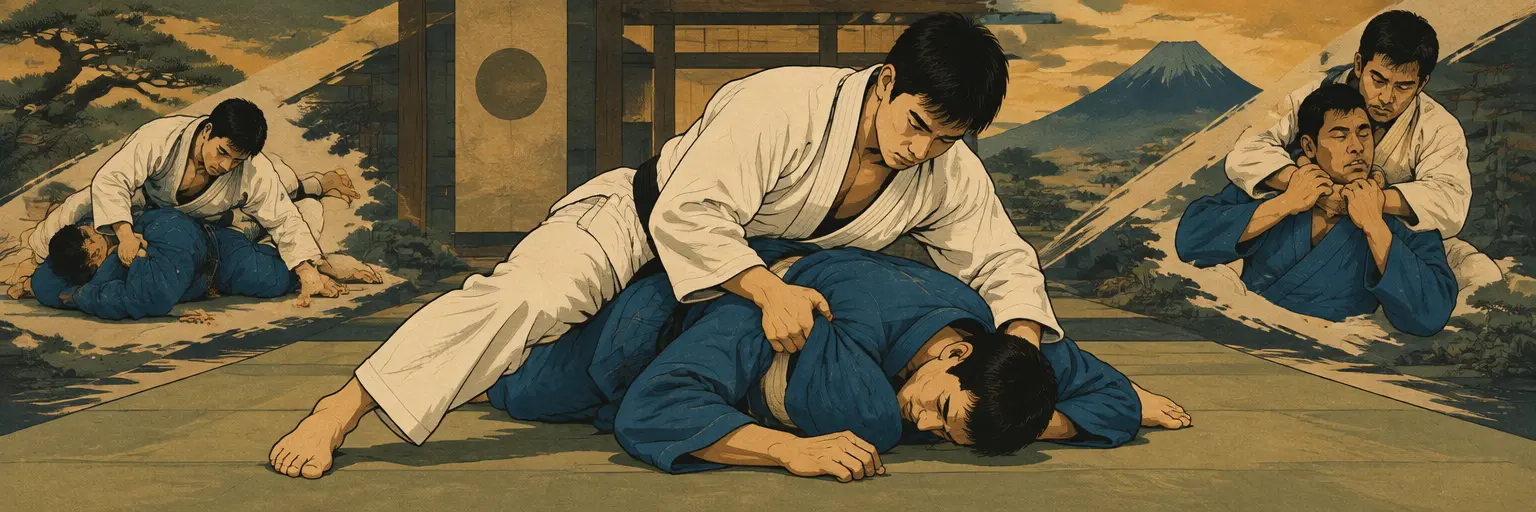
Osaekomi-waza focuses on pinning your opponent’s shoulders to the mat for 20 seconds to score Ippon—winning the match instantly. Techniques like Kesa-gatame (scarf hold), Kami-shiho-gatame (upper four-quarter hold), and Yoko-shiho-gatame (side four-quarter hold) are foundational. These pins are not just about weight; they require precise body positioning, hip control, and constant pressure to prevent escapes. For competition, effective pinning can also set up submissions or tire out your adversary. In self-defense, holding a downed attacker allows you to control the situation, call for help, or strike if necessary. Learn how to transition seamlessly from throws into these dominant positions and how to counteract common escapes like the bridge-and-roll or shrimp.
Beyond the basic holds, this section covers variations and count-attacks—how to adjust your weight distribution when an opponent attempts to bench-press you off, or how to switch from Kesa-gatame to Kuzure-kesa-gatame to maintain control. You’ll also explore the concept of “turtling”—when an opponent defends by curling up—and how to break that shell using techniques like the “clock choke” setup from side control. For self-defense scenarios, pins teach you how to maintain top pressure while managing striking, a critical skill for realistic encounters. Expect video links, step-by-step illustrated guides, and common mistakes to avoid for each pinning technique.
🔗 Shime-waza: Chokes and Strangles for Victory ⛓️
Shime-waza—chokes that cut off blood flow to the brain (strangles)—are among the most efficient finishes in Judo. Techniques like Nami-juji-jime (normal cross choke), Hadaka-jime (rear naked choke), and Okuri-eri-jime (sliding collar choke) require leverage over brute strength. This subcategory teaches you the hidden layers: hand placement on the collar (lapel), the direction of force (pulling downward or outward), and the timing of your squeeze. You’ll learn how to attack from various positions—mount, side control, guard, and even when your opponent is trying to pass your guard. For competition, mastering a few high-percentage chokes can turn a losing position into a sudden victory. For self-defense, a well-applied choke offers a non-striking way to neutralize a larger aggressor, especially in scenarios where causing long-term injury is undesirable.
We analyze the physiological mechanics—why certain chokes act on the carotid arteries versus the windpipe—and why the former is safer and more effective. You’ll discover the concept of “tachi-waza” chokes (standing) and how to elevate an opponent to apply a guillotine from a failed throw. Also explored are defenses: how to tuck your chin, use your arms to block collar grips, and escape once trapped. The section includes legendary match analyses, such as the famous 1980s rivalries where chokes clinched Olympic gold, plus drills to improve grip strength and hand-fighting mastery. Whether you’re a white belt or brown, these techniques will expand your submission arsenal dramatically.
🧩 Kansetsu-waza: Joint Locks (Elbow Control) 🤕
Kansetsu-waza in Judo uniquely targets the elbow joint, as other joint locks are banned for safety. The Juji-gatame (cross armlock) is the crown jewel—applied from guard, mount, or side control—where you isolate an arm between your legs and hyperextend it over your hip or thigh. Other key locks include Ude-garami (figure-four arm lock) and Ude-hishigi-juji-gatame. This section covers the subtle mechanics: controlling the wrist and elbow, using your legs as fulcrums, and breaking the opponent’s grip with a “pump" motion. You'll learn transition sequences—for example, sweeping a trapped opponent to set up a juji-gatame from mount. In self-defense, these locks allow you to manipulate an attacker’s joints to escape or create space without resorting to strikes. But beware: these techniques demand precision; a sloppy attempt can injure your own limbs or allow a counter.
Beyond the classic armlock, we delve into defensive strategies against Kansetsu-waza, including the crucial survival position of “locking your arms tight” to your chest and rolling away from attack. For competition, you’ll study how to chain submissions—e.g., transitioning from a failed elbow lock directly into a choke or pin. The history of these techniques is also fascinating: they were refined by Judo’s founder, Jigoro Kano, who removed dangerous wrist and shoulder locks from older Jujutsu schools. Modern Judo’s “Newaza” specialists, like Olympic legends, often use armlocks to reverse positions. Expect extensive video breakdowns, progressive drills for solo practice, and advice on when to abandon a lock and reposition for safety.
⚔️ Transitioning Between Pins and Submissions: Newaza Strategy 🔄
Grappling fluency comes from flow—moving fluidly between pins, chokes, and locks. In this section, we teach you how to chain attacks: a tight Kesa-gatame can force your opponent to turn away, exposing their back (and an immediate rear-naked choke). A failed armlock from mount can often transition directly into Kami-shiho-gatame. You’ll learn the crucial concept of “position before submission”—not harming your own control by fishing for a submission too early. We break down the hierarchy of Newaza: achieving a dominant pin, then attacking submissions, while always being ready to recover if your opponent escapes. Stress is placed on hip movement and base stability, as those are the roots of every successful transition. For self-defense, this flow lets you neutralize an attacker rapidly—from stand-up throw, to pin, to a disabling choke—without ever stopping your forward pressure.
We also analyze common Newaza mistakes, such as leaving too much space while pinning or overcommitting to a choke. You’ll see how elite judoka use feints (e.g., faking a choke to force an arm to extend, then switching to an armlock). This section includes spider-web style flowcharts of combinations, plus sparring drills to develop your “grappling IQ.” You’ll understand when to sacrifice a pin for a submission attempt and how to regain guard or return to your feet if you fail. This tactical knowledge elevates your Judo from isolated techniques to a coherent ground game.
🏆 Competition Rules, Scoring, and Safety in Katame-waza 📏
Understanding IJF (International Judo Federation) rules is vital for competitive success and training safety. For pins, you score Ippon for 20 seconds of Osaekomi; Waza-ari for 10-19 seconds. Chokes and armlocks score Ippon immediately if applied effectively (e.g., tapping or losing consciousness). This section clarifies illegal techniques—like neck cranks, twisting ankle locks, or attacking the spine—and how referees signal penalties (Shido). You’ll learn the “Matte” call (pause) and when a submission must be stopped. For safety protocols, we emphasize the absolute necessity of tapping out early to avoid injury and the importance of drilling falls to protect your joints. We also cover the Kata (forms) of Katame-waza, which are ritualized patterns used for grading and demonstrating technical purity, essential for black belt promotion.
For training pal, we advise on safe rolling etiquette: no grabbing fingers, controlling your own limbs, and immediately letting go when your partner taps. You’ll find guidance for referees, such as understanding the hand signals for pinning time and determining if hips are pinned correctly. This section also compares Judo’s grappling to BJJ or wrestling, showing how Judo’s “all-in” approach (i.e., winning by pure submit) differs from points-based sports. We provide a downloadable cheat-sheet of current IJF rule changes (e.g., leg grabs banned in standing positions) and how they impact your ground strategy.
Frequently Asked Questions
What is the most effective pin in Judo for beginners?
For beginners, Kesa-gatame (scarf hold) is most effective. It’s relatively intuitive—you control the opponent’s head with your arm, and your chest presses down on their torso. Weight distribution is forward and slightly off-center, making it harder to bridge out. Practice it slowly to develop a strong base and learn to adjust your hips when they attempt shrimp escapes.
How long does it take to master a basic choke like Hadaka-jime?
Most students learn the fundamental mechanics of Hadaka-jime in 2-4 weeks of consistent practice, but true mastery—applying it fluidly from rolling and finishing against resistance—can take months. The key is developing forearm flexibility to sink the choking arm deep and perfecting the “crushing” pressure from your bicep and chest, not just your hands.
Are chokes dangerous to practice with a partner?
When done correctly and with mutual respect, chokes are safe. Blood chokes (carotid) cause unconsciousness in 4-10 seconds if applied fully, so always tap early. Avoid windpipe chokes (trachea) as they can cause permanent damage. Always communicate with your partner, use a safeword, and never drill on someone with neck conditions or high blood pressure.
Can Judo Katame-waza be used in mixed martial arts (MMA)?
Absolutely. Judo’s pins, chokes, and armlocks translate well into MMA. Techniques like the Kesa-gatame allow ground-and-pound, while the Juji-gatame is a staple submission. However, you must adapt to strikes, as Judo’s traditional rules don’t allow punches or kicks. Many MMA fighters, such as Ronda Rousey, originated from judo and used these exact techniques to dominate opponents.
What should I do if my opponent defends a choke by tucking their chin?
If your opponent’s chin is tucked, you can’t sink a deep choke. Shift your approach: move to an armlock instead, or transition to a pin to wear them down. Alternatively, use your forehead to press their chin upward, creating space, or switch to a collar choke from the gi, which doesn’t require a perfect neck position.