Karate: Kyokushin Style – The Full-Contact Path to Forging an Unbreakable Spirit
Kyokushin Karate, founded by the legendary Masutatsu Oyama, is renowned as the "ultimate truth" in martial arts, defined by its brutal full-contact sparring, bare-knuckle conditioning, and philosophy of self-overcoming. Unlike point-based karate styles, Kyokushin emphasizes realism, endurance, and the famous "one strike, one kill" principle translated into powerful, committed techniques. This subcategory explores the core training methods, unique rulesets, mental fortitude requirements, and practical self-defense applications that make Kyokushin a globally respected fighting system. Whether you are a beginner or a seasoned black belt, understanding this style's uncompromising approach will radically transform your perspective on combat and personal growth.
💥 The Pillars of Kyokushin Training: Kihon, Kata, and Kumi-te
Kyokushin training systematically builds a fighter from the ground up through three integrated pillars: Kihon (basics), Kata (forms), and Kumi-te (sparring). In Kihon, practitioners repetitively drill powerful punches, low kicks, and knee strikes with explosive hip rotation, focusing on kime (focus) and proper body mechanics. Kata such as Pinan and Sanchin develop breathing, posture, and visualization of combat scenarios, while dynamic tension techniques condition the body for impact.
The true heart of Kyokushin lies in Kumi-te, which progresses from controlled drills to full-contact sparring with protective gear for groin and shins, but no gloves on the hands. This gradual escalation teaches practitioners to manage pain, distance, and timing under real pressure. You will learn to absorb body blows, sacrifice defense for counterattacks, and develop an unshakable calm under fire, making this style unmatched for building fighting spirit and physical resilience.
🥊 The Rules of Combat: Why Kyokushin Forbids Head Punches
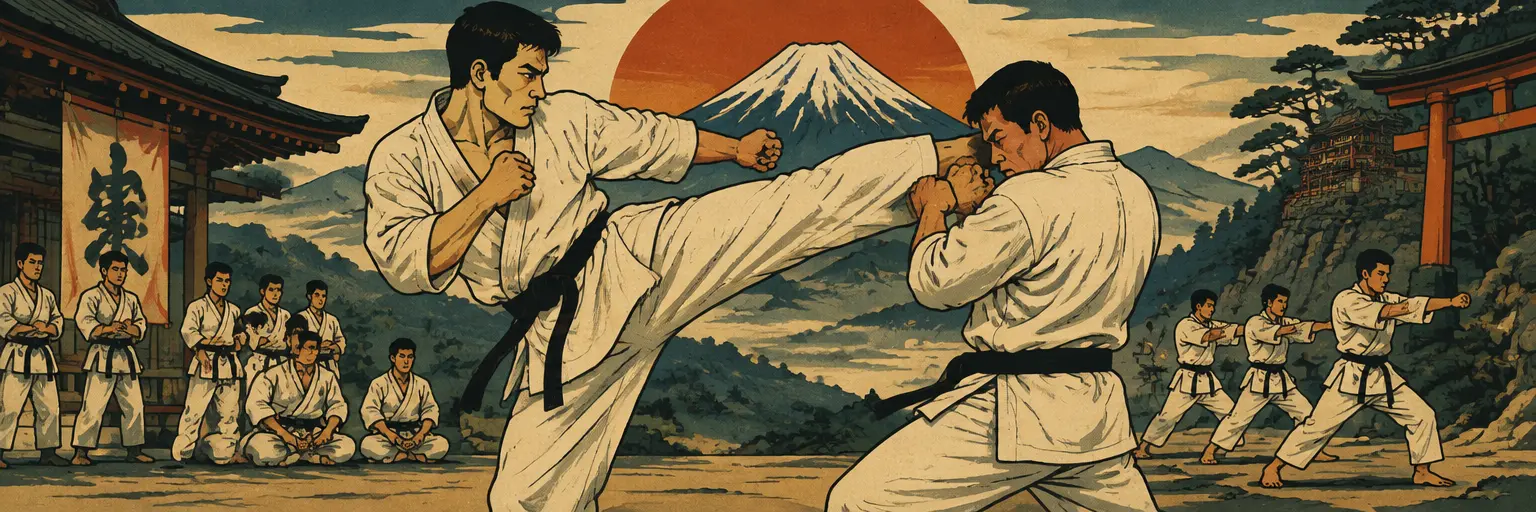
One of the most defining aspects of Kyokushin is its sparring rule: no punches to the head, but kicks and knees are fully allowed to the head. This unique rule shapes a distinctive fighting strategy that prioritizes body punching to break down an opponent’s guard and stamina, while delivering devastating high kicks, roundhouse kicks, and knee strikes to the skull. Consequently, Kyokushin fighters develop exceptional hip flexibility, shin conditioning, and the ability to close distance safely beneath an opponent’s jab.
This ruleset also instills a unique mental toughness because beginners face the fear of head kicks early, learning to keep hands high and maintain constant footwork. In self-defense contexts, this training translates to practical skills: you learn to strike vulnerable targets like the ribs, solar plexus, and thighs while retaining the ability to deliver fight-ending kicks to the jaw or temple. Understanding these rules is essential for spectators, competitors, and anyone considering whether Kyokushin aligns with their combat goals.
🦵 Shins, Fists & Body Conditioning: Forging the Human Weapon
Kyokushin practitioners are famous for their iron-body conditioning, which includes repeated striking of the shins, forearms, fists, and ribs against makiwara boards, heavy bags, and even opponent’s limbs. This progressive desensitization reduces pain response and increases bone density over years, enabling bare-knuckle striking and powerful leg checks. Training sessions often include "sanbon kumite" (three-step sparring) where you absorb and deliver hard blows, teaching your nervous system to remain composed under trauma.
Beyond physical hardening, conditioning builds profound self-belief—when you know your body can withstand punishing kicks without breaking, psychological fear diminishes dramatically. You will also practice breathing exercises (ibuki) and meditation-like focus to channel energy, enhancing recovery between explosive bursts. This holistic approach ensures that body and mind evolve together, making Kyokushin not just fighting, but a transformative lifestyle that improves confidence, posture, and everyday resilience.
🏆 Tameshiwari & Knockdown Tournaments: Proving Your Limit
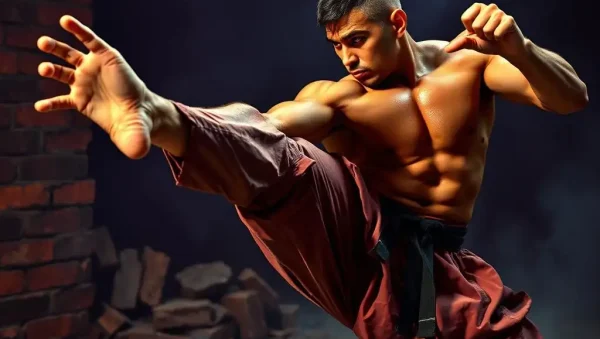
A signature element of Kyokushin is Tameshiwari (breaking techniques), where practitioners shatter wooden boards, bricks, or even baseball bats using punches, elbows, or kicks. This practice demonstrates the culmination of technique, timing, and mental focus, and is often featured in belt promotions to prove striking power. In addition, the famous Knockdown Tournament format—where fighters face successive opponents in a round-robin—tests not only skill but endurance, as you must fight multiple bouts in a single day with minimal rest.
These high-stakes challenges teach critical life lessons about strategy under fatigue, emotional control, and the courage to continue after being knocked down. You will learn to conserve energy, exploit opponents’ weaknesses, and develop a fighter’s heart that refuses to quit. For martial artists seeking a competitive outlet or personal proof of their limits, Kyokushin tournaments offer an unmatched environment to measure progress, humility, and victory over oneself.
🛡️ Practical Self-Defense & Real-World Application
While Kyokushin is a sport, its core techniques are deeply rooted in practical self-defense, prioritizing gross motor movements effective under stress: low kicks to destabilize attackers, powerful hip-driven punches to the torso, and knee strikes to close range. Because sparring involves full-contact strikes to the body, practitioners develop realistic timing and the ability to absorb hits rather than freezing—a critical advantage over rhythm-based styles. Furthermore, the emphasis on stances like Sanchin develops structural integrity to resist pushes and grabs.
Nevertheless, Kyokushin’s lack of head-punch defense in sparring means you must supplement training with scenario drills—such as defending against haymakers, knife threats, or multiple attackers—to close that gap. Many dojos integrate self-defense applications of katas and bunkai, teaching joint locks and throws that transition from striking ranges. Ultimately, Kyokushin provides a robust base of fighting fitness, situational awareness, and calm under pressure, which can be tailored to survive real-world encounters effectively.
Frequently Asked Questions
Is Kyokushin Karate suitable for complete beginners?
Yes, absolutely. Kyokushin dojos typically welcome beginners of all ages and fitness levels. Training starts with basic stances, punches, and kicks, progressing slowly to contact. The full-contact sparring is introduced gradually and is optional for many lower ranks, ensuring safety while building confidence. Expect a demanding workout and a supportive community focused on personal growth.
Do I need to condition my shins to be extremely hard to practice?
Not immediately. Shin conditioning is progressive and safe when done correctly under supervision. Beginners learn proper kicking technique before increasing impact. Over months, you’ll perform light shin taps against bags and pads, gradually raising intensity. Always use proper form and allow recovery to avoid injury. Advanced practitioners often achieve dramatic shin density, but it’s built slowly.
How is Kyokushin different from Shotokan karate?
The primary difference is contact level. Shotokan focuses on linear, long-range techniques, point sparring, and pulling punches at the head. Kyokushin uses full-contact strikes to the body, circular kicking techniques, and prioritizes endurance and toughness. Kyokushin’s sparring is more continuous and realistic, while Shotokan emphasizes speed, distance, and perfect form. Both are excellent but appeal to different goals.
Can Kyokushin prepare me for mixed martial arts (MMA)?
Yes, Kyokushin provides a strong striking base with excellent leg kicks, pressure testing, and close-range clinch knees. Many MMA fighters, such as Georges St-Pierre, credit Kyokushin for their foundation. However, you’ll need to adapt to head punches and ground fighting, which Kyokushin doesn’t cover. Supplementing with boxing and wrestling will make you a well-rounded striker.
What is the rank structure and black belt time in Kyokushin?
Kyokushin uses a colored belt system from white to brown, then black (shodan) up to higher dans. Under typical training of 2–3 sessions weekly, earning a black belt takes around 4–6 years. Promotion requires demonstrating kihon, kata, kumite, and Tameshiwari (breaking tests). Progression emphasizes skill, spirit, and attitude, not just time, ensuring a truly competent black belt.