Unveiling WadoRyu: The Gentle Art Within the Fierce Fist
🥋 Discover Wado Ryu's unique blend of softness and power. Explore the rich Wado Ryu martial arts history, uncovering its philosophical roots…
Read article
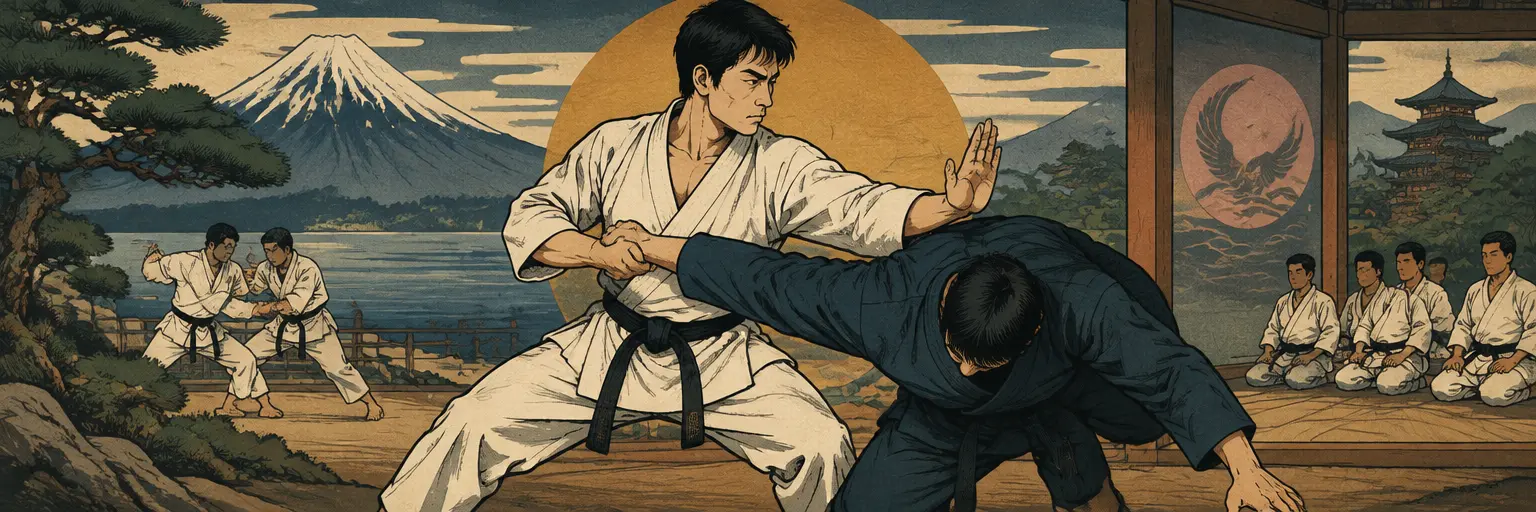
Wado-Ryu karate stands apart as a uniquely fluid and pragmatic martial art, seamlessly blending the hard, linear strikes of traditional karate with the soft, redirection-based principles of jujutsu. Rather than meeting force with force, Wado-Ryu emphasizes body evasion, joint locks, and swift throws alongside its powerful punches and kicks. This synthesis creates a system that prioritizes efficiency of movement and natural posture, making it exceptionally effective for real-world self-defense. By focusing on distance control and the redirection of an opponent’s energy, practitioners learn to neutralize attacks with minimal effort, turning an aggressor’s own momentum against them. If you seek a martial art that values practical combat application over rigid form, while retaining the rich cultural heritage of Japanese budo, Wado-Ryu offers a sophisticated and deeply strategic path to mastery.
🥋 Discover Wado Ryu's unique blend of softness and power. Explore the rich Wado Ryu martial arts history, uncovering its philosophical roots…
Read article
🥋 Discover how WadoRyu self defense psychology emphasizes awareness and calm response, empowering practitioners to anticipate threats and react effectively, blending martial…
Read article
🥋 Discover WadoRyu Karate's distinctiveness at MartialArtsMastery.org. Explore its unique WadoRyu Karate Jujutsu Blend, delving into its historical roots, training principles, and…
Read article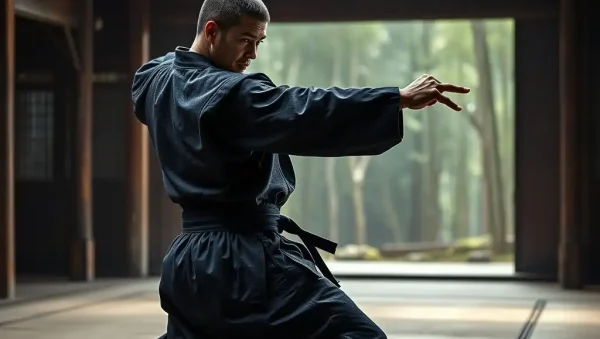
🥋 Discover Shindo Yoshinryu, the foundational jujutsu school that shaped Wado-ryu's essence. Explore its profound techniques, rigorous training, and historical significance on…
Read article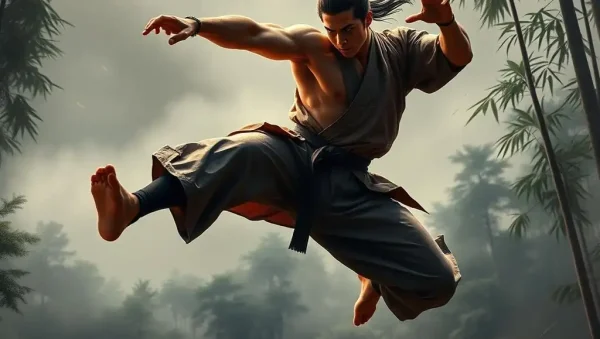
🥋 Discover the secrets behind Inasu, Nagasu, and Noru as we delve into WadoRyu Jujutsu evasion techniques, revealing advanced strategies that enhance…
Read article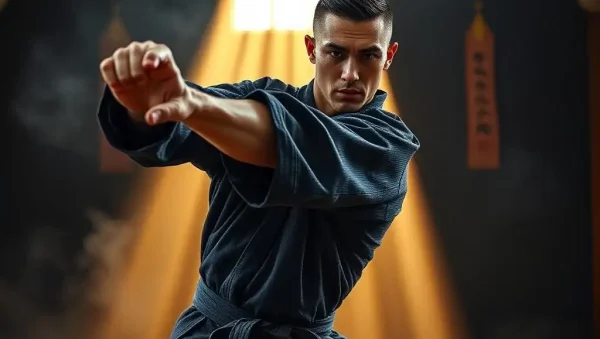
🥋 Master WadoRyu blocking techniques defense by transforming defensive actions into offensive opportunities. This article reveals how skilled practitioners invite and exploit…
Read article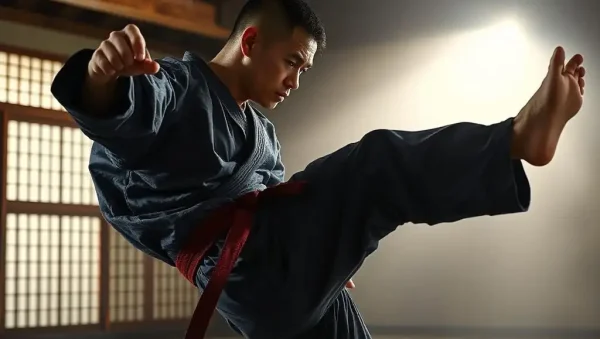
🥋 Discover how WadoRyu Kumite enhances Jujutsu applications training by bridging traditional karate techniques with effective self-defense strategies, deepening understanding, and improving…
Read articleWado-Ryu is a distinct and sophisticated style of karate founded by Hironori Otsuka, unique for its seamless integration of traditional karate striking with the redirection, evasion, and joint-locking techniques of Japanese jujutsu. Unlike harder, linear styles, Wado-Ryu emphasizes body shifting, natural stance, and tai sabaki, making it a highly practical and fluid martial art. On this page, we explore the historical origins, core techniques, philosophical differences, and self-defense applications that define this elegant yet powerful discipline, helping you decide if Wado-Ryu is the right path for your martial arts journey.
Wado-Ryu was established in the 1930s by Hironori Otsuka, a master of both Shito-Ryu karate and Yoshin-ryu jujutsu. Otsuka sought to create a style that prioritized efficiency over brute force, blending the evasive footwork of classical jujutsu with the explosive strikes of Okinawan karate. He was one of the first to formalize karate as a distinct Japanese martial art, earning the title of Japan’s first Karate-Do grandmaster. His vision was not just a fighting system but a form of personal development, emphasizing harmony and natural movement over rigid power.
Understanding the historical context is vital for any practitioner. Where other styles like Shotokan emphasize long, deep stances and linear power, Wado-Ryu’s origins in jujutsu mean that distance is managed through shifting and avoidance rather than blocking. This makes the style particularly relevant for modern self-defense, as students learn to control an opponent’s momentum rather than clash against it. By studying Otsuka’s biography and his writings, you gain a deeper appreciation for why every technique in Wado-Ryu exists and how it reflects a philosophy of non-resistance and efficiency.
The heart of Wado-Ryu lies in Tai Sabaki, or body evasion, which teaches practitioners to move their entire body off the line of attack while simultaneously positioning themselves for a counter. Instead of meeting force with force, a Wado-Ryu practitioner will shift, pivot, and angle their body to neutralize an incoming strike. This is paired with the use of natural, relaxed stances that are shorter and more flexible than the deep stances of other karate styles, allowing for rapid weight shifts and seamless transitions between offense and defense. The principle of “going with the flow” is paramount, mirroring jujutsu’s concept of yielding to overcome.
What this means for you as a student is a constant focus on posture, rhythm, and timing rather than sheer muscle strength. Every punch, kick, or block is executed from this dynamic platform, making your movements less telegraphed and more adaptable to changing circumstances. Practicing kata and kumite in Wado-Ryu will train your brain to react instinctually, using efficient paths of motion that conserve energy. This approach is particularly appealing for those who prefer a more intellectual and strategic form of martial arts, one that prioritizes smart positioning over heavy conditioning or breaking boards.
A defining feature of Wado-Ryu is its inclusion of jujutsu-based techniques within its kata and self-defense applications (bunkai). Students are taught not only striking but also joint locks, wrist twists, and off-balancing throws that are traditionally found in Aikido or Jujutsu. This is most visible in kata like Kushanku and Chinto, where movements often contain hidden grappling applications that are revealed through detailed analysis. The goal is to achieve total control over an attacker, either by striking a vulnerable point or by manipulating a joint to subdue them without excessive force.
This blending means that Wado-Ryu is an incredibly well-rounded self-defense system. Unlike pure striking arts, you will learn how to handle grabs, clinches, and close-quarters threats. The practice of Kumite in Wado-Ryu is also distinctive, focusing on free-flowing, semi-contact sparring that allows for the safe application of these locks and throws. By integrating these techniques, you cultivate a tactile awareness of an opponent’s body posture and balance, making your responses not only faster but also far more decisive and effective in a real-world scenario where the fight might end up on the ground or in close contact.
Kata, the pre-arranged sequences of movements, serve as the living repository of Wado-Ryu’s techniques. Two of the most vital forms are Kushanku and Naihanchi, each offering a different lesson in the style’s philosophy. Kushanku is a long, complex kata that involves powerful strikes, stances, and evasion, teaching the practitioner how to move in multiple directions against multiple hypothetical opponents. It is a masterclass in mobility, emphasizing the use of the hips and the forward edge of the foot to generate power while remaining light and agile. In contrast, Naihanchi is a shorter, staid-looking kata performed mostly in a horse-riding stance, yet its subtle weight shifts and grappling applications are deceptively deep.
Through dedicated kata practice, you will learn to internalize the core principles of Wado-Ryu. Rather than robotic repetitions, each movement in a kata holds meaning—a block is often a deflection leading to a lock, a strike is a thrust to a vital point while avoiding a sweep. Analyzing these sequences with a qualified instructor unlocks the true “bunkai” (application) of the style. This deep study not only improves your physical technique but also enhances your mental focus and body awareness, making kata a form of moving meditation that sharpens your combat reflexes and your understanding of distance, timing, and anatomical vulnerabilities.
In an era of unpredictable street violence, Wado-Ryu’s emphasis on evasion and control makes it an incredibly effective self-defense system. The principle of initial evasion is perhaps its greatest asset–you are taught to avoid being hit entirely rather than to toughen your body to absorb punishment. The jujutsu elements provide non-lethal options for de-escalating a situation, such as wrist releases, shoulder locks, and takedowns that allow you to immobilize an attacker without causing permanent harm. This creates a spectrum of responses, from a calm restraint to a devastating counter-strike, giving you the confidence to adapt to any threat level.
Furthermore, Wado-Ryu’s training methodologies emphasize real-world scenarios over sport competition. Many dojos incorporate drills that simulate grabs, shoves, and multiple attackers, ensuring your techniques are functional under stress. The natural stances mean you don’t have to “reset” your posture to fight, as you can react from a normal standing position. This practicality appeals to law enforcement officers, security professionals, and ordinary citizens alike. By mastering Wado-Ryu, you are not just learning to fight; you are cultivating a heightened sense of awareness, a calm mind, and a set of physical tools that resolve conflicts with the least possible violence required, truly embodying the mantra of “the way of peace and harmony.”
Yes, Wado-Ryu is widely considered one of the most effective karate styles for self-defense due to its jujutsu foundation. Its emphasis on evasion, joint locks, and throws allows you to handle close-quarters grabs and clinches that pure striking arts often struggle with. The natural stances and body shifting also let you move and react fluidly from any position, making your defense quicker and more pragmatic in real-world street encounters.
No, you do not need prior fitness to begin Wado-Ryu. The style’s relaxed stances and body awareness focus are actually gentler on the knees and hips than deep-stance karate. Training will gradually build your flexibility, cardiovascular health, and core strength through dynamic movements and kata practice. Many schools welcome beginners of all ages and fitness levels, adjusting intensity to individual capabilities while maintaining technical correctness.
The primary difference is philosophy and technique. Shotokan uses deep, wide stances and linear power, emphasizing distance and strong blocking. Wado-Ryu avoids direct blocking, preferring quick body evasion (Tai Sabaki) and shorter, more natural stances to deflect and counter. Additionally, Wado-Ryu incorporates jujutsu locks and throws, while Shotokan generally focuses exclusively on striking. This makes Wado-Ryu more fluid, evasive, and grappling-friendly at close range.
Yes, when taught properly and with controlled partners, joint locks and throws are quite safe. Wado-Ryu schools practice with a “tap-out” protocol, meaning you immediately release a lock when your partner signals discomfort. Throws are executed using low-impact breakfalls to protect the ukemi partner. The focus is on technique and control over maximum force, ensuring a constructive training environment that builds skill without causing injury.
The typical timeline for reaching Shodan (first-degree black belt) in Wado-Ryu is about 4-6 years, depending on training frequency and dojo requirements. This period involves learning all kata, kumite vocabulary, and jujutsu-waza applications. However, a black belt is not just about time but about demonstrating technical efficiency and philosophical understanding, so the journey is as important as the goal, focusing on continuous refinement of your body shifting and principles.







