The Evolution of Kendo Bogu: From Samurai Battlefield to Modern Dojo
🥋 Explore the fascinating Kendo bogu evolution history, tracing its transformation from samurai battlefield armor to modern dojo gear, highlighting innovations that…
Read article
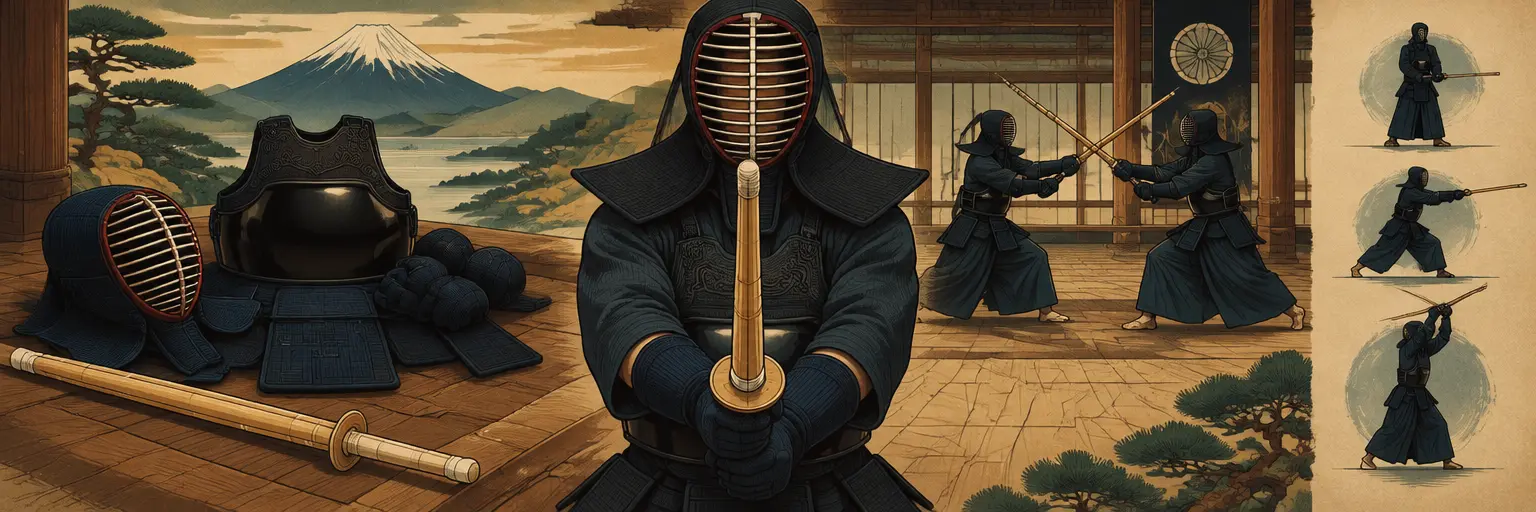
Dive into the disciplined world of Kendo, the “Way of the Sword,” where ancient samurai spirit meets modern athletic precision. This guide explores the essential equipment—from the protective *bogu* armor (men, do, kote, tare) to the resilient bamboo *shinai*—that ensures both safety and authenticity. Master the foundational stances (kamae), including the central *chudan-no-kamae*, which balance offense, defense, and mental focus. Then, refine your technique with the three core basic strikes: the powerful men (head), the precise kote (wrist), and the thrusting tsuki (throat). Whether you’re a beginner seeking correct posture or an advanced practitioner polishing your *kihon*, this breakdown provides the essential framework to build speed, accuracy, and *ki-ken-tai-ichi*—the unification of spirit, sword, and body. Unlock the secrets to effective *waza* (techniques) and cultivate the unyielding *zanshin* (heightened awareness) that defines true martial mastery. Perfect for enthusiasts aiming to deepen their understanding of this iconic Japanese art.
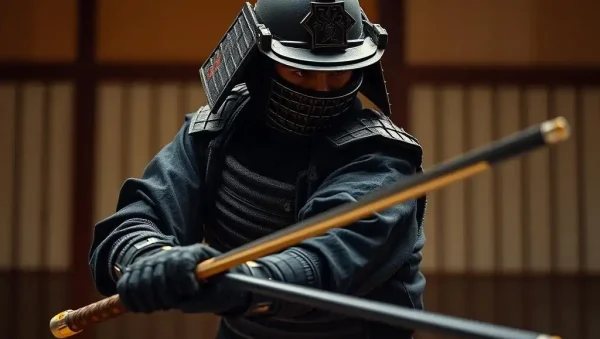
🥋 Explore the fascinating Kendo bogu evolution history, tracing its transformation from samurai battlefield armor to modern dojo gear, highlighting innovations that…
Read article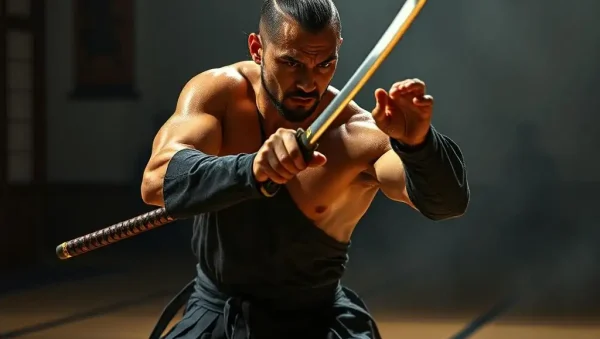
✨ Master your Kendo basics with suburi drills! Learn how these fundamental movements build devastating power and pinpoint accuracy, essential for any…
Read article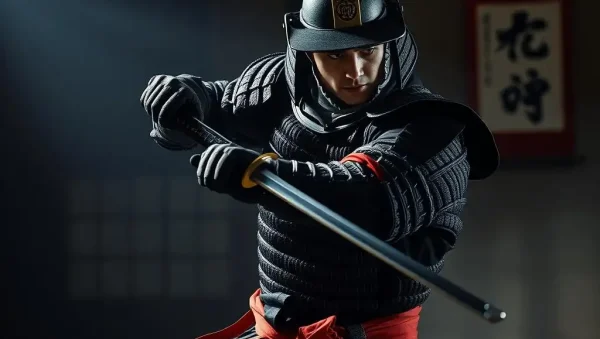
😊 Dive into our Kendo Bogu Buying Guide at MartialArtsMastery.org to confidently select your first protective gear, ensuring safety and performance. Discover…
Read article
🥋 Discover how Ashi Sabaki Kendo Footwork enhances your stances and strikes, enabling fluid movement and precision. This vital technique is the…
Read article
🌟 Discover how KiKenTaiIcchi unites spirit, sword, and body to enhance Kendo strikes, blending philosophy and technique to elevate practitioners’ mastery. Explore…
Read article
🥋 Discover how to enhance your Kendo basic strikes practice at home with effective solo drills. This guide from MartialArtsMastery.org offers practical…
Read article
🥋 Discover the essentials with our Kendo armor breakdown for beginners, exploring the Men, Kote, Do, and Tare. This guide simplifies the…
Read articleWelcome to the precise world of Kendo, the Japanese “Way of the Sword,” where disciplined footwork, razor-sharp focus, and centuries-old etiquette converge. In this comprehensive subcategory, we break down the essential gear (bogu and shinai), foundational stances (kamae), and core attacking techniques (kihon waza) that every practitioner must master. Whether you are a complete beginner or a seasoned martial artist exploring a new discipline, this guide offers actionable insights into the physical precision and mental fortitude required for effective Kendo practice. Prepare to transform theoretical knowledge into powerful, controlled strikes while understanding the cultural soul embedded in every movement.
Before stepping onto the dojo floor, you must understand the purpose and maintenance of every piece of armor and weapon. The shinai (bamboo sword) is your primary tool, typically made of four slats held together by leather fittings, designed to simulate a katana’s weight and flexibility safely. The bogu (armor) consists of the men (head protector), kote (gloves), do (chest protector), and tare (waist protector), each meticulously crafted to absorb powerful impacts while preserving mobility.
Proper fitting is non-negotiable: a loose men can shift during a strike, while ill-fitting kote restrict wrist snap. Your gi (jacket) and hakama (pleated trousers) are not just uniform—they represent respect and tradition, with the seven pleats of the hakama symbolizing the seven virtues of Bushido. Learn to inspect your shinai’s leather bindings for wear, oil the bamboo monthly, and fold your bogu correctly to extend its lifespan. Investing in quality equipment and regular maintenance ensures both safety and authentic performance.
Kamae is more than just how you hold your sword—it is your psychological and physical readiness. The primary stance, Chudan-no-kamae (middle stance), positions the shinai tip toward the opponent’s throat, offering balanced offense and defense. Jodan-no-kamae (upper stance) holds the sword overhead, favoring aggressive downward cuts but leaving your torso exposed. Gedan-no-kamae (lower stance) points the tip low, inviting attacks to bait a countershot.
Beyond these, Hasso-no-kamae (figure-eight stance) and Waki-gamae (side stance) are situational, often used to hide your line of attack or deceive an opponent’s range perception. Each stance dictates your footwork (suri-ashi sliding steps) and your kikentai-ichi—the unity of spirit, sword, and body. Beginners should drill Chudan daily, focusing on relaxed shoulders, a straight spine, and eyes that see beyond the opponent’s eyes (enzan no metsuke). Stances are not static poses; they are living springs of potential energy.
The four primary target areas form the core of Kendo’s offensive vocabulary. Men (head strike) is a vertical cut aimed at the forehead, executed with a sharp fumikomi (stamping step) and a loud kiai (“Men!”). Kote (wrist strike) targets the right wrist of your opponent’s leading hand, requiring precise angle and timing. Do (trunk strike) is delivered to either side of the torso, demanding a slight body lean and diagonal cut. Tsuki (throat thrust) is the most dangerous, practiced only under strict supervision due to its piercing nature.
Each strike follows a rhythm: ki-ken-tai-ichi means spirit, sword, and body move as one. Your tenouchi (hand grip) must tighten sharply at the moment of impact, while your left heel drives the hip rotation. Do not swing from the shoulder—instead, let the wrists snap upward and downward in a controlled arc. Beginners should practice suburi (air swings) repeatedly for muscle memory, then progress to striking a hanging target to develop correct distance (maai) and follow-through. Precision beats power; a clean, accurate cut scores points, not brute force.
Kendo is inseparable from reishiki (etiquette), which governs every second of practice. The bow before entering the dojo, the respectful positioning of your shinai, and the formal rei (bow) to your opponent are not mere rituals—they train humility, awareness, and mutual respect. Keiko (practice) includes kihon (basics), uchi-komigeiko (repetitive striking), kakari-geiko (continuous attack), and ji-geiko (free sparring). Each format sharpens a different skill, from stamina to split-second decision-making.
To train smarter, always begin with a thorough warm-up focusing on ashi-sabaki (footwork), as poor footing ruins the strongest strike. During paired drills, communicate with your partner through kiai and body language—Kendo is dialogue, not monologue. End each session with mokuso (silent meditation) to reflect on your mistakes, then politely thank your partner and sensei. Consistency, not intensity, yields progress; even 20 minutes of daily suburi is superior to a weekly marathon. Respect the dojo’s hierarchy, and you will accelerate your learning exponentially.
The true mark of a Kendo practitioner is zanshin—the state of heightened awareness and readiness that persists after a strike lands. This is not a physical pose but a mental posture: your eyes remain fixed, your shinai returns to center, and your breath continues with calm authority. Zanshin demonstrates that you are not vulnerable or distracted; it is a test of character, not just technique. Many tournaments are won or lost on the quality of zanshin, as a sloppy follow-through negates an otherwise perfect men cut.
To cultivate zanshin, practice mushin (no-mind) by letting go of ego, hesitation, and anticipation. Train your spirit through tanren (forging) by repeating harsh drills until they feel natural, and engage in uchikomi with explosive vigor, then hold your finishing position for two full seconds. Visualization helps: imagine a warrior who is calm yet alert, like a mirror reflecting without staining. Kendo becomes a moving meditation where each strike is a question, and your opponent’s response is the answer. This mental resilience carries beyond the dojo, improving focus in work and daily life.
Most beginners grasp the fundamental men, kote, and do strikes within 3 to 6 months of consistent weekly practice (2-3 sessions). However, mastery of timing, accuracy, and zanshin typically takes several years. The initial learning curve focuses on correct footwork and hand coordination, so patience and repetitive suburi are essential. Progression through graded exams (kyu and dan) naturally guides your timeline.
Initially, you only need a shinai, a gi, and a hakama—many dojos allow beginners to wear loose athletic clothing for the first few classes. Kendo armor (bogu) is usually introduced after 3-6 months when you’ve mastered basic movements. Your instructor will guide purchases to ensure a proper fit. Some dojos rent bogu, but owning your own ensures hygiene and consistent learning.
You can practice suburi (air swings) and footwork alone, but partner striking requires protective armor and a supervised environment. Practicing paired cuts without bogu risks serious injury to the head and wrists. For home practice, focus on stances, visual drills, and fitness. Always save impact drills for the dojo under expert supervision to avoid developing bad habits or injuries.
Kendo is primarily a competitive and spiritual discipline, not a practical self-defense system. Its core techniques assume a shinai and armor, which are not available in daily life. However, you develop exceptional footwork, reaction speed, situational awareness, and mental composure—transferable to escape or deflection scenarios. For street defense, pair Kendo with a modern self-defense art like Krav Maga or Brazilian Jiu-Jitsu.
A well-maintained shinai lasts 2 to 3 months under heavy training, but beginners who train less frequently might go 6 months or longer. Inspect before each use: check for split bamboo slats, loose leather tips, or weakening of the tsuru (string). Immediately retire any shinai showing a deep crack or sharp edges to prevent splintering. Regular oiling and proper storage in a dry place extend life.







