Seamless Transitions: Combining Strikes and Sweeps in the Muay Thai Clinch
💪 Master the art of fluid combat with our guide to seamless Muay Thai clinch transition techniques. Learn to effectively combine strikes…
Read article

Muay Thai, known as the Art of Eight Limbs, is a devastatingly effective striking system that utilizes fists, elbows, knees, and shins to create a versatile arsenal of attacks. Central to its power is the clinch, a unique grappling range where fighters control posture to unleash brutal knees and elbows while defending against takedowns. This ancient Thai martial art emphasizes devastating power, relentless pressure, and superior conditioning, making it a cornerstone for both competitive fighters and practical self-defense. With its deep cultural roots in Thailand and global recognition in modern combat sports, mastering its angles, timing, and body mechanics offers an unmatched edge in stand-up combat. Whether you’re drawn to its explosive strikes, tactical clinch work, or raw physical toughness, Muay Thai demands discipline and rewards practitioners with unshakable confidence and functional fight skills.

💪 Master the art of fluid combat with our guide to seamless Muay Thai clinch transition techniques. Learn to effectively combine strikes…
Read article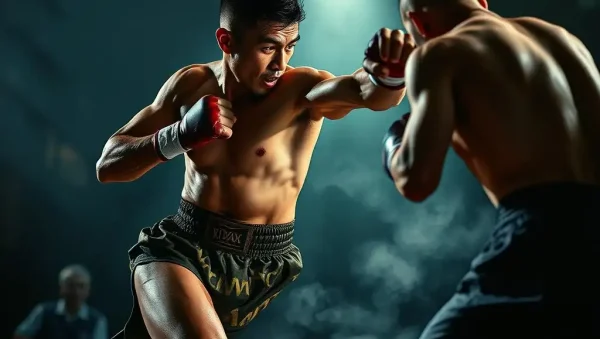
🥊 Mastering Muay Thai distance management techniques is essential for controlling the battlefield, allowing fighters to effectively strike, clinch, and defend. This…
Read article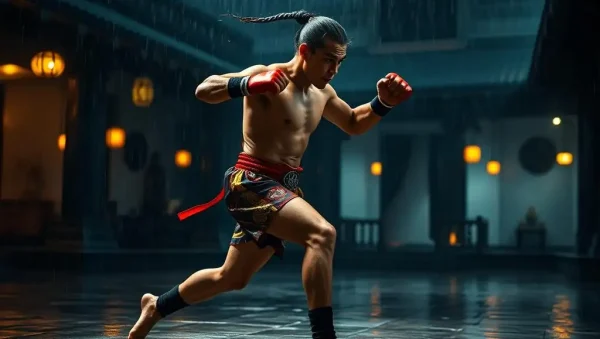
🥊 Master the art of movement with essential Muay Thai footwork techniques, enabling fighters to dominate striking and clinch ranges. Discover how…
Read article
🥊 Discover how integrating strike techniques enhances Muay Thai clinch techniques training, empowering practitioners to dominate opponents with seamless transitions and control—unlock…
Read article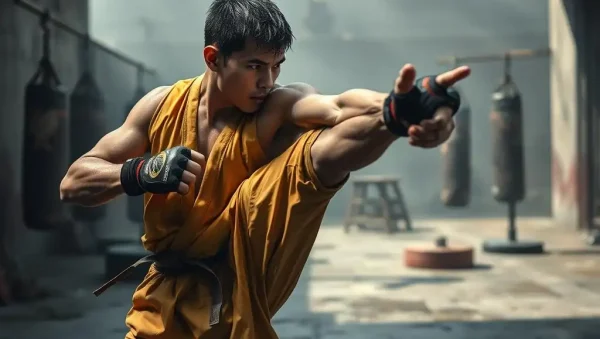
Muay Thai solo drills offer a powerful path to mastery, accessible anywhere. Hone your strikes and defense with these essential techniques for…
Read article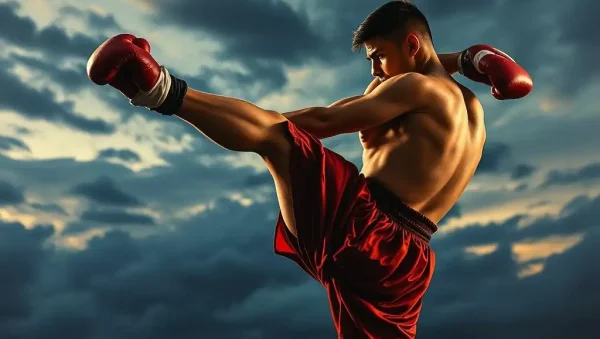
🥋 Discover the secrets behind the Muay Thai roundhouse kick anatomy with our step-by-step guide, unlocking powerful techniques rooted in tradition and…
Read article
💥 Master the devastating Sok Tad elbow technique, the guard-splitting surprise strike that will elevate your offensive arsenal. Uncover its secrets on…
Read articleWelcome to your definitive guide on Muay Thai, the revered "Art of Eight Limbs" from Thailand. This subcategory dives deep into the two pillars of the sport: the devastating array of strikes using fists, elbows, knees, and shins, and the intricate, battle-defining clinch work. Whether you are a beginner seeking authentic technique breakdowns or an advanced practitioner refining your fight IQ, this resource covers everything from foundational mechanics to elite-level strategy. Our goal is to bridge the gap between traditional Wai Kru rituals and modern sports science, offering actionable insights for training, fitness, and self-defense. Ready to sharpen your weapons and master close-range combat? Let’s begin.
Here, we dissect the core offensive weapons of Muay Thai, moving beyond generic descriptions to show you the exact biomechanics, hip rotation, and weight transfer required for maximum power. You will learn the signature teep (push kick) for range control, the devastating roundhouse kick with shin conditioning, and the sneaky elbow strikes that can end a fight in seconds. We also cover the knee strikes from both long and short range, often delivered inside the clinch. Each strike is explained with its traditional Thai name, common defensive counters, and training drills to build speed and accuracy. Expect visual cues for footwork and posture, plus tips on power generation from the ground up.
Beyond individual techniques, this section emphasizes strike combinations and rhythm breaking. You will discover how elite fighters set up a head kick with a low leg kick or use a jab to blind an opponent before a flying elbow. We also address the crucial difference between power vs. speed vs. control strikes, helping you adapt to different sparring partners and competition scenarios. For fitness enthusiasts, we highlight how each strike engages core stabilizers, glutes, and rotational muscles, converting martial art practice into a full-body workout. By the end, you will have a mental library of strikes to chain seamlessly, whether for sport, cardio, or self-defense.
The clinch is where Muay Thai separates itself from other striking arts. This subcategory explains the plum (double-collar tie), the single-collar tie, and the body lock, showing you how to control posture, break an opponent’s balance, and unleash knees and elbows from a dominant position. You will learn the critical role of hand placement (thumb on the jaw, not the neck) and foot positioning to off-balance a larger opponent. We also break down defensive clinch techniques, including pummeling, arm drags, and the "tie-up" escape, ensuring you never feel stuck or vulnerable. This is not just theory; we provide step-by-step partner drills to develop feel and reaction time.
Moreover, we explore the transition from clinch to takedown—essential for MMA or self-defense. Learn the dumping hip toss, the sweep from the plum, and the subtle knee reaps that can put an attacker on the ground without sacrificing your balance. For competitive strikers, we discuss how judges score clinch dominance, emphasizing forward pressure, active knees, and breaks that leave you in control. We also mention famous clinch warriors like Dieselnoi and Yodsanklai, analyzing their signature moves. Finally, we include conditioning drills, such as neck strengthening and grip endurance, to ensure your clinch game is both technically sound and physically overwhelming.
Defense in Muay Thai is an art in itself, and this section teaches you to become a counter-striking terror. We cover the five primary defensive tools: the leg block against kicks, the knee block for low kicks, the shin block (conditioned to absorb pain), the elbow shield for punches, and the hand parry for jabs. You will also learn footwork-based evasion—swaying, stepping back, and cutting angles—to avoid damage entirely. Each defense is paired with a recommended counter-attack, such as catching a kick and sweeping, or slipping a cross and replying with a liver hook. The key is timing and distance management, which we break down into drills.
We also address the psychological aspect of defense: staying calm under pressure, reading telegraphs, and never panicking in exchanges. For self-defense, we emphasize survival mechanics—how to protect your head against a flurry and safely exit range. Advanced strategies include counter-clinching after defending a knee and using the long guard to smother punches while threatening with elbows. Real-world examples from legendary fights illustrate how defensive mastery turns the tide. Finally, we share shadowboxing routines and partner drills to sharpen your reflexes, ensuring your defense is not passive but an active weapon that creates openings for your own offense.
Muay Thai training is notoriously brutal, but this section turns that intensity into smart, periodized programming. You will learn the traditional “three-round” style of Thai gyms—jump rope, shadowboxing, heavy bag, pads, and sparring—plus modern strength and conditioning to prevent injuries. We break down the essential equipment (Thai pads, focus mitts, heavy bag) and how to use each for maximum skill transfer. Expect detailed pad-holding instructions, so you can train a partner effectively, and a weekly schedule balancing technical work, cardiovascular endurance, and rest. We also include specific exercises: neck bridges, core rotation throws, and shin conditioning via rolling pins or light kicks.
Beyond the physical, we dive into fight preparation—cutting weight safely, tapering, and mental visualization. For hobbyists, we suggest modifications to avoid burnout, such as lower-impact kick drills and more stretching. We also highlight the importance of recovery: ice baths, massage, and sleep, which are often ignored but crucial for progression. Nutrition guides for muscle gain and fat loss are tailored to your training volume. Through interviews with coaches, we reveal how Thai fighters pace themselves over a 5-round fight and how you can build that same stamina. This is your roadmap from white to black shorts, emphasizing consistency over intensity.
To truly master Muay Thai, you must respect its roots. This subcategory transports you to ancient Siam, where Muay Boran (ancient boxing) was practiced in royal courts and battlefields. We trace the evolution to modern ring sport in the 20th century, including the Ram Muay pre-fight dance, the Mongkol headband, and the Pong Malai garlands, explaining the spiritual significance behind each ritual. You will learn about legendary fighters like Nai Khanomtom, who defeated nine Burmese fighters in 1774, and modern icons like Saenchai and Rodtang, who blend tradition with innovation. We discuss how gambling culture shaped the scoring system and why the Wai Kru is a sign of respect, not just a warm-up.
We also explore the global spread of Muay Thai, from its inclusion in MMA to its popularity as a fitness trend in the West. Modern adaptations, such as “Muay Thai cardio” classes and women’s professional divisions, demonstrate its versatility. We analyze rule changes—like the removal of head-butting—and how they affect technique. Additionally, we cover the ethical dimensions: the role of gyms in Thailand, the treatment of child fighters, and how to train ethically. By understanding its cultural context, you gain a deeper appreciation for the art, which improves your discipline and respect for opponents. This section is both a history lesson and a philosophical guide to living the “Muay Thai way” both inside and outside the ring.
The teep (push kick) is arguably the most essential. It develops balance, range control, and defensive safety. Mastering the teep teaches weight transfer and hip flexion that improve all other kicks. For self-defense, it keeps attackers at bay effectively. Drill it on a heavy bag daily for better reach and stability.
Nuance: Muay Thai clinch focuses on upright posture, neck control (plum), and generating knee/elbow strikes. Wrestling aims for takedowns through lower-body manipulations. In MMA, you must combine both: use the plum to unbalance, then transition to a wrestling takedown. Clinch stance is wide for strike defense, whereas wrestling stance is lower for safer shots.
Yes for basics, but advanced technique requires a coach. Online videos help with solo shadowboxing, conditioning, and visualizing combinations. However, critical feedback on hip rotation or clinch pressure is impossible without an in-person trainer. Use online resources to supplement, not replace, a qualified gym for sparring and pad work.
Muay Thai offers more tools (elbows, knees, kicks) and clinch control, making it superior in close-quarters defense. Boxing is simpler to learn quickly but lacks close-range skills. For real-world scenarios, Muay Thai’s long guard and teep effectively manage threats. However, boxing’s head movement and footwork are valuable, so cross-training is optimal.
Shin conditioning is gradual, taking about 6-12 months of consistent practice. Start by lightly tapping a heavy bag, then increase power over weeks. Never strike with maximal force on bare shins without buildup. Alongside physical conditioning, proper bone density via calcium and rest helps reduce microfractures. Patience is key; avoid pain-inducing techniques to prevent long-term injury.







