Utilizing Natural Cover and Concealment: A Ninjutsu Field Guide
🌿 Master the shadows with "Utilizing Natural Cover and Concealment: A Ninjutsu Field Guide." Discover essential Ninjutsu field concealment techniques to blend…
Read article
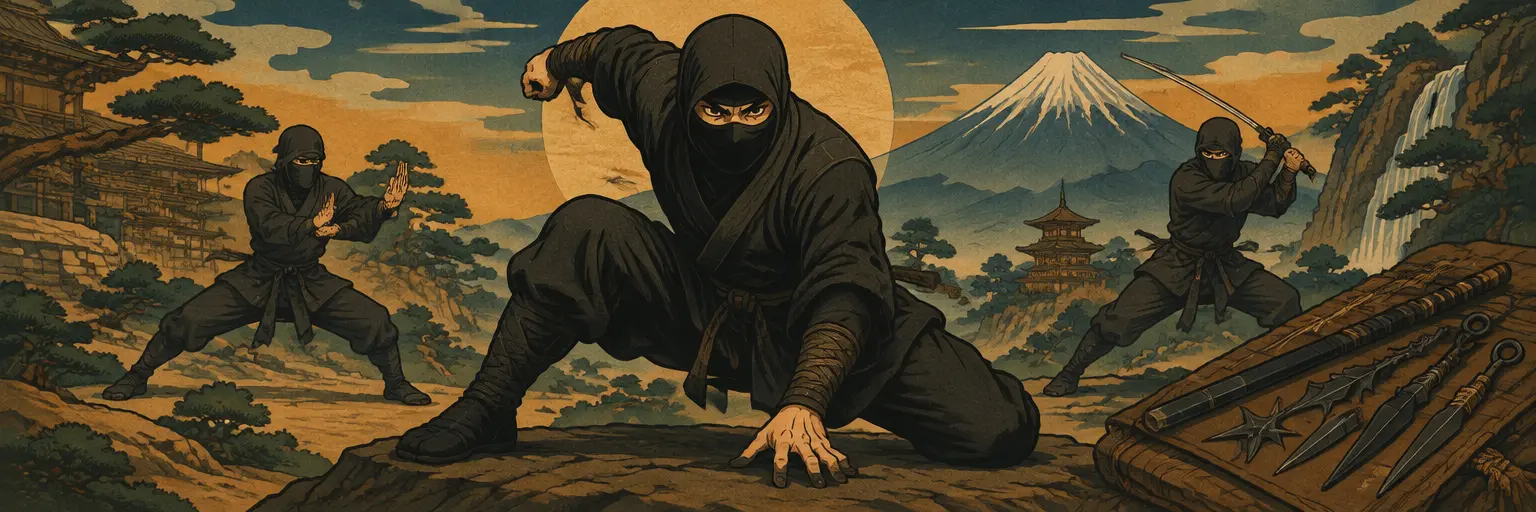
Discover the shadowy world of Ninjutsu, the ancient Japanese art of espionage, stealth, and survival, where unarmed combat and weapon mastery merge into a seamless strategy for outwitting any adversary. On MartialArtsMastery.org, we break down the core techniques—from silent footwork and body conditioning to precise strikes, joint locks, and evasion—while diving into classic weapons like the shuriken, tanto, and kusarigama, each taught with practical applications for modern self-defense. Whether you’re a history buff or a serious practitioner, our guides reveal the mindset behind ninjutsu’s fluid, adaptable approach, emphasizing awareness, timing, and psychological warfare over brute force. Unlock the secrets of the shinobi and elevate your martial arts repertoire with actionable drills, tactical breakdowns, and legendary case studies—all optimized for real-world readiness. Step beyond the myth and into effective, proven strategy that blends tradition with contemporary relevance.
🌿 Master the shadows with "Utilizing Natural Cover and Concealment: A Ninjutsu Field Guide." Discover essential Ninjutsu field concealment techniques to blend…
Read article
🗡️ Discover the 18 traditional Togakure Ryu Ninjutsu weapons, integral to this ancient martial art. Explore their historical significance, practical uses, and…
Read article
🎯 Master the art of Hira Shuriken throwing technique by perfecting your grip, stance, and release for pinpoint accuracy. Explore expert training…
Read article
🗡️ Discover how ninja information gathering techniques serve as a vital strategic weapon, blending stealth, intelligence, and discipline to master martial arts…
Read article
🥋 Discover the lethal precision of Bojutsu techniques for self-defense, as legendary ninjas mastered the long staff with unparalleled skill. Explore the…
Read article
🌟 Discover the power of Ninjutsu street defense techniques, mastering unarmed skills to effectively counter common street attacks. This article explores practical…
Read article
🌟 Master the art of Ninjutsu escape and evasion with innovative diversion tactics that ensure a clean getaway. Explore ancient strategies and…
Read article
🌟 Master the art of concealment with our Ninjutsu evasion techniques training, unlocking the secrets to disappearing in plain sight. Dive into…
Read articleNinjutsu, the legendary "art of stealth" practiced by the shinobi of feudal Japan, is far more than the acrobatic mysticism portrayed in popular media. This subcategory of Individual Martial Arts Styles dives deep into the practical, battlefield-tested techniques and strategic frameworks that defined historical ninjutsu. From unarmed combat (taijutsu) to the diverse arsenal of hidden weapons (bukijutsu), we dissect the core principles of evasion, adaptability, and efficiency that make this system uniquely effective. Here, you’ll discover how ancient tactics translate into modern self-defense, fitness, and tactical awareness, separating historical fact from cinematic fiction while honoring the deep strategic philosophies of the ninja.
Unarmed ninjutsu, or taijutsu, is built on natural body mechanics and fluid, circular motion rather than brute force. Practitioners learn to evade attacks through *taihenjutsu* (body movement), using angles and footwork to neutralize an opponent’s power before countering with strikes, joint locks, or throws. This is not a sport; every movement is designed for real-world survival, emphasizing efficiency of motion and breaking an attacker’s balance (kuzushi) quickly and decisively. Expect to explore the "eight gates" of the body—eyes, ears, nose, mouth, and four limbs—as primary targets for devastating effects.
Beyond the physical, unarmed ninjutsu integrates strategic deception, teaching practitioners to feint, misdirect, and use environmental distractions to create openings. Techniques like unbalance throws and wrist locks are studied for immediate application in self-defense scenarios, not for tournament points. The curriculum stresses that the best "shadow warrior" wins without a fight, using posture, breath control, and situational awareness to deter aggression before it begins. For beginners, mastering the basic kamae (fighting postures) provides a solid foundation for all advanced grappling and striking methods, making this a rich area for martial artists seeking pragmatic, reality-based combat training.
The ninja were renowned for their inventive use of weapons, and this section covers the core arsenal of bukijutsu. The ninja-tō (straight-edged short sword) is examined as a versatile tool for cutting, thrusting, and climbing, while the shuriken (throwing stars) are studied not as primary killers but as distraction and suppression tools. We also deconstruct the kusarigama (sickle-and-chain), a complex weapon that entangles and severs, alongside the hanbō (short staff), a ubiquitous walking-stick disguise capable of dynamic striking and locking techniques. Each weapon has specific ranges, footwork, and tactical uses, taught through solo kata (forms) and paired drills.
Mastery of these weapons requires more than just physical repetition; it demands an understanding of improvisation. Shinobi were experts at turning everyday objects—farming tools, ropes, and even fans—into lethal implements. In our detailed guides, you’ll learn the fundamentals of grip, stance, and trajectory specific to each weapon, alongside historical context on how these tools were concealed and deployed in espionage and ambush. Moreover, we emphasize modern adaptations, showing how skills with the hanbō can enhance your defensive tactics with a cane or umbrella today. This is not just historical reconstruction; it is a practical exploration of asymmetrical warfare principles applied to personal protection.
Ninjutsu’s strategic core goes beyond combat, encompassing ninpo—the higher art of survival, espionage, and intelligence gathering. This section reveals the classic "five elements" (Godai) strategies: Earth (hidden movement and stalking), Water (adapting fluidly to situations), Fire (offensive vigor), Wind (evasion and speed), and Void (knowing when to act or not). You’ll explore ancient methods of silent walking, lock-picking, disguise, and the psychological manipulation used to confuse or distract enemies, all underpinned by acute awareness of your environment (sanjaku-tobi). These are civil-war-era special operations skills, systematically broken down for modern study.
Moreover, this facet focuses on tactical planning, teaching readers how to analyze a situation from multiple perspectives—including time, terrain, and weather—to gain the advantage. Historical case studies of shinobi missions illustrate how a small, well-trained force could sow chaos in a castle using fire, noise, and misinformation, shaping outcomes without direct confrontation. Learning these strategies enhances not just martial readiness but also daily decision-making, fostering a proactive versus reactive mindset. We emphasize ethical application, ensuring that the "shadow warrior" code is used for protection and resilience, not malicious intent, while keeping the historical authenticity of these ancient techniques intact.
For the ninja, the mind was the ultimate weapon, and this subcategory explores the mental conditioning that defines true ninjutsu. This includes meditation, breath work (kokyu-ho), and visualisation to maintain calm under extreme stress—a quality as valuable on the modern street as on the ancient battlefield. You’ll study the concept of shinobi-iri (stealth entering), not just physically but mentally, learning to read body language, predict bursts of violence, and control your own emotional responses. The "unshakable mind" (fudoshin) is a core goal, achieved through repetitive drills and philosophical reflection on impermanence. This is holistic training connecting physical technique to spiritual fortitude.
Furthermore, we integrate the shichi-ho-de (seven ways to lead) and other historical leadership principles used by ninja commanders. These ancient maxims provide a framework for motivation, team cohesion, and situational authority that is surprisingly relevant to modern leadership and self-development. The resilience cultivated here is not about aggression but about endurance—the ability to survive adversity, adapt to sudden changes, and persist through failure. Our content clarifies that the legendary "trained body, fearless mind" is attainable through a structured regimen of physical drills, mental puzzles, and ethical reflection, transforming ninjutsu from a mere combat art into a lifelong path of personal mastery and inner peace.
This section converts ancient shinobi methods into a modern self-defense system that protects against contemporary threats such as muggings, assault, and home invasions. We break down practical applications of taijutsu escapes from common grabs, using principles of evasion and joint manipulation to avoid injury. Strategies for disarming a knife-wielding attacker using the same angular footwork and target selection as historical ninja are explained, but always with an emphasis on escape and de-escalation. You’ll learn how the ninja’s focus on situational awareness prevents confrontations before they start—reading a crowd, identifying exits, and understanding the psychology of a potential predator. This is reality-based defense, shorn of fantasy.
Uniquely, this facet adapts the kusarigama and hanbō techniques to everyday objects like a folded umbrella, belt, or backpack, teaching you to convert your environment into a defensive asset. We provide scenario-based drills that replicate real-world environments—parking lots, stairwells, and narrow corridors—so you train in conditions similar to where attacks occur. The ethical use of force is a key tenet, teaching you legal thresholds for self-defense and the importance of post-incident procedures. This is not about becoming a super-soldier but about developing a proactive, confident, and highly capable mindset that embodies the ninja’s "use the environment, not muscle" philosophy for maximum personal safety in our modern world.
Yes, when taught authentically. Modern ninjutsu focuses on situational awareness, escape, and using natural body mechanics to neutralize threats quickly. Techniques are adapted from historical survival tactics and prioritize ending a confrontation safely, often targeting vital points and using throws to create distance. It is a pragmatic system that works under adrenaline.
Taijutsu is the unarmed body movement of the ninja, emphasising evasion and natural postures, while jujutsu is a broader Japanese grappling system. In ninjutsu, taijutsu integrates strikes, locks, and throws fluidly with weapon use, often incorporating stealth and environmental awareness. Jujutsu is more systematic in joint lock and throw sequences, whereas taijutsu is more fluid and situation-driven.
No, beginners are always welcome, and fitness builds gradually. Ninjutsu training improves conditioning through natural movement, but it is designed to work for different body types and ages. The emphasis is on technique, leverage, and timing, not raw strength, so you can start at any fitness level and see progress with consistent practice.
Basic competency with simple tools like the hanbō can take a few months of practice, but full mastery takes years. The weapons system requires precise footwork, timing, and coordination, which are developed progressively. A dedicated student can learn defensive use of a stick or improvised object within 6-12 months, but advanced forms like the kusarigama take longer to handle safely and effectively.
Ninjutsu has authentic historical roots in feudal Japan, with documented manuals like the Bansenshukai. However, many modern schools have incorporated new techniques. Our content teaches the classic principles of evasion, espionage, and weaponry while acknowledging historical adaptation. We focus on the traditional mindset and proven skills, not cinematic fantasy.







