Sanshou's Evolution: How Chinese Kickboxing Was Forged and Standardized
🐉 Uncover the fascinating journey of Sanshou, from its ancient roots to modern combat. Explore the evolution of its dynamic Sanshou kickboxing…
Read article
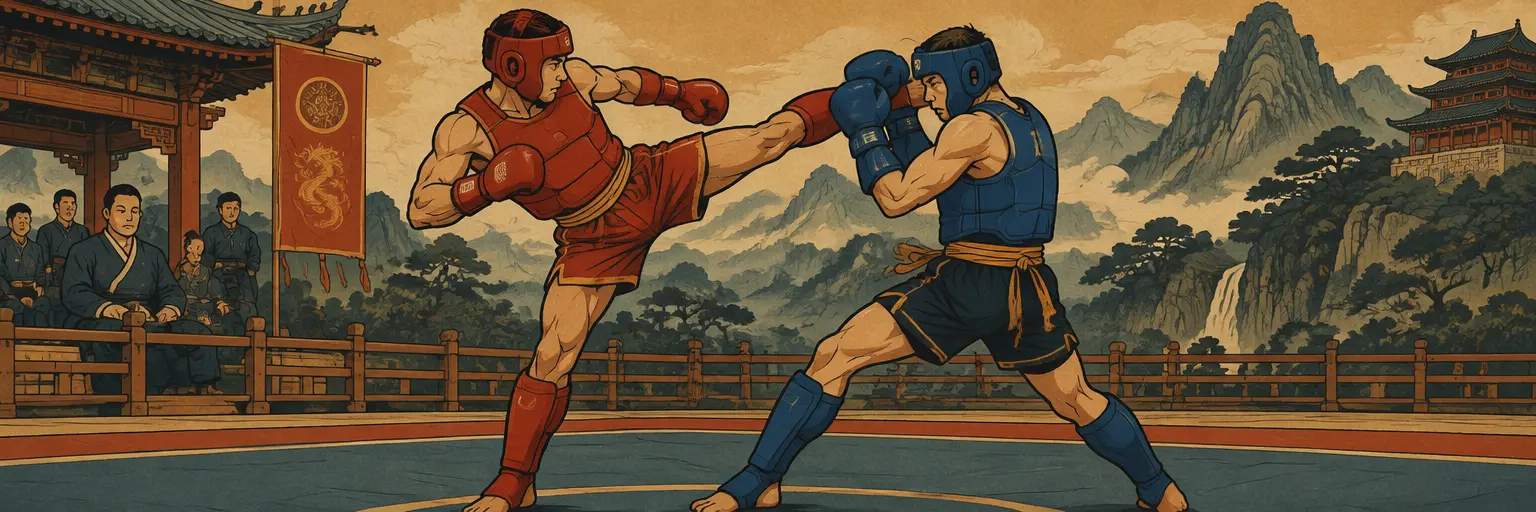
Discover the electrifying world of Sanda (Sanshou)—China’s dynamic kickboxing system that blends traditional kung fu with modern, practical combat. Unlike purely striking arts, Sanda is a full-contact sport that combines fast, powerful punches and kicks with throws and sweeps, making it one of the most complete stand-up fighting styles for real-world self-defense and competitive success. Here, you’ll unlock the core techniques—from the explosive front kick and spinning heel kick to the clinch-based takedowns that set it apart—and grasp the essential rules that govern its fast-paced bouts, including scoring, legal targets, and safety gear. Whether you’re a striker looking to add wrestling-like throws or a martial artist seeking a proven, authentic combat system rooted in centuries of Chinese tradition, Sanda offers a brutal yet disciplined path. Master the art of “free fighting” where long-range strikes set up close-range control, and every exchange demands both agility and strategy. Perfect your footwork, sharpen your reflexes, and learn why Sanda has produced world champions and elite MMA fighters.
🐉 Uncover the fascinating journey of Sanshou, from its ancient roots to modern combat. Explore the evolution of its dynamic Sanshou kickboxing…
Read article
🥋 Discover essential Sanda kick defense techniques to enhance your combat skills. This article explores effective methods, specialized drills, and rules, empowering…
Read article
🥊 Unlock your full potential with essential Sanda striking drills techniques. These targeted exercises enhance speed, power, and precision, helping practitioners refine…
Read article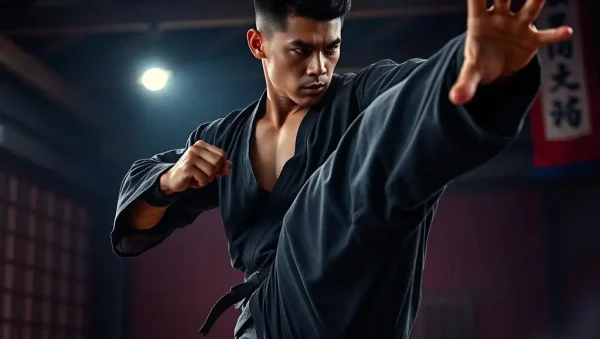
🥋 Discover how Sanda cross training benefits martial arts by enhancing agility, strength, and versatility. Integrating complementary arts and exercises not only…
Read article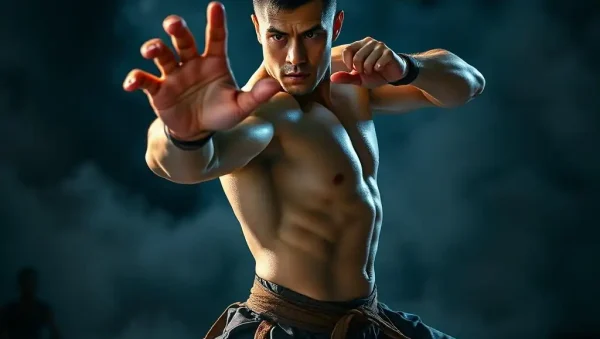
💥 Master the Sanda palm heel strike technique, a powerful close-range weapon. Explore its effectiveness and strategic application within the Sanda ruleset…
Read article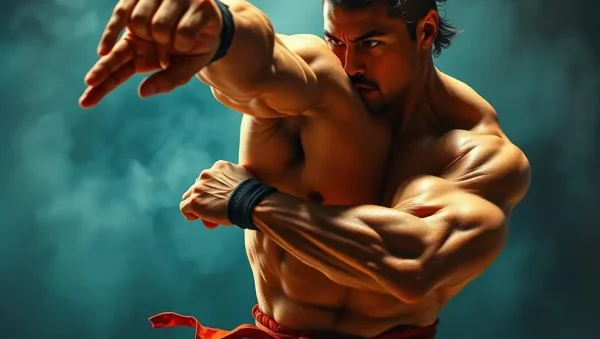
🥋 Discover effective Sanda punch defense techniques that transform your defense into a powerful offense. Learn how to legally counter punches, enhance…
Read article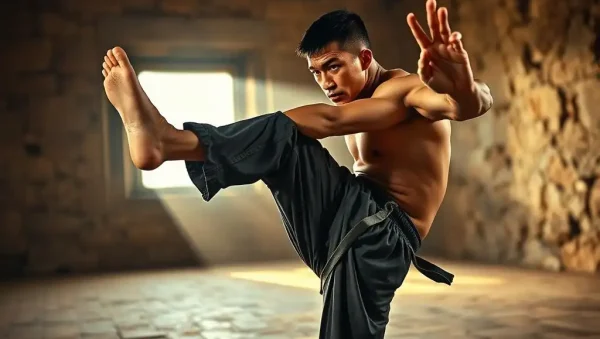
🥋 Unlock your potential at a Sanda training camp. This comprehensive Sanda training camp preparation guide covers essential expectations and expert advice…
Read article
🥋 Master the crucial Sanda takedown defense techniques to remain dominant. This guide on MartialArtsMastery.org reveals how to stay on your feet…
Read articleWelcome to the dynamic world of Sanda / Sanshou, the modern combat sport and self-defense system born from traditional Chinese martial arts. Also known as Chinese kickboxing, this explosive discipline combines powerful striking with lightning-fast takkedowns and throws, making it one of the most practical and complete fighting styles on the planet. Unlike many traditional martial arts, Sanda is built for real-world effectiveness, blending boxing, kickboxing, and wrestling into a seamless system. Whether you are a beginner exploring martial arts or an experienced fighter looking to expand your arsenal, this guide unlocks the essential techniques, rules, and training methods that define modern Chinese kickboxing, all optimized to help you master the art of full-contact combat.
In Sanda, striking is a blend of Western boxing footwork and traditional Chinese long-range kicks. Expect to learn rapid-fire punches like the jab, cross, and hook, combined with devastating low kicks targeting the legs and thighs, a signature of Chinese kickboxing. The emphasis is on speed, power, and timing, using your entire body to generate force, not just your arms. Unlike pure Muay Thai, Sanda fighters often use a more mobile, evasive stance, which sets up both counter-strikes and explosive entries for throws. You will practice chain punching combinations and spinning back fists, but the true secret lies in setting up the takedown with a well-placed strike—making your offense unpredictable and highly effective for self-defense.
Training for strikes involves heavy bag work, pad drills, and sparring with protective gear. You will focus on hip rotation for punches and the shin conditioning for kicks, ensuring every blow is both painful and precise. The unique aspect of Sanda striking is the continuous motion; you are always moving, circling, and feinting, which makes you a difficult target. Learning to transition from a missed kick into a throw is a hallmarks skill, turning defensive moments into instant offensive attacks. Mastering these techniques builds not only powerful limbs but also the reflexes needed to react in chaotic, close-quarters situations.
What truly distinguishes Sanda from other kickboxing styles is its full incorporation of Shuaijiao, or Chinese wrestling. This is not just a grappling afterthought; it is a fundamental scoring and self-defense component that makes Sanda a complete mixed martial arts base. You will learn a repertoire of hip throws, leg sweeps, and body locks designed to unbalance and slam your opponent to the mat with brutal efficiency. The key is to use your opponent's momentum against them, requiring minimal strength and maximum leverage. In competition, a successful takedown scores high points, encouraging fighters to transition seamlessly from long-range kicks to clinch work and instant throws.
Drilling these throws requires a dedicated partner and crash mats, as you must practice the entry, lift, and follow-through repeatedly. The clinch in Sanda is vastly different from Muay Thai; you are constantly looking to wrap, pull, and off-balance your opponent, often using a "plum" or neck-tie grip. This wrestling layer provides a huge advantage in real-world altercations, allowing you to control the distance, negate a larger attacker's power, and put them on the ground safely. By mastering Sanda's takedowns, you gain the confidence to handle both standing strikes and unexpected grappling, making you a truly unpredictable and dangerous competitor.
Understanding the rules is essential for any Sanda practitioner, especially if you plan to compete. Sanda bouts are held on an elevated Leitai (platform) or a standard ring, typically lasting two rounds of two minutes with a third if needed. Points are awarded for three primary actions: clean punches and kicks to legal targets, takedowns or throws, and dominant ring control. A powerful throw that slams the opponent onto their back scores two points, while a simple takedown or effective strike scores one point. The scoring is fast-paced, rewarding aggression and control over passive point-fighting. In some competitions, knockouts and forced retreats are also recognized, mirroring professional kickboxing standards.
Competitors wear protective gear including headgear, chest protectors, and shin guards in amateur levels, with pros often fighting without them. The referee has absolute authority to stop the match for safety, and judges actively penalize passivity, clinching without action, and holding. The uniqueness of the rules is that you cannot simply "run away"; the ring's elevated nature and scoring system force you to engage. This rule set prepares you for practical self-defense by encouraging constant environmental awareness and decisive action. Whether you watch or compete, knowing the scoring deeply enhances your appreciation for the tactical buildup behind every strike and throw.
To excel in Sanda, you must cultivate a robust physical foundation proportional to your technical skills. Conditioning focuses on explosive power output, aerobic and anaerobic endurance, and strong core stability for throws. Daily routines often include rope jumping, sprint intervals, and medicine ball throws to mimic the explosive nature of takedowns. Equally vital is partner drills that isolate specific movements—like catching a low kick and immediately executing a sweep, or defending a punch and shooting for a body lock. You will also engage in shadow boxing with visualization, imagining both striking and clinching scenarios, which sharpens your mental speed and creativity.
Heavy bag work is your best friend for building bone density and striking power, while focused pad work improves timing and accuracy. For throws, resistance-band work and partner carries build the necessary back and leg strength. Sparring is the ultimate test, where you learn to blend all these elements under pressure, honing your fight IQ. Conditioning also includes flexibility routines, particularly for the hips and hamstrings, allowing for high kicks and deep stances. To truly master Sanda, you must treat each training session as a holistic workout that transforms your body into a lethal, all-purpose weapon, ready to strike and throw without hesitation.
Beyond the ring, Sanda is perhaps the most directly applicable martial art for real-world violence. Its philosophy of strike to set up a throw is inherently practical; in a street altercation, getting the fight to the ground on your terms is often the safest outcome. You learn to manage distances, deal with larger opponents using leverage, and handle multiple attackers by staying mobile and striking vital areas with simple, powerful techniques. Unlike arts that focus purely on punches or kicks, Sanda's wrestling foundation teaches you balance and gravity control, which are essential for escaping grabs and bear hugs. The constant sparring against resisting opponents builds desensitization to fear and improves your decision-making under duress, a critical advantage in emergencies.
Furthermore, the conditioning required for Sanda means you will be physically prepared for the rigors of a fight—your cardiovascular system and muscular endurance will not fail you when you need them most. The mental resilience developed through hard training translates directly to confidence in your daily life, making you less likely to be targeted by aggressors. While no martial art can guarantee victory, Sanda’s well-rounded blend of striking, takedowns, and ground control (through basic groundwork drills) covers the triad of combat skills more effectively than most. For those seeking practical warrior arts steeped in ancient Chinese tradition yet perfected for modern reality, Sanda is an unmatched choice.
No, not exactly. While Sanda includes kickboxing techniques, it also incorporates throws and takedowns from Shuaijiao wrestling. Standard kickboxing focuses only on punching and kicking, while Sanda is often called "Chinese boxing and wrestling," making it a more complete striking art that prepares you for mixed combat situations.
Absolutely not. Sanda is beginner-friendly and taught progressively. You will start with basic footwork, punches, kicks, and simple throws, gradually building more complex combinations. A good instructor will always scale intensity to your level, ensuring a safe but challenging learning environment for all fitness and experience levels.
Beginners need a comfortable set of boxing gloves (10-12 oz), hand wraps, shin guards, a mouthguard, and a jockstrap/cup. For sparring, a headgear and chest protector are highly recommended, especially for beginners, to minimize the risk of injury while you learn timing and control.
Yes, Sanda is an excellent base for MMA. Its kicking and boxing transitions smoothly, but its takedown defense and offensive throws are a massive advantage. Many famous MMA fighters, such as Cung Le and Zhang Weili, grew out of Sanda, proving its effectiveness in the cage against various styles.
You can learn basic self-defense techniques within 3-6 months of consistent training. Achieving competition-level proficiency typically takes 2-4 years of dedicated practice, sparring, and conditioning. However, the journey is continuous; every session refines your flow, power, and tactical awareness, and this is the true goal of the art.







