Developing Reaction Time and Reflexes for Combat: The Ultimate Training Guide
In the unpredictable world of combat sports and self-defense, speed isn’t just about how fast you can throw a punch—it’s about how quickly your brain perceives a threat and signals your muscles to respond. Developing reaction time and reflexes for combat is the cornerstone of martial arts mastery, separating elite fighters from hobbyists. This comprehensive subcategory within our Training & Techniques section dives deep into drills, neuroscience, and practical methods to shave milliseconds off your responses. Whether you’re a boxer, grappler, or street-defense practitioner, sharpening these skills improves your defensive timing, counter-attacking ability, and overall fight IQ, ensuring you’re always a step ahead of your opponent.
🥊 Understanding the Difference: Reflexes vs. Reaction Time in Martial Arts
Many martial artists use “reflex” and “reaction time” interchangeably, but they are fundamentally different. Reflexes are involuntary, hardwired neural pathways—like pulling your hand away from a hot stove—that bypass conscious thought. Reaction time, on the other hand, involves a conscious decision-making process: you see a jab, your brain processes it, then you choose to parry or slip. In combat, you need both. Reflexes handle inherent physical dangers (like flinching from an unexpected strike), while reaction time allows strategic responses planned through training. Understanding this distinction is critical because it changes how you train—reflexes are honed through repetitive stimulus-response drills, while reaction time improves through scenario-based sparring and visual-cognitive exercises.
For practical combat application, you cannot rely solely on innate reflexes; you must train your reaction time to become second nature. Drills like mirror sparring, randomized pad calls, and ball-drop catches build the neural speed required to read an opponent’s subtle telegraphed movements. Additionally, sport-specific reflexes, such as a boxer’s flinch-to-block or a BJJ fighter’s hip-escape under pressure, are trained deliberately. This subcategory will guide you through both, ensuring you build a balanced, instinctive defense and offense. By mastering this duality, you’ll reduce hesitation in high-stakes exchanges and increase your overall survival rate in both the dojo and the street.
⚡ Top Drills to Slash Your Combat Reaction Time
Reaction time in combat is trainable, and specific drills yield dramatic improvements within weeks. One of the most effective is the “double-end bag” exercise—its erratic rebound forces your eyes to track, your brain to process, and your hands to respond in milliseconds. Another staple is “reaction ball” training: a six-sided rubber ball is thrown against a wall, bouncing unpredictably; catching it sharpens your visual tracking and hand-eye coordination, directly translating to slipping and countering strikes. For lower-body agility, “ladder drills” with randomized commands (e.g., “left, right, back”) improve footwork reaction, keeping you out of danger and repositioning to strike. Incorporate partner drills where your coach randomly shouts numbers or touches targets, forcing you to execute a pre-learned defensive move on cue.
To further enhance combat-specific reflex speed, integrate “reactive shadowboxing”: record a video of someone attacking, play it at varying speeds, and practice your counters. This trains anticipation, a key component of elite reaction time. Also, use “light sparring” at 50% intensity, where one partner only attacks off an audio or visual cue—this condition your nervous system to respond without hesitation. Consistency is key; perform these drills for at least 15–20 minutes daily, taking adequate rest between sets to avoid neural fatigue. Over time, you’ll notice your defensive blocks happen automatically, and your counter-offensives flow without conscious thought. Remember, quality over quantity—slow, precise practice first, then build speed.
🧠 Neurological Training: How to Rewire Your Brain for Faster Responses
Combat reaction time isn’t just physical—it’s neurological. Your brain’s processing speed determines how quickly you can interpret visual cues, predict movements, and trigger motor responses. One proven method is “perceptual-cognitive training,” which uses video footage of real fights to improve your ability to read opponents’ intentions. Studies show that expert martial artists exhibit superior “quiet eye” duration—they fixate on critical areas like the shoulders or lead hand earlier than novices. You can train this by watching fight clips and pausing at key moments, asking yourself, “What happens next?” and then checking the outcome. This builds predictive neural pathways, allowing you to initiate your reaction before a strike fully launches.
Another neurological technique is “dual-task training,” where you perform a simple physical action (like bouncing on your toes) while simultaneously responding to visual or auditory cues. This overloads your brain, forcing it to prioritize and react faster under pressure—mimicking combat chaos. Additionally, incorporate “reaction-time apps” that test your millisecond responses to random color changes; they provide quantifiable feedback, helping you track progress. Meditation and mindfulness also play a role—reducing stress hormones like cortisol improves your brain’s processing speed by lowering cognitive interference. By combining these neurological drills with physical practice, you’re building both the hardware (neural pathways) and software (muscle memory) for lightning-fast reflexes.
🥋 Sport-Specific Reflex Drills: Boxing, Muay Thai, BJJ, and MMA
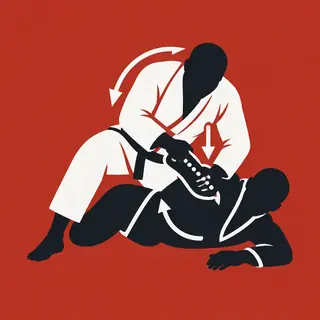
Each martial art demands unique reaction patterns. In boxing, the prime reflex is the “slip and counter.” Practice “blitz reaction drills” where a partner throws a predictable jab, but you must pick one of three responses (slip left, parry, or duck) based on a color called out just before impact. Muay Thai requires rapid leg checks; train with a partner who randomly fires low kicks, forcing you to check or block in under 200 milliseconds. For Brazilian Jiu-Jitsu, reflexes center on escaping submissions—drill “reactive armbar escapes” where your partner initiates the technique at random, and you must execute your standard escape without visual cues, relying solely on feel and spatial awareness. MMA blends all these—use “matrix sparring” where you wear a blindfold and your partner taps you, prompting a pre-learned defensive movement set.
Beyond specific moves, sport-specific reflex training builds muscle memory that becomes autopilot in competition. For instance, in wrestling, practice “shot reaction” drills: your opponent feints a takedown, and your only cue is the movement of their hips—train this by having a partner initiate a fake shot, forcing you to sprawl or re-shoot instantly. Similarly, for Taekwondo sparring, work on “head-check reactions” using a tennis ball thrown at your face (wear eye protection) to train the parry, block, or dodge reflex. These drills are not just about speed; they teach you to recognize the exact stimulus your opponent presents, making your reactions contextually appropriate. Always vary the drills to avoid plateaus, and log your improvement times to stay motivated.
🏃 Physical Conditioning for Faster Reflexes: Strength, Plyometrics, and Vision
Your body’s physical state heavily influences reaction speed. Weak or fatigued muscles react slower, so conditioning is non-negotiable. Incorporate plyometric exercises like squat jumps and clap push-ups to enhance explosiveness; these train fast-twitch muscle fibers, responsible for sudden bursts of movement. Similarly, speed ladder training improves foot coordination and neural firing rates. Strength training, especially for the core and legs, provides a stable base for rapid directional changes. However, avoid overtraining—neural fatigue decimates reaction time. Always pair heavy lifting days with light reflex drills to maintain sharpness. Balance is crucial: too much hypertrophy bulk can slow you down, so focus on power-to-weight ratio.
Vision is the gateway to reaction speed. Spend 10 minutes daily on visual tracking exercises, such as following a moving object (like a pendulum) with your eyes while keeping your head still, or playing “eye-hand basketball” by bouncing a ball and catching it with peripheral vision cues. Another hallucination-free technique is “speed reading”—train your eyes to scan multiple targets quickly. Hydration and sleep are also foundational; dehydration by just 2% impairs cognitive and motor reaction by up to 15%. Eat anti-inflammatory foods (berries, fish oil) to reduce neural noise. Finally, regular cardiovascular conditioning improves blood flow to the brain, sustaining your reaction speed throughout a long fight. A well-conditioned body supports a fast mind—never neglect your physical health in favor of pure technique.
Frequently Asked Questions
How long does it take to see improvement in reaction time?
Most martial artists notice measurable improvements (5-10 milliseconds faster) within 3–4 weeks of consistent daily drills. However, significant combat advantages, like automatic defenses, require 8–12 weeks of structured training. Neural adaptations occur faster than physical ones, so expect early gains, then a plateau. Keep training varied and progressive to avoid stagnation.
Can reaction time be improved at any age?
Yes, though younger athletes have quicker baseline speeds, older practitioners can still improve substantially. Neuroplasticity allows your brain to build new pathways throughout life. Focus on perceptual training, not just physical drills, as this compensates for any age-related decline. Many masters are slower physically but read opponents better, making their effective reaction faster.
What are the best drills for a beginner with no partner?
Solo options include reaction-ball-wall catches, double-end bag work, and video-based shadowboxing. Use a metronome app to time your defensive moves to random beats. Also, practice eye-tracking on a wall projector or phone app. The key is consistency and making each rep as explosive as possible.
How does sparring affect reflex development compared to drilling?
Sparring provides dynamic, unpredictable stimuli that drilling cannot replicate, forcing your brain to adapt in real-time. However, drilling is where you build foundational patterns; sparring refines them. For optimal gains, spend 70% of your training time on deliberate drills and 30% on live sparring, progressing from light to full contact.
Are there any supplements that boost reaction time for combat?
Caffeine (100-200mg) taken 30 minutes prior to training can temporarily sharpen alertness and motor reaction. Creatine monohydrate supports cognitive processing and may improve reaction speed in fatigued states. Omega-3 fatty acids and B-complex vitamins support neural health long-term. Always consult a healthcare professional before adding supplements.