The Silent Language: What Your Movement Says About Your Martial Skill
😉 Uncover how your subtle movements reveal your true martial arts skill. MartialArtsMastery.org delves into the silent language of combat, translating your…
Read article

Mastering the art of combat begins beneath your fists—it starts with your feet. In martial arts, footwork is the silent foundation of every strike, block, and takedown, transforming raw power into precise, evasive action. This essentials guide dives into the core pillars of stance, movement, and evasion, teaching you how to maintain balance, generate explosive momentum, and slip attacks with fluid agility. Whether you’re a beginner learning your first fighting stance or a seasoned practitioner refining your angles, you’ll discover proven drills to sharpen reaction time, improve lateral mobility, and keep your center of gravity unshakable under pressure. Unlock the secret to controlling distance, dictating the pace of any encounter, and turning defense into offense with seamless transitions. Your journey to becoming a more elusive, efficient, and confident martial artist starts here—get ready to move smarter, not harder. 🥋👣⚡

😉 Uncover how your subtle movements reveal your true martial arts skill. MartialArtsMastery.org delves into the silent language of combat, translating your…
Read article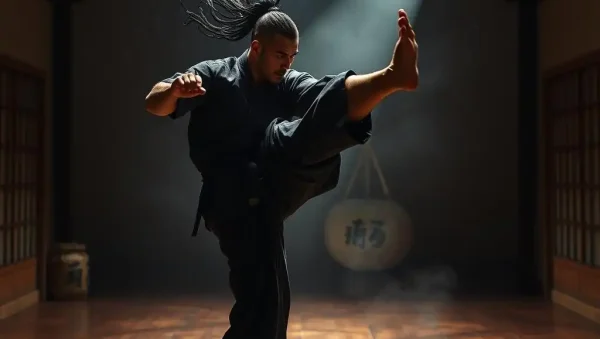
🌀 Unlock devastating power! "Circular Logic" reveals how mastering angular movement in martial combat training enhances your techniques, transforming your approach to…
Read article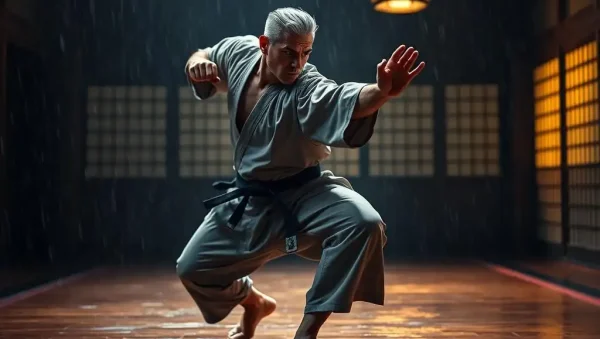
💥 Elevate your combat effectiveness by seamlessly weaving crucial evasion techniques into your martial arts training. Discover how integrating defensive movement amplifies…
Read article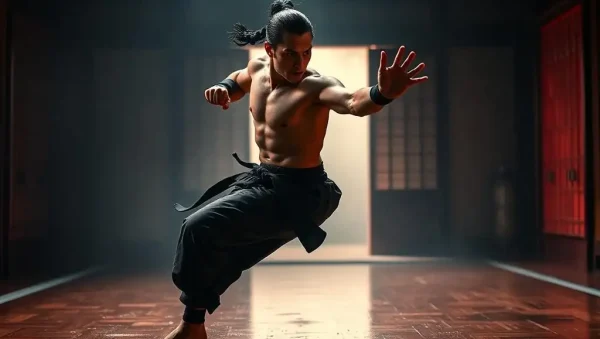
✨ Master the synergy of breath and movement. Discover how integrating respiration with footwork dynamics revolutionizes your martial arts training, enhancing power,…
Read article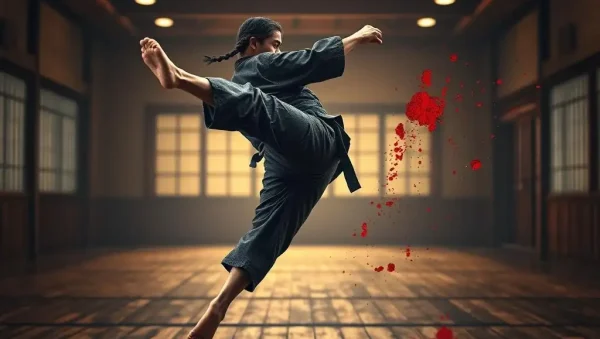
🏆 Unlock the secrets of anticipatory movement in martial arts training. Learn to read your opponent's intentions and react with lightning speed,…
Read article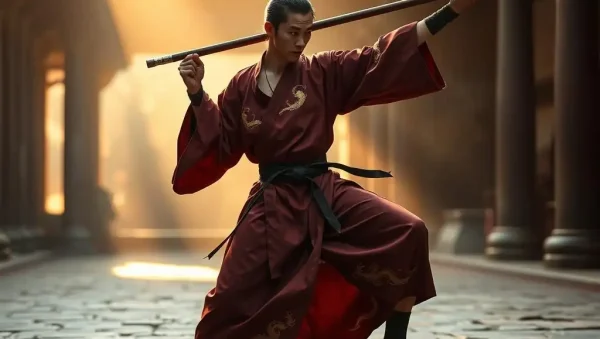
🧘 Uncover the profound connection between ancient martial arts philosophy and stances. Explore how timeless wisdom shapes effective movement and mental fortitude…
Read article
⚡️ Discover how smart evasion in martial arts conserves vital energy, allowing for sustained defense and decisive counter-offense. Master the art of…
Read articleMastering footwork is the silent engine behind every powerful strike, smooth takedown, and successful escape in martial arts. In this subcategory, we strip away styles and focus on universal principles of stance, movement, and evasion that apply across boxing, Muay Thai, karate, Taekwondo, and self-defense. Whether you are a white belt or a seasoned fighter, refining your feet will instantly improve balance, speed, and defensive awareness. Expect practical drills, biomechanical insights, and common mistakes to avoid, all designed to make your lower body a weapon of control.
Your stance is your home base—it determines how quickly you can attack, retreat, or change angles. In this section, you will learn the core elements of a versatile stance: foot width, weight distribution, and knee bend. A strong stance keeps your center of gravity low but not stiff, allowing for explosive shifts without telegraphing your intent. We break down bladed stances (common in karate) versus square stances (common in boxing), explaining when each offers advantages in reach, power, or hip rotation.
You will also practice adjusting your stance for offensive pressure versus defensive countering. Simple drills, like the “step-drag” and “push-off pivot,” will teach you to maintain balance while moving in any direction. Avoid common pitfalls such as crossing your feet or standing flat-footed, which kill your reaction time. By the end, you will feel rooted yet light—ready to spring forward or slip away without thinking.
Movement is not just about getting closer or farther—it is about controlling the space your opponent can use. Here we focus on linear movement (advancing and retreating) and lateral movement (shuffling left and right) as the two primary axis of footwork. You will learn how to step with the lead foot first for smooth entries, and how to push off the rear foot for rapid retreats that keep your guard intact. We also cover “crescent steps” and “swerve steps” to cut off your opponent’s best angles, forcing them into awkward positions.
Practical exercises include shadowboxing with a focus on foot placement, using cones or floor markers to practice clean step patterns, and partner drills where you mirror each other’s movements. Emphasizing small, controlled steps over large lunges is key—large steps create momentum you cannot stop, making you vulnerable to counters. By mastering lateral movement, you will naturally create openings for body shots and kicks, while making your opponent miss more often.
Pivoting is a game-changer in evasion and angle creation. This section dives into forefoot and heel pivots, teaching you how to rotate your body quickly without sacrificing balance. You will learn the “back pivot” (turning away from the opponent’s power side) and the “front pivot” (stepping into an angle that sets up your own strikes). These moves are essential for escaping corner pressure and for landing hooks or roundhouse kicks with extra rotational force.
We provide step-by-step breakdowns of pivot chains, like the “step-pivot-step” sequence, which allows you to circle off your opponent’s lead hand. Drills include standing pivot with resistance bands to build ankle strength, and mirror drills with a partner to practice reacting to directional cues. Remember to keep your knees slightly bent and your head off the centerline—this makes your pivots both faster and safer. Avoid pivoting on your toes alone, as that strains the Achilles and reduces stability.
Evasion is about using your feet to make opponents miss, not just moving your head. Here you will learn the footwork behind classic defensive maneuvers: slipping (head movement combined with a small lateral step), bobbing (lowering your stance while stepping forward), and weaving (a circular head-and-body motion). Each technique relies on your feet to change levels and direction simultaneously, so your opponent’s punch sails past you while you stay in position to counter.
We explain the timing and distance cues needed to execute these moves effectively—for example, slipping when the punch is halfway to you, not at the start. Partner drills with slow punches help you build muscle memory, while solo shadowboxing lets you combine slips with footwork patterns. Critical mistakes include leaning too far forward (losing balance) and failing to reset your stance after evasion. With practice, you will become a moving target that frustrates even the sharpest strikers.
No skill improves without repetition. This section compiles the best footwork drills for beginners to advanced practitioners, all using minimal equipment. Start with the “ladder shuffle” using tape on the floor to build precision and speed. Progress to “cone weave” drills that combine pivots and lateral steps. For sparring-specific footwork, we include the “boxer’s rhythm” drill, where you alternate between bouncing and stepping to break predictable timing.
Advanced players can try “reaction mirror” drilling, where a partner points directions randomly and you must move without crossing your feet. We also integrate footwork into defensive round drills—your partner attacks, and you evade using only your feet, then counter with one strike. Track your improvement over four weeks with a simple checklist: speed, balance, and the number of successful evasions per round. The goal is not perfection but continuous, measurable growth.
The biggest mistake is bouncing on your toes too high or standing flat-footed, which destroys stability and reaction speed. Another common error is crossing your feet when moving laterally, which trips you up. Focus on taking small, controlled steps and keeping your weight slightly forward on the balls of your feet.
With dedicated practice of 15-20 minutes per day, you will see noticeable improvement in 4-6 weeks. Basic stance and linear movement become comfortable in about two weeks, but pivoting and evasive combination patterns take longer. Consistency beats intensity—daily short drills outperform weekly long sessions.
Absolutely. Shadowboxing with a focus on foot placements, using floor tape or cones, and even practicing in front of a mirror are excellent solo methods. You can also drill footwork while walking—take a few steps forward, pivot, and step back—anywhere you have a few square meters of space.
In self-defense, footwork is about creating distance to escape, not exchange. Proper movement lets you avoid an attacker’s initial rush, gain time to assess the situation, and find safe exits. It also helps you maintain balance on uneven ground, which is common in real-world scenarios—unlike the smooth mats of a gym.
Core principles—balance, stability, and movement economy—are universal, but expression differs. Boxers use a bladed stance with heavy lateral shuffles; karate uses deep stances with neutral steps; Muay Thai relies on subtle weight shifts for checks and teeps. Learning general fundamentals first makes style-specific adaptations easier later.