The Jab Deconstructed: Biomechanics of Speed and Precision
💥 Unlock devastating power and surgical accuracy. This article delves into the Jab technique biomechanics explained, revealing the scientific principles behind explosive…
Read article
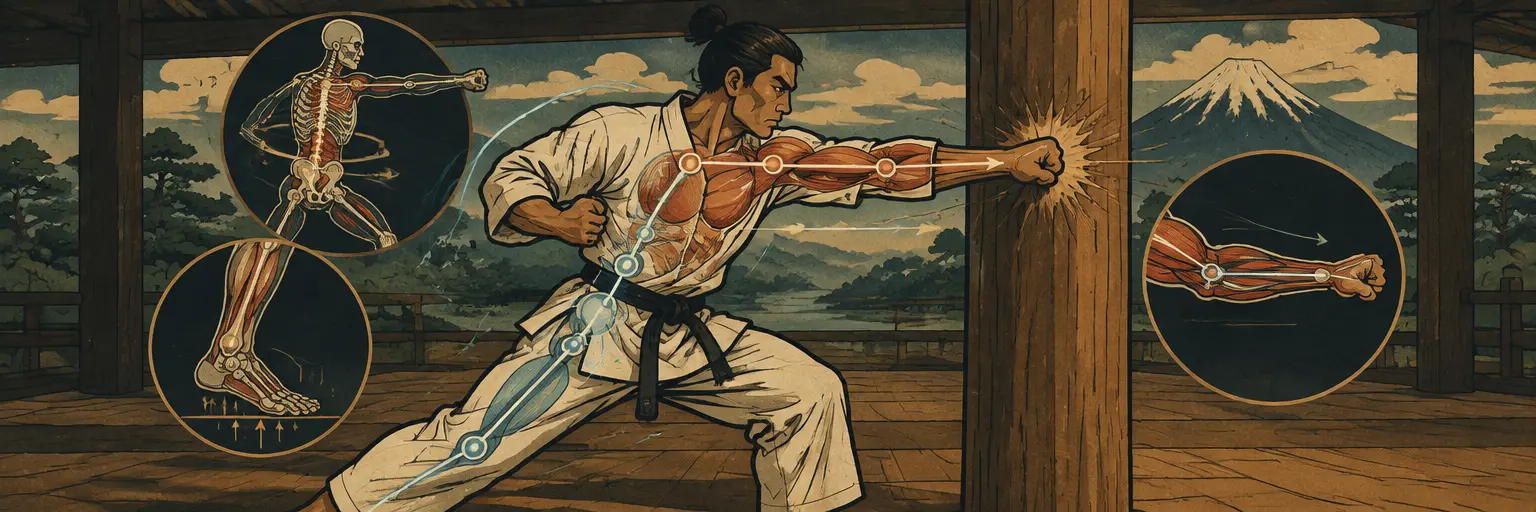
Unlock the true potential of every strike by mastering the biomechanics of power and precision—where science meets combat efficiency. This isn’t just about throwing harder; it’s about understanding how your body’s kinetic chain, from ground reaction forces to hip rotation and wrist snap, generates explosive impact while maintaining pinpoint accuracy. By refining your stance, weight transfer, and joint alignment, you’ll reduce injury risk and increase force delivery, whether you’re practicing boxing, karate, or Muay Thai. Learn to synchronize muscle activation, breathing, and timing to turn raw strength into controlled, devastating technique. Perfect for fighters and instructors alike, this knowledge bridges the gap between theory and real-world application, helping you strike smarter, faster, and with unmatched efficiency. 🥋💥
💥 Unlock devastating power and surgical accuracy. This article delves into the Jab technique biomechanics explained, revealing the scientific principles behind explosive…
Read article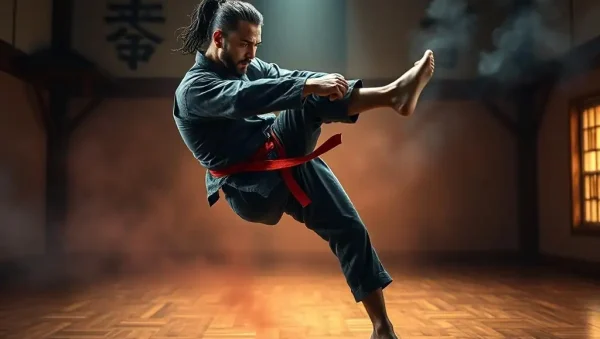
💥 Unlock devastating power! Learn the secrets of explosive strike body sequencing, harnessing the kinetic chain from your feet to your fist…
Read article
🎯 Master the art of striking with precision! Explore "Trajectory Control: The Science of Guiding Your Strike to the Mark" on MartialArtsMastery.org,…
Read article
💥 Master martial arts by understanding force vectors. Discover how force vector training techniques unlock precision and power, guiding your movements for…
Read article
💪 Unlock devastating strikes! Discover how precise shoulder girdle mechanics amplify your punching power, transforming your technique and dominance on the martial…
Read article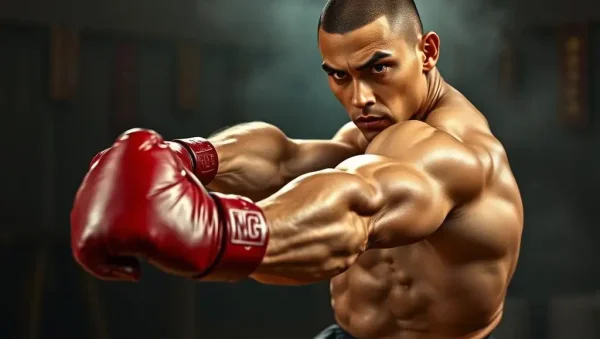
💪 Unlock devastating power and pinpoint accuracy in your martial arts striking by mastering biomechanics. Understand the science behind every movement to…
Read article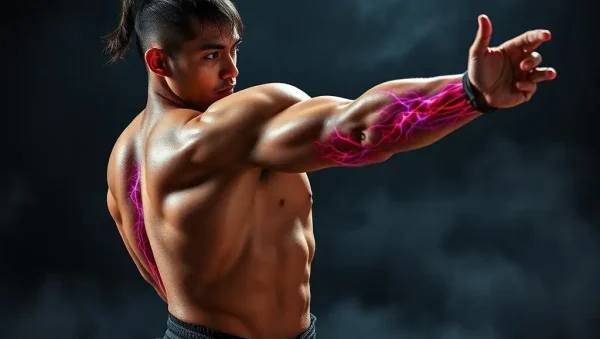
💥 Unlock devastating striking power! Learn how fascia training improves your strikes, revealing the hidden network that amplifies force in your martial…
Read articleWelcome to the Biomechanics of Striking section of Martial Arts Mastery, where science meets combat. Here, we break down the physics and anatomy behind every punch, kick, elbow, and knee, transforming raw effort into devastating efficiency. Whether you are a beginner seeking proper form or a seasoned fighter refining your edge, this subcategory focuses on the kinetic chain, joint alignment, and timing that separate powerful strikes from mere arm movements. Expect to elevate your understanding of force generation, impact transfer, and target precision, all grounded in practical drills and biomechanical principles.
Your strike’s power begins not in your arm, but in your feet. The kinetic chain describes how energy accumulates sequentially through the legs, hips, core, and finally into the striking limb. This section explains how to sequence these segments—pushing off the rear foot, rotating the hips, and snapping the shoulder—to create a whip-like effect. By mastering this timing, you maximize force production while minimizing energy leaks from improper posture.
Expect step-by-step breakdowns of a proper cross, hook, and roundhouse kick, emphasizing ground reaction force and torque. We provide visual cues and common error corrections, such as over-rotating the back foot or leading with the elbow. Practical drills include shadowboxing with resistance bands and slow-motion technique reviews. The goal is to make your strikes feel effortless yet explosive, turning your entire body into a single, coordinated weapon.
Balance is the silent partner of power. This facet focuses on how your stance, foot placement, and weight distribution affect both the stability of your base and the acceleration of your strike. A narrow stance sacrifices power; a wide stance sacrifices mobility. You will learn to shift your center of gravity dynamically—from a forward weight shift for jabs to a rearward pivot for side kicks—without telegraphing your intent.
We dissect the biomechanics of the bladed stance, square stance, and transitional steps, offering drills that train proprioception. Expect guidance on using hip torque to lock your rear leg during a cross, and how to generate upward force for uppercuts by dipping your knees. Precision is achieved through subtle weight adjustments, allowing you to hit moving targets without losing your balance or opening yourself to counters. This is the foundation of practical striking in sparring.
Striking hard is meaningless if your wrist folds or your ankle rolls. This section emphasizes the skeletal alignment that ensures your force travels undiminished from your body into the target. We cover the optimal angle for a straight punch—where the wrist, elbow, and shoulder form a straight line—and the proper shin-to-foot angle for kicks to prevent injury. Misalignment not only causes impact reduction but also leads to chronic pain.
Here, you will find detailed guides on wrist conditioning, fist formation, and the use of striking surfaces like the first two knuckles or the shin’s flat area. We explain how to tense your forearm muscles at the moment of contact to create a “structure” that withstands recoil. Drills include hitting focus mitts with a relaxed arm then tightening only on impact, and practicing kicks on pads to feel correct bone-on-pad contact. Precision comes from knowing exactly which part of your anatomy meets the target, every time.
What happens after impact is as critical as the strike itself. Poor recoil leaves you vulnerable or off-balance. This segment covers the biomechanics of dissipation—how to absorb the reactive force from the target using your joints and muscles to avoid injury. You will learn the “snap” technique, where you retract your limb quickly after contact, not just for speed but to reduce stress on your shoulder and elbow. Similarly, for kicks, proper hip retraction protects your knee and lower back.
Expect strategies for micro-bracing your core and glutes at impact to stiffen your structure, converting your body into a rigid frame that channels energy forward. We also address how to use counter-rotation—spinning the opposite shoulder or hip—to stop your momentum rather than fighting it. Drills include rapid-fire bag punches with instant retraction and partner drills where you strike a heavy bag then immediately slip or pivot to practice recovery. This maximizes your fight endurance and keeps you ready for the next move.
Power without accuracy is wasted. This facet explores the spatial biomechanics of striking—how to judge distance, use your reach, and time your strike to land at the optimal point of your limb’s extension curve. Striking too early or too late reduces force by up to 50%. We break down the “sweet spot” of full extension for punches and the ballistic arc for kicks, helping you calibrate your range through perceptual training.
You will find drills using telegraph detection, reaction time exercises, and footwork adjustments like the “step-drag” to close distance without altering your stance’s integrity. Precision is also about targeting—hitting the chin, liver, or solar plexus requires specific angle changes and hip height adjustments. We explain how to read your opponent’s posture to find openings, then generate power while your body is off-center without losing balance. This is the art of turning chaos into controlled, devastating accuracy.
The most common error is leading with the arm instead of the hips, causing force loss and shoulder strain. Beginners often punch by extending the arm forward while their hips remain static. To fix this, focus on pushing off the rear foot and rotating your hips before your shoulder moves. Practice slow, exaggerated rotations to rewire your muscle memory.
Heavy lifting builds raw strength, but striking power depends on speed and coordination. Use resistance bands for explosive extension drills, plyometric push-ups, and medicine ball throws. Also, practice “shadowboxing with intention”—throw each strike as if hitting a target, focusing on hip snap and full extension. This trains your nervous system to recruit fast-twitch fibers efficiently.
Hook punches commonly hurt the wrist because the impact angle is diagonal. Ensure your fist is horizontal with your palm facing down, and your wrist remains straight from the knuckles to the forearm. Strike with the first two knuckles, not the outer edge. Strengthen your wrists with wrist curls and rice bucket exercises, and keep your elbow at a 90-degree angle at impact.
No, shifting 100% of your weight leads to over-extension and balance loss. Aim for 70-80% weight transfer, keeping a slight bend in your knees to allow quick recovery. For jabs, keep most weight on your back foot to stay mobile. For power punches like crosses, shift forward but maintain your rear foot partially grounded for stability.
Precision kicks require hip flexibility and ankle control. Start by practicing slow kicks in front of a mirror, focusing on lifting your knee high and extending the shin along the correct path. Use a target at hip height first, then gradually raise it weekly. Always reset your stance after each kick to avoid dropping your guard. Daily stretching for the hamstrings and hip flexors is essential.