Advanced Joint Manipulation and Control (Cross-Style) – Elevate Your Grappling Arsenal
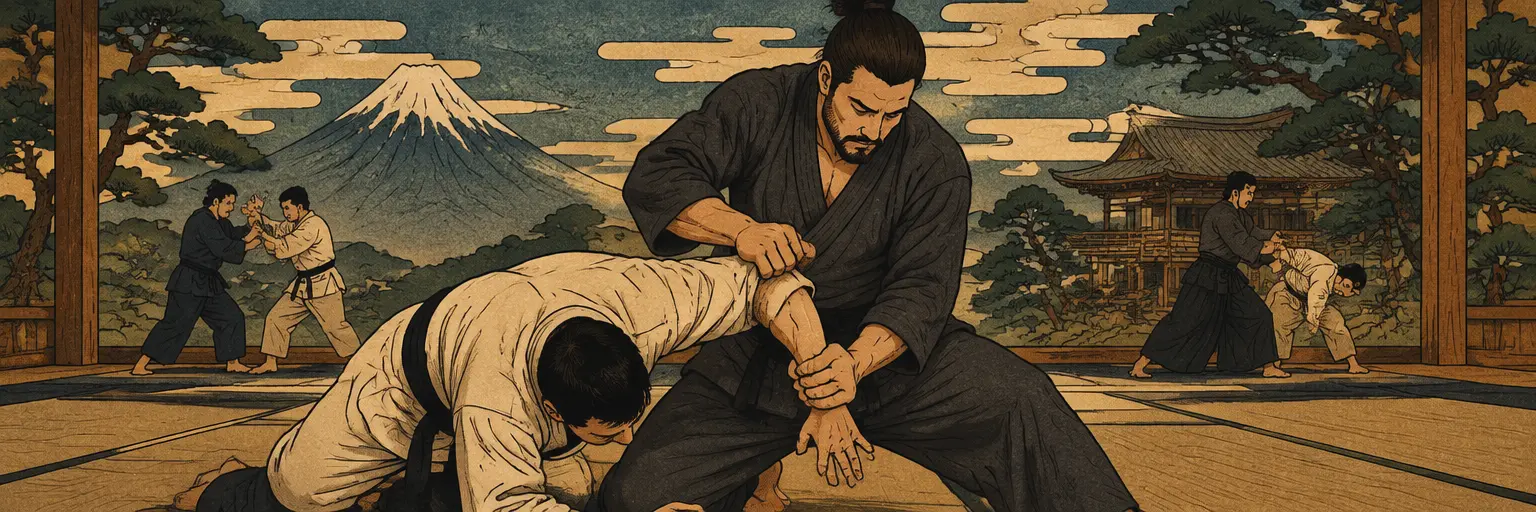
Welcome to the Advanced Joint Manipulation and Control (Cross-Style) subcategory at MartialArtsMastery.org, where the boundaries between disciplines dissolve in favor of universal mechanical principles. Here, you will explore how techniques from BJJ, Judo, Aikido, Sambo, and catch wrestling can be fused into a seamless, adaptive system. This is not about memorizing isolated moves; it is about understanding leverage, angle, and weight distribution to control any opponent, regardless of their style. Expect deep dives into hyperextension, rotation, and compression locks, plus tactical setups from both standing and ground positions. Let’s unlock the subtle physics that turn small joints into powerful control points.
🦾 The Core Principles of Cross-Style Joint Locks
Every effective joint manipulation, from a simple wristlock to a complex heel hook, relies on a universal set of biomechanical rules. In this section, you will learn how to identify the weakest rotational axis of the elbow, shoulder, knee, or wrist, and how to apply torque in the precise direction that bypasses muscular strength. We break down the difference between breakdown locks (forcing a tap through direct pressure) and positional control locks (using a lock to move an opponent without full submission). Expect detailed analysis of how your own body alignment amplifies force, reducing the need for raw power.
Moreover, you will discover how to blend Aikido’s circular wrist flows with BJJ’s kimura grip to create unexpected entries. We emphasize reaction-based training, showing you how to read an opponent’s resistance and instantly switch between a straight armbar, a shoulder lock, or a finger twist. This cross-style approach ensures you are never married to one tradition’s “perfect” form, but instead adapt to the chaos of live sparring with mechanical intelligence.
🤼♂️ Standing Joint Control: From Clinch to Quick Submission
Many practitioners underestimate the power of joint locks while standing, assuming they only work on the ground. This segment changes that misconception by focusing on standing wristlocks, elbow bars, and shoulder wraps that can end a fight in seconds without ever going to the mat. You will learn how to use a collar tie or biceps grip to set up a standing kimura, and how Judo’s kansetsu-waza can be applied to redirect an opponent’s momentum into a snapping armbar. Critical for self-defense: these techniques work equally well against a larger, untrained attacker because they exploit skeletal structure, not muscle.
We also cover transitional strategies—how to move from a standing lock into a takedown that maintains control. For example, a standing figure-four wristlock can be used to force the opponent to their knees, allowing you to flow directly into a tornado grip or a guillotine. Each technique is broken down step-by-step with attention to footwork and weight shifting, ensuring you can apply them live without freezing under pressure. Practical drills include partner resistance scaling, from compliant to fully resisting, to build confident, instinctive reactions.
🛡️ Ground-Based Joint Manipulation: Escapes, Sweeps, and Submissions
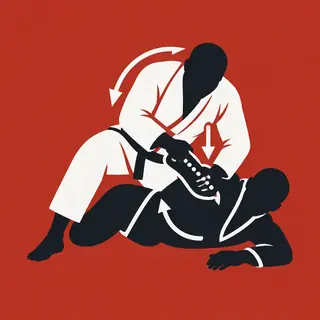
On the ground, joint control becomes a chess game of angles and leverage. Here, we dissect armbars from guard, shoulder cranks from side control, and heel hooks from 50/50, but through a cross-style lens that borrows from catch wrestling’s leg locks and Sambo’s knee bars. You will learn how to use your legs to create frames that prevent an opponent’s escape, and how to transition seamlessly from a failed submission into a sweep or a dominant position. The keyword is control: every joint lock is paired with a positional anchor, so you never lose top pressure or sacrifice posture.
Additionally, we address defensive joint manipulation—how to escape an armbar or kimura by using your opponent’s own joint mechanics against them. By understanding counter-locks and drift techniques, you can turn a bad position into an offensive attack. Video breakdowns and case studies of high-level matches illustrate how elite grapplers chain these moves, offering you both theoretical knowledge and practical drilling plans. Our goal is to make you a non-linear thinker on the mats, where every lock is a doorway to another lock or a sweep.
⚙️ Bio-mechanics for Safe & Effective Training
Safety is paramount when training advanced joint manipulation, as a wrong angle can cause serious injury. This H3 section focuses on the anatomical limits of each joint, including degrees of rotation, typical pain tolerance, and the distinction between pain compliance and structural damage. We provide a practical framework for progressive resistance, ensuring that you and your training partners can push intensity without crossing dangerous thresholds. Learn how to apply submission holds at 70% power in sparring to build technical skill, and how to communicate using tap signals effectively.
We also delve into conditioning exercises that strengthen your own joints against attacks, such as isometric wrist curls and shoulder stability drills. This is not just for grapplers—striking martial artists also benefit from understanding joint vulnerabilities to defend against grabs. You will receive sample warm-up routines and cool-down stretches that enhance flexibility in the shoulders and hips, the two most targeted areas. Ultimately, this section aims to create longevity in your practice, so you can enjoy joint manipulation for decades without chronic injuries.
🧠 Strategic Integration: Combining Joint Locks with Chokes and Strikes
Advanced practitioners know that joint locks are rarely used in isolation; they work best when chained with other attacks. Here, you will explore combination sequences that alternate between a joint lock and a choke, forcing the opponent to defend one and expose the other. For example, a kimura can be attempted, and when the opponent straightens their arm to defend, you immediately switch to a baseball bat choke from side control. Similarly, joint locks set up powerful striking angles in self-defense scenarios—controlling an attacker’s elbow to create a clear path to a knee strike.
We also discuss strategic positioning: when to prioritize a lock over a choke, based on your opponent’s posture, fatigue, and limb availability. This cross-style approach borrows from Japanese Jiu-Jitsu’s atemi-waza and modern MMA to show that joint manipulation is not just a submission tool—it’s a control system. Through live sparring drills, you’ll practice “same-position flow,” where you chain three to four attacks from a dominant hold, keeping your opponent constantly reacting. The result is a fluid, adaptive game that confuses even seasoned grapplers.
Frequently Asked Questions
What is cross-style joint manipulation?
Cross-style joint manipulation refers to blending techniques from multiple martial arts (e.g., BJJ, Judo, Aikido) into a cohesive system. Instead of isolating moves, you learn universal leverage principles that apply across disciplines, making your attacks less predictable and more adaptable to any opponent’s reactions.
Do I need to be a black belt to learn these advanced techniques?
No, but a solid grasp of basic locks and escapes is recommended. Cross-style methods rely on foundational mechanics like grip strength, hip movement, and positional awareness. If you have 1-2 years of consistent grappling training, you can integrate these concepts safely with a qualified instructor.
Are joint locks legal in sport grappling competitions?
It depends on the rules. BJJ and Judo allow arm and shoulder locks but restrict spinal cranks and small joint manipulation. Catch wrestling and submission grappling often permit leg locks at advanced belt levels. Always review the specific competition rulebook before attempting exotic locks.
How can I practice joint locks safely at home?
Use resistance bands and controlled drilling with a cooperative partner, focusing on slow, technical movement. Never apply force at full speed without a trained spotter. For solo practice, visualize the angles and practice hand positioning on a heavy grappling dummy to build muscle memory.
Can joint manipulation work against a larger, stronger opponent?
Yes, when executed with precise leverage and angles, joint locks are extremely effective against bigger attackers because they bypass muscle and target skeletal weaknesses. However, you must master transitions and use positional control to prevent them from using brute strength to escape before the lock is fully set.