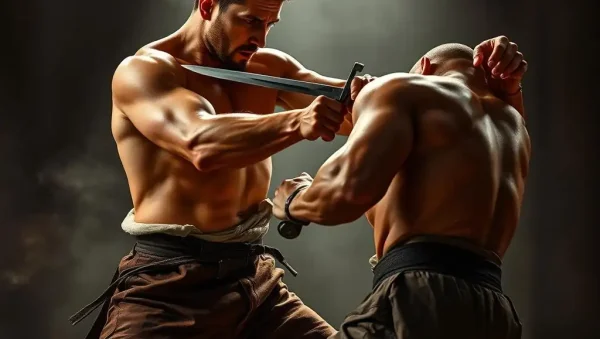
Historical European Martial Arts (HEMA): Dagger and Grappling
Welcome to the focused study of Historical European Martial Arts (HEMA), specifically the lethal and practical arts of dagger combat and grappling. Unlike sport fencing, this subcategory delves into the Renaissance-era fencing manuals of masters like Fiore dei Liberi and Hans Talhoffer, where close-quarters knife work and wrestling were inseparable for survival. Expect detailed breakdowns of guards, takedowns, and counters rooted in historical manuscripts, tailored for modern practitioners seeking authentic technique, historical context, and functional self-defense applications. Here, you’ll learn why dagger and grappling were considered the foundation of all armed combat in medieval Europe.
🗡️ The Fundamentals of Dagger Defense
Mastering the dagger begins with understanding its grip, stances, and the vital principle of “crossing the line”—moving offline from the attacker’s thrust. This section covers the core guards from Fiore's *Fior di Battaglia*, such as the “Iron Gate” and “Long Guard”, teaching you how to parry, bind, and control the opponent’s weapon arm. You’ll learn the six primary plays (or *scambi*) that form the bedrock of dagger work, emphasizing timing and leverage over brute strength, making this knowledge accessible to all body types.
Expect step-by-step visual breakdowns (described textually) of common attacks—like the downward stab and reverse grip—and the precise defensive responses. Each technique is explained with its historical purpose, from street defense to judicial combat, allowing you to train with both authenticity and modern safety. By the end, you’ll grasp how to disarm an armed assailant using simple, direct circular motions, a skill that translates directly to modern knife-defense scenarios.
🤼 Core Grappling Principles and Holds
HEMA grappling, often called *Ringen*, is not modern judo or BJJ; it’s a brutal, armor-aware system focused on breaking posture and controlling the head and neck. Here, we explore the foundational concepts of “the four fights” (close, middle, long, and ground) from master Ott Jud’s teachings. You’ll learn to execute takedowns like the hip throw and leg sweep, along with standing chokes and joint locks that target the elbows and shoulders, all designed to end a fight quickly against a dagger-wielding opponent.
This section emphasizes the synergy between grappling and dagger: how a simple wrist grab can transition into a disarm, or how a throw creates space to draw your own knife. You’ll practice techniques in a modern gym using padded daggers and mats, but the drills remain faithful to historical manuscripts. We’ll also cover how to fall safely and protect your vitals during these rapid exchanges, ensuring your training is both intense and injury-free.
⚔️ Combining Dagger & Grappling in Flow Drills
The real magic of HEMA lies in seamless integration—fighting with a dagger while simultaneously using your free hand to grip, hook, or strike. This section presents flow drills that chain together dagger parries with grappling entries, mirroring the chaos of a medieval duel. You’ll practice sequences where a failed dagger thrust becomes a clinch, leading to a trip or an arm drag, demonstrating how historical masters viewed combat as a continuous, adaptive exchange rather than separate phases.
These drills are designed for pairs and small groups, encouraging controlled pressure testing with resistant partners. Each flow chart is derived from specific manuscript plays, ensuring you’re not inventing techniques but rediscovering proven methods. As you progress, you’ll learn to read an opponent’s weight shift, use their momentum against them, and transition from offense to defense fluidly—skills that are invaluable for both historical reconstruction and modern self-defense.
📜 Historical Context: Masters & Manuals
To truly understand dagger and grappling, you must meet the masters who wrote it all down. This subcategory profiles key figures like Johannes Liechtenauer, Fiore dei Liberi, and Andre Lignitzer, explaining their unique systems and the cultural context of their work. Learn how armor influenced grappling—why certain holds worked in plate armor but not on the street—and how dagger techniques differed for judicial duels versus assassination. This historical lens deepens your appreciation for every move you practice.
We also compare and contrast the major manuscripts, such as the *Codex Wallerstein* and *Talhoffer’s Fechtbuch*, discussing their illustrations and cryptic notes. You’ll discover how modern HEMA instructors reverse-engineer these sources to create teachable curricula, and how you can access digital scans to do your own research. This context transforms your training from mere physical exercise into a living history lesson, connecting you to centuries of martial wisdom.
🛡️ Safety Gear, Training Partners & Modern Practice
Training historical dagger and grappling requires specific equipment to ensure safety while preserving realistic techniques. This section outlines essential gear: HEMA-rated padded daggers (nylon or leather), from steel replica daggers for solo drilling, plus fencing masks, gorgets, and heavy gloves for partner work. We’ll explain how to choose the right level of protection based on your intensity—from light “semi-free” sparring to full-contact armored wrestling—and how to inspect your gear for wear.
Beyond gear, we emphasize the importance of a trusted training partner who shares your commitment to control and calibrated resistance. You’ll learn drills to build that trust, including progressive resistance from static holds to free-form grappling, always with clean tap-out rules. We also cover common injuries (finger jams, sprained wrists) and prevention strategies, plus how to find or form a local HEMA club. This ensures your journey into medieval close combat is both educational and sustainable for decades.
Frequently Asked Questions
Do I need prior martial arts experience to start HEMA dagger and grappling?
No, absolute beginners are welcome. The techniques are taught progressively, starting with basic balance, grips, and footwork. However, having some wrestling or fencing experience can accelerate your learning, as the concepts of leverage and distance are similar. Most clubs offer introductory classes tailored to novices, so just bring a water bottle and an open mind.
What kind of protective gear is absolutely required for sparring?
Minimum required gear includes a padded fencing mask with back-of-head protection, a gorget (neck guard), heavy HEMA gloves (specific for dagger and grappling), and a groin protector. For grappling-only sessions, knee pads and elbow pads are highly recommended. Many clubs provide loaner gear for your first few sessions, so you can try before buying.
Is HEMA grappling effective for modern self-defense?
Yes, but with adaptation. The core principles—controlling the weapon arm, using throws to disable, and maintaining awareness of multiple attackers—are timeless. However, modern self-defense involves clothing differences and legal considerations. We recommend cross-training with a reality-based self-defense system to complement your HEMA skills, while always training with consent and avoiding eye gouges in practice.
How long does it take to become proficient in dagger techniques?
Proficiency varies by individual, but with consistent practice (2-3 times per week), most students become competent in basic defenses and disarms within 3-6 months. Mastery of fluid counter-offenses under pressure often takes 2-3 years of dedicated sparring. The focus should be on smooth, effective movement rather than speed, which prevents bad habits.
Can I practice these techniques alone if I don't have a partner?
Yes, solo drills are essential. You can practice footwork, dagger guards, and slow-motion disarms against a pell or heavy bag. Shadow grappling (visualizing a partner’s attack) helps build muscle memory. However, solo work cannot replace partner timing, so seek at least one training partner or online tutorial group to progress beyond basic mechanics.