Humility and Respect: Core Values in the Ip Man Wing Chun Tradition
🌟 Discover how Ip Man Wing Chun humility embodies respect and humility, core values that underpin the martial art’s philosophy. Embracing these…
Read article

Wing Chun in the Ip Man lineage is a compact, straight-line system built on economy of motion, simultaneous attack-defense, and structural efficiency—not raw power. Rooted in the centerline theory, this kung fu style uses sensitivity drills like Chi Sao (sticky hands) to read an opponent’s intent, while core principles such as forward pressure, yielding, and trapping turn defense into immediate offense. Mastering the Sixt-and-a-Half Point Pole and Butterfly Knives comes only after honing the three empty-hand forms: Siu Nim Tau (little idea), Chum Kiu (seeking the bridge), and Biu Jee (thrusting fingers), each teaching posture, footwork, and emergency recovery. With practical self-defense drills, wooden dummy training, and focus on direct, explosive strikes to vital targets, Ip Man’s method emphasizes the shortest distance between you and the threat. Whether you’re a beginner exploring martial arts history or a seasoned practitioner refining technique, this guide unpacks the key mechanics—from tan, bong, and fook arm positions to turning, stepping, and chain punches—so you can apply Wing Chun’s legendary efficiency in real-world scenarios.
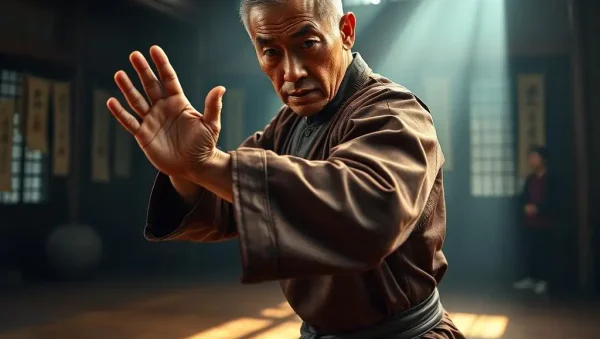
🌟 Discover how Ip Man Wing Chun humility embodies respect and humility, core values that underpin the martial art’s philosophy. Embracing these…
Read article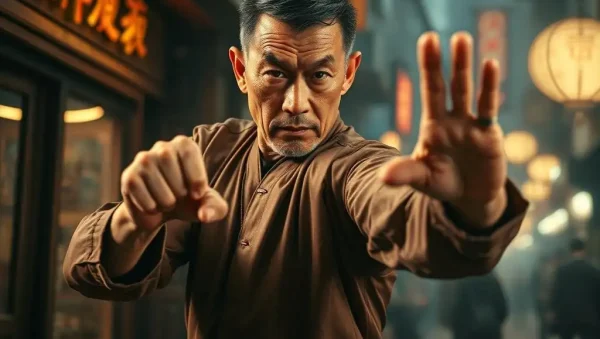
🌟 Discover how Ip Man Hong Kong culture transcended borders, transforming martial arts into a global phenomenon. His legacy, rooted in Hong…
Read article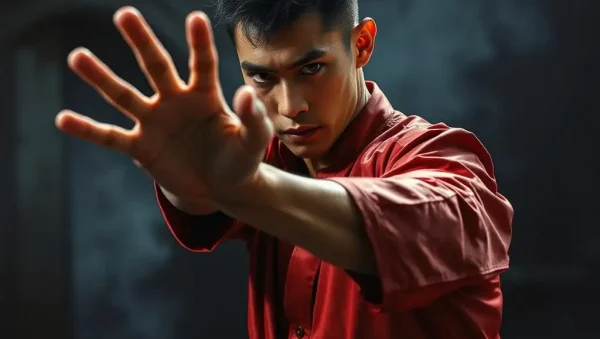
🥋 Discover the most common Wing Chun beginner training errors and learn quick, effective strategies to correct them. At MartialArtsMastery.org, explore expert…
Read article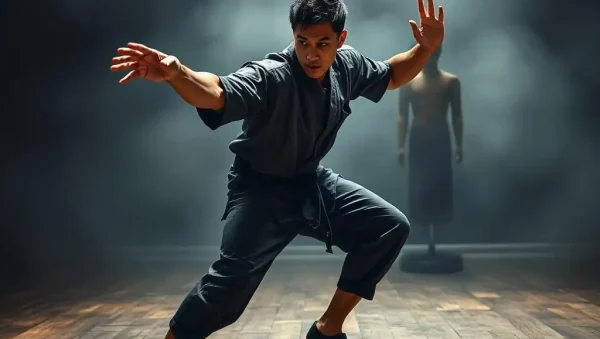
🌟 Master Ip Man's directness stems from Wing Chun's core: the centerline. Discover how understanding and training this vital principle unlocks unparalleled…
Read article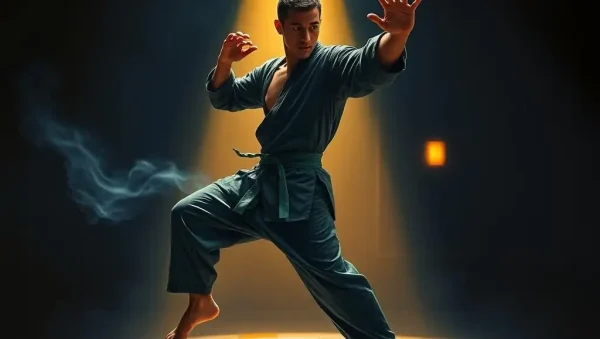
🌬️ Discover how Wing Chun breathing patterns focus enhances energy flow and mental clarity, vital for mastering forms and self-defense. Explore the…
Read article
🌟 Discover how Chi Sao Ting Jing training enhances "Listening Energy," sharpening sensitivity and flow in martial arts. This vital practice deepens…
Read article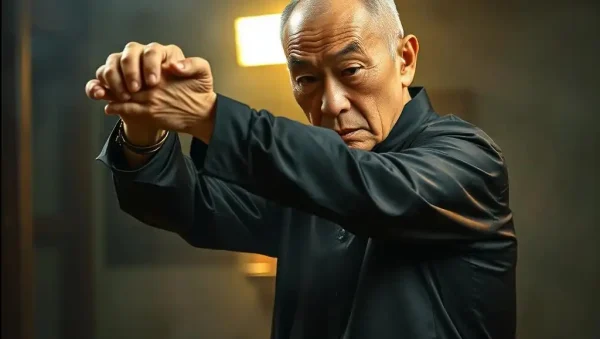
🥋 Discover the art of mastering the Ip Man Wing Chun dummy through Mok Yan Jong training, a vital technique that enhances…
Read articleWing Chun, as passed down through the legendary Ip Man lineage, is a compact, scientific martial art designed for efficiency and close-quarters combat. Unlike styles that rely on brute force, this system emphasizes structure, centerline control, and simultaneous attack and defense. Below, we break down the core principles and signature techniques that define this practical art, offering both beginners and advanced practitioners a clear roadmap for mastery.
At the heart of Wing Chun lies the concept of the centerline—an imaginary vertical line running down the center of your body. Attacks and defenses are directed along this line to dominate the opponent's most vulnerable target while minimizing exposure. The Yee Jee Kim Yeung Ma (goat-riding stance) and the forward intent (Lat Sau) build a grounded, immovable structure that transfers force through the body like a shockwave. Economy of motion dictates that every movement is direct, eliminating wasted energy, which makes the system brutally efficient in tight spaces.
Another pillar is sensitivity through sticky hands (Chi Sau). This training develops tactile reflexes, allowing you to "listen" to an opponent's intent through touch rather than sight. The principle of simultaneous defense and offense (Lin Sil Die Da) ensures you never block without striking back in the same motion. These principles are timeless, making Wing Chun adaptable to various body types and physical conditions, as they rely on angles and leverage over muscular power.
The Tan Sau (palm-up hand) is a versatile deflecting guard that redirects incoming strikes while positioning your arm to counter. Paired with the Wu Sau (protecting hand), it forms the classic Bon Sau structure. The Bong Sau (wing arm) uses a rotating elbow to absorb and redirect heavy blows, often flowing into a counter-palm strike. These are not static blocks; they are dynamic weapons designed to collapse an opponent's line and create openings.
The signature chain punch (Lin Wan Kuen) is a rapid, vertical-fist combination that maintains constant forward pressure. It is delivered from the elbow with minimal telegraphing, overwhelming defenses through volume and precision. Complementing these, the Pak Sau (slapping hand) and Lap Sau (grabbing hand) strip away guards, while kicks like the front stomp (Jik Tek) target the shins and knees. Each technique is a puzzle piece designed to work within the system's logic of trapping and bridging the distance.
Ip Man’s teaching standardized the system and popularized it globally, especially through students like Bruce Lee and Wong Shun Leung. The lineage emphasizes practical self-defense over sport or demonstration. Sparring drills, such as Gor Sau, simulate real encounters with unpredictable attacks, teaching practitioners to remain calm and adaptive. The forms—Siu Nim Tau, Chum Kiu, and Biu Jee—are not just patterns but reference manuals for structure, footwork, and emergency techniques.
In the Ip Man branch, Chi Sau is heavily refined, transitioning from pre-arranged drills to free-flowing sensitivity games that mirror combat’s chaos. The lineage also incorporates the wooden dummy (Muk Yan Jong) to improve precision and joint alignment. Unlike other Wing Chun variants, this line often emphasizes a slightly more upright stance and rapid footwork shifts, making it highly effective for modern scenarios involving multiple attackers or confined environments.
Wing Chun’s footwork is deceptively simple yet profound. The pivot (Juen Ma) on the heels allows instant direction changes, while the advancing step (Biu Ma) closes distance explosively. Trapping techniques, such as Lap Da (grab and punch) and Jut Sau (jerk hand), immobilize an opponent's limbs briefly to deliver unimpeded strikes. This is not wrestling but a split-second control window that sets up decisive blows.
Practitioners learn to "borrow" the opponent's force, using their momentum against them. For instance, when an attacker pushes, you yield slightly then counter with a palm strike to the chin. The triangle footwork for angling off the line of attack is critical, enabling you to strike from blind spots. These techniques are practiced repeatedly until they become instinctual, turning complex movements into simple, reliable responses under stress.
Training begins with Siu Nim Tau (“Little Idea”), a static form that builds relaxation and correct limb positioning. Students then progress to Chum Kiu (“Seeking the Bridge”), integrating footwork and turning to close distance. Biu Jee (“Thrusting Fingers”) is the emergency form, containing explosive pressure-point strikes and recovery techniques. Each form is a progression, not a checklist, demanding deep refinement before moving forward.
Chi Sau practice is the crucible where principles meet application. Beginners start with single-hand drills, then advance to double-hand rolling. This builds reflexive defense and the “sticky” feel of controlling the opponent’s arms. Daily repetition of these drills, coupled with partner work, rewires neural pathways, making Wing Chun a reactionary system. Lineage-specific details—like the “three treasures” of structure, timing, and sensitivity—are drilled to ensure that practitioners maintain the art’s core integrity while adapting to their own bodies.
With consistent practice of 2-3 times per week, basic self-defense skills from the Ip Man lineage can be developed in approximately 6-12 months. However, true proficiency in Chi Sau and advanced trapping takes 3-5 years of dedicated training. The system’s efficiency accelerates early progress, but refinement is lifelong. Your personal physical condition and prior martial experience also influence speed.
Absolutely. Wing Chun was designed to overcome strength with leverage and structure. The forward stance, centerline theory, and trapping techniques neutralize brute force, making it ideal for smaller frames. Ip Man himself was wiry, yet legendary for defeating larger opponents. The system emphasizes positioning and sensitivity, so power discrepancies are minimized through technique and timing.
Yes, but it requires realistic sparring. Wing Chun’s close-quarters focus is perfect for urban environments like hallways or cars. The chain punch and simultaneous defense-offense overwhelm attackers. However, practitioners must train against resisting partners and incorporate ground-survival basics, as no style is complete alone. Adaptation is key, but its core tactics are highly effective.
Ip Man’s lineage emphasizes a more relaxed, upright structure, with heavy focus on Chi Sau sensitivity and forward pressure. Some older styles (e.g., Yuen Kay Shan) use more evasive footwork and complex hand traps. Ip Man’s approach is pragmatic, teaching simple, explosive counters. His students, like Wong Shun Leung, also integrated modern sparring, making this branch arguably more combat-tested.
No. The wooden dummy is a useful tool but not mandatory for beginners. Many techniques can be practiced with a partner or using wall bags and focus mitts. The dummy refines angles, distance, and joint alignment, but its benefits can be partially replicated with shadow work and partner drills. Invest in it only after mastering the first two forms, and improve your basics first.







