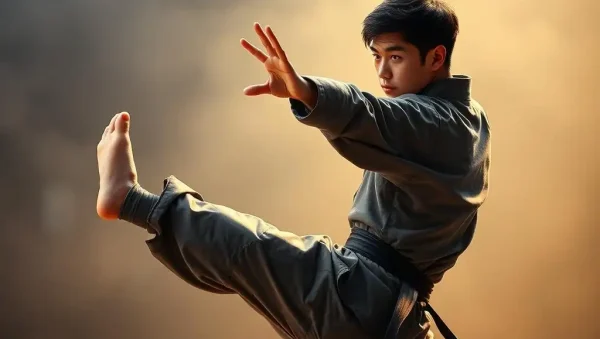
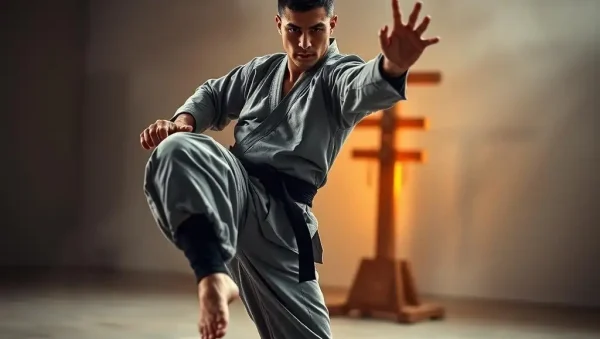
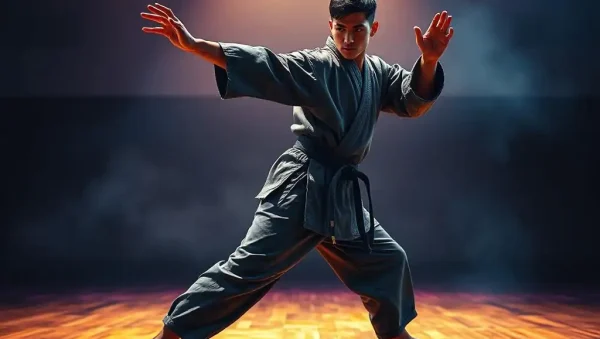
Taekwondo Patterns (Poomsae/Hyung) Overview: The Heartbeat of Form
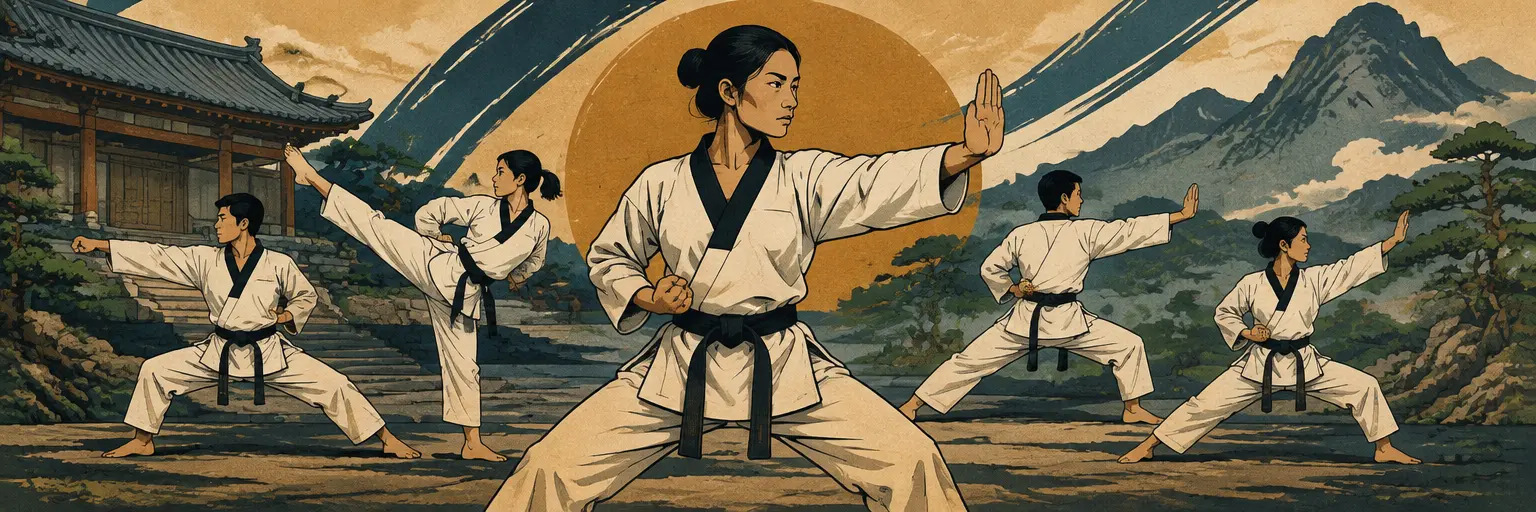
For practitioners of Taekwondo, patterns—known as Poomsae in Kukkiwon/WT style and Hyung in ITF/Chang Hon style—are far more than choreographed sequences of kicks and strikes. They are the living encyclopedia of the art, encoding offensive and defensive techniques, stances, transitions, and philosophical principles into a dynamic solo practice. At Martial Arts Mastery, we delve into this subcategory to illuminate how patterns serve as both a foundational training tool and an advanced combat simulation. Whether you are a white belt grappling with your first Taegeuk Il Jang or a black belt seeking deeper meaning in Koryo, this overview provides the essential roadmap to understanding, practicing, and mastering the structured forms that define Taekwondo’s technical and cultural identity.
🔷 Understanding the Dual Heritage: Poomsae vs. Hyung
Taekwondo patterns are not monolithic; they branch into two major systems, each with its own history and technical emphasis. The Kukkiwon/WT Poomsae system, which governs Olympic sparring, features the Taegeuk series (1-8) for color belts and the black belt forms like Koryo, Keumgang, Taebaek, and Pyongwon. These prioritize smooth, flowing transitions, deep stances, and dynamic hip rotation, reflecting the Korean philosophical concept of um/yang (yin/yang) balance. Conversely, the ITF/Chang Hon Hyung system, developed by General Choi Hong Hi, includes 24 patterns named after Korean historical figures or concepts, focusing on sine wave motion—a rhythmic up-and-down body pulse—and a more linear, explosive execution of techniques.
For a beginner, the distinction might seem academic, but it is critical for goal-oriented practice. If you compete in WT tournaments, mastering the Taegeuk Poomsae is essential for scoring. If you practice ITF for self-defense or tradition, the Hyung lineup—such as Chon-Ji (Heaven and Earth) or Hwa-Rang (the Flowering Knights)—offers a different set of combative applications. This subcategory clarifies these differences, helping you identify which sequence to prioritize based on your school’s affiliation, rank requirements, and personal goals. By understanding the “why” behind each movement’s placement, you transform rote memorization into intentional, powerful execution.
🟠 The Role of Patterns in Belt Advancement and Grading
In most Taekwondo schools, patterns are the single most significant component of belt promotion tests. Before you step onto the mat for grading, you are expected to demonstrate precise technique, correct stance height, proper breathing, and kihap (sharp yell) at predetermined moments. For example, performing Taegeuk Oh Jang (5th pattern) requires you to show command of back stances, knife-hand blocks, and side kicks—each executed with controlled speed and powerful ending. This subcategory explains the grading criteria for each pattern level, breaking down what examiners look for: balance during pivots, chambering of hands before blocks, and the visual snap of the hips on every strike.
Beyond the mechanical, patterns also test your memory and focus. Under the pressure of a grading floor, forgetting the next movement can be catastrophic; thus, regular pattern practice ingrains muscle memory and mental resilience. This guide offers practical memorization strategies—chunking sequences by direction, visualizing the Korean meaning behind each move, and drilling slow-motion repetitions. We also address common pitfalls, such as rushing the final kick, collapsing the stance, or failing to maintain eye contact in the direction of attack. By aligning your practice with these expectations, you not only pass your test but also build a rock-solid foundation for advanced sparring, self-defense, and personal confidence.
🥋 Breaking Down Core Movements: Stances, Blocks, Kicks, and Strikes
Every Poomsae or Hyung is built from a finite vocabulary of fundamental movements. The front stance (ap-kubi) provides power and stability for punches; the back stance (dwit-kubi) enables agile deflection and counterattacks; the horse stance develops leg strength for low blocks. In this subcategory, we dissect each pattern’s signature techniques—like the knife-hand block in Taegeuk Il Jang, the twin palm block in Taegeuk Chil Jang, or the reverse hooking kick in the black belt form Taebaek. We explain the biomechanics: how to pivot the back foot for maximal hip torque, how to chamber the opposing hand for protection, and how to time your exhalation with the execution of each technique.
For advanced practitioners, we explore the application (bunkai-like analysis) of each movement. A pattern’s block is not just a defensive gesture—it is a joint lock, a throw, or a striking setup. For example, the opening move of Koryo, a high-fisted low block, can be interpreted as a grabbing counter to a punch. This layer of understanding elevates your practice from aesthetic dance to a practical combat drill. We also compare how ITF sine wave motion adds vertical power to the same techniques, contrasting it with WT’s horizontal hip rotation. Such detailed breakdowns ensure you never perform a movement without knowing its purpose, intent, and potential application in real-world defense.
🟢 Philosophical and Cultural Significance of Each Pattern
Taekwondo patterns are not arbitrary sequences; each one is a symbolic narrative of Korean history, ethics, and the martial artist’s spiritual journey. The Taegeuk forms draw from the I Ching’s eight trigrams, each representing a natural element (like heaven, fire, water, wind) and an associated virtue, such as yang (brightness) or gam (perseverance). For instance, Taegeuk Sa Jang reflects thunder and teaches the principled force of hidden power. The ITF Hyung are named after historical figures or concepts, like Do-San (the patriot Ahn Chang-ho) or Choi-Yong (a medieval general), embedding lessons of leadership, sacrifice, and national identity into your movement.
Understanding this philosophical layer enriches your training and your connection to the art. When you perform Keumgang (diamond), you are embodying the idea of “being as solid as a diamond” against adversity; when you execute Eui-Am (the pen name of a Korean independence activist), you channel the spirit of resolute resistance. This subcategory provides historical context for every form, helping you to appreciate why certain sequences are repeated, why specific stances are exceptionally low, and why some patterns conclude with a defensive posture. By internalizing these stories, your practice becomes a meditation, not just a workout—transforming you from a novice copying motions into a disciplined student of Eastern philosophy and martial tradition.
⬛ Training Tips, Drills, and Common Mistakes to Avoid
Mastering a pattern requires deliberate, structured repetition—not endless mindless going. Our guide offers progressive training drills: first, practice each segment in isolation (e.g., the first five moves of Taegeuk Sam Jang) with slow, exaggerated tension; then link two segments with a focus on smooth weight transfer; finally, perform the entire pattern at speed with dynamic kihap. We recommend mirror practice to refine alignment and video analysis to spot uneven footwork. Also crucial is mental rehearsal—visualizing the pattern while off the mat, which strengthens neural pathways and reduces anxiety before testing. For advanced students, we suggest changing tempo (slow-fast-slow), adding resistance bands for strength, or performing with eyes closed to enhance proprioception.
Common mistakes plague practitioners at all levels. Overlooking chambering weakens the block’s power; lifting the heel on stances compromises balance; rushing the final move ruins the pattern’s cadence; forgetting the kihap loses focus. This subcategory outlines each pitfall with corrective cues, such as “imagine your front knee is pressing against a wall” for stance depth or “exhale on every strike, inhale on every transition” for breath control. We also emphasize the importance of consistent daily practice, even just 10 minutes, over marathon weekend sessions. By applying these drills and corrections, you will see dramatic improvements in your form, your grading scores, and your confidence in sparring, where pattern-derived footwork becomes second nature.
Frequently Asked Questions
What is the difference between Poomsae and Hyung in Taekwondo?
Poomsae refers to the standardized forms used in Kukkiwon/WT Taekwondo, such as the Taegeuk series and black belt forms like Koryo. Hyung is the traditional term used in ITF/Chang Hon Taekwondo, comprising 24 patterns like Chon-Ji and Hwa-Rang. While both are solo sequences of techniques, they differ in origin, numbering, stances, and movement dynamics—WT emphasizes fluid hip rotation, while ITF uses sine wave motion. Your school’s affiliation determines which system you practice.
How many Taekwondo patterns are there in total?
The number depends on the system. The Kukkiwon/WT system has 8 Taegeuk Poomsae for color belts plus 9 black belt forms (Koryo, Keumgang, Taebaek, Pyongwon, Sipjin, Jitae, Cheonkwon, Hansu, Ilyeo), totaling 17. The ITF/Chang Hon system has 24 Hyung, each named after a Korean historical figure or concept. Some schools also include older Palgwae forms, bringing the total to more than 25, but the above are the most common modern standards.
Can practicing patterns help improve sparring performance?
Yes, unequivocally. Patterns develop precise footwork, stance stability, timing, and hip power—all critical for sparring. The transitions between stances train your ability to shift weight quickly, while the execution of kicks in patterns builds muscle memory for speed and accuracy. Patterns also teach you to maintain balance under pressure and to visualize an opponent, improving your reaction time and tactical awareness when facing a live partner.
Are patterns purely traditional, or do they have practical self-defense applications?
Patterns are deeply combative. Each movement is a coded application for blocking, striking, joint locking, or throwing against a realistic attacker. For example, a low block can redirect a kick while the other hand grabs, and a high side kick can target an opponent’s knee or chin. Modern instructors often teach “poomsae applications” to reveal these hidden techniques, showing that patterns are not just dance but a systematic self-defense curriculum.
How long should it take to learn one Taekwondo pattern?
For a beginner, a simple pattern like Taegeuk Il Jang typically takes 3-6 weeks of daily practice to memorize and execute acceptably. Advanced patterns, such as Keumgang, may take months to refine. The key is consistency—training for 10-15 minutes daily is more effective than a 2-hour session once a week. Your instructor’s feedback and your own video review accelerate progress significantly.