Wrestling (Catch Wrestling): Submissions and Pins – Master the Mat
Welcome to the definitive guide on Catch Wrestling submissions and pins, a cornerstone of the Individual Martial Arts Styles at MartialArtsMastery.org. This subcategory dives deep into the brutal, effective, and historically rich techniques of catch-as-catch-can wrestling. Here, you’ll learn how to control opponents with devastating pins and secure fight-ending submissions—skills that bridge traditional grappling and modern MMA. Whether you’re a beginner or a seasoned grappler, this resource is engineered to elevate your ground game with precision and power.
🦾 Core Catch Wrestling Submissions: The Painful Arsenal
Expect a breakdown of the most iconic catch wrestling submissions, including the keylock, neck crank, and toe hold. Unlike BJJ, catch wrestling prioritizes pain compliance and positional control over pure joint mechanics. You’ll discover how to apply these locks from unexpected positions—like the leg lace or the free-style ride—forcing opponents to submit or risk injury. Each technique is explained step-by-step, with emphasis on leverage, anatomical targeting, and common counters.
Our guides also highlight the philosophy behind catch wrestling’s “no holds barred” approach. You’ll learn why submissions here are often faster and more aggressive, designed for real combat scenarios. We cover both classic and modern variations, ensuring you understand the evolution from old-time carnival bouts to today’s submission grappling competitions. Master these, and you’ll have a toolkit that transitions seamlessly to self-defense and sport.
🛡️ Pinning Combinations: Control and Dominance on the Ground
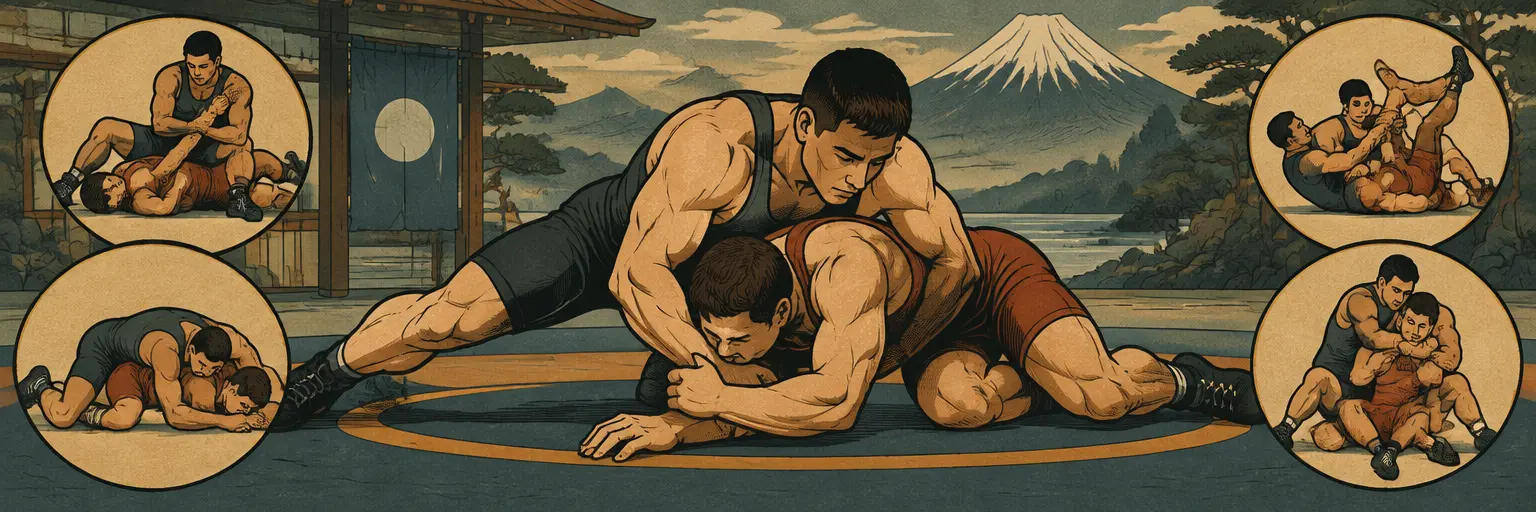
This section focuses on the art of the pin, from the side control to the reverse half-nelson. Catch wrestling pins aren’t static—they are dynamic pressure systems that exhaust opponents while setting up submissions. Expect detailed tutorials on turning your opponent’s base, using your hips for maximum weight distribution, and transitioning between pinning variations to prevent escapes. Learn the classic cradle and nelson family to crush resistance.
You’ll also see how pins serve as a strategic platform for strikes and submissions, mirroring catch wrestling’s no-gi focus. Our content explains the “tightwaist” and “leg-over” sequences, showing you how to chain pins into arm locks or chokes. By mastering these controls, you’ll keep opponents flat, sap their energy, and dominate the mat—essential for both scoring points in sport and surviving on the street.
⚡ Transitioning Between Pins and Submissions: Flow of Catch
Here, we dissect the seamless transitions that make catch wrestling so feared. Expect to learn the switch, sit-out, and granby roll as escape methods, but more importantly, how to counter them into immediate submissions. The content reveals drills for linking a half-nelson into a chicken wing or a leg ride into a heel hook. This fluidity separates catch wrestlers from rigid positional grapplers.
We emphasize timing and reaction, teaching you to read your opponent’s weight shifts. Detailed breakdowns cover the “100 hooks” principle—using every limb to entangle and attack. You’ll practice scenarios where a failed pin becomes a submission setup, keeping your offense relentless. This section is perfect for intermediate grapplers seeking to add unpredictability and finishing power to their game.
🔥 Historical Context and Modern Application of Catch Submissions
Understand the origins: catch wrestling’s rise in Lancashire, its carnival “hook” contests, and its influence on MMA pioneers like Ken Shamrock and Josh Barnett. This content ties old-school techniques to current no-gi tournaments—showing how leg locks and neck cranks have been refined. You’ll learn why catch wrestling fell out of favor and how its practical, no-nonsense approach is surging back in modern combat sports.
We also compare catch wrestling submissions to BJJ and judo, highlighting unique pressure points and finishes that are often banned elsewhere. Expect tactical insights on rule adaptation, from full-contact to sport rules, ensuring you can modify techniques legally. This historical lens enriches your training, giving you context for why certain holds are carved into the DNA of wrestling and MMA alike.
💪 Training Drills for Submissions and Pins: Drilling to Victory
This practical section provides solo and partner drills to ingrain catch wrestling mechanics. Expect exercises like the bridge-and-roll for neck strength, shoulder isolation for keylocks, and ankle flexibility for toe holds. Each drill is designed for progressive overload, building both technique and physical resilience. You’ll also find resistance band routines to mimic submission pressure without a partner.
Our content includes flow-drilling sequences—partnered reps where you alternate between pinning and submitting with low resistance. These build muscle memory for seamless transitions. We stress safety, teaching proper tapping and escape routines to prevent injury during practice. By consistently applying these drills, you’ll transform theory into instinct, ready to execute under fatigue in live sparring or competition.
Frequently Asked Questions
What is the difference between catch wrestling submissions and BJJ submissions?
Catch wrestling focuses on pain compliance and positional dominance, often using cranks and toe holds that are illegal in BJJ. BJJ prioritizes leverage and chokes from guard, while catch wrestling attacks from top position, using pins to force errors. Catch submissions are typically faster and more aggressive, designed for quick finishes, whereas BJJ emphasizes methodical progression.
Are catch wrestling pins effective in modern MMA?
Absolutely. Pins like the side control and nelson are foundational for ground-and-pound and submission setups in MMA. Catch wrestling’s pressure-based control restricts opponent movement, allowing strikes and finishing holds. Many UFC fighters use catch-style rides to dominate rounds, proving its timeless effectiveness.
Can beginners learn catch wrestling submissions safely?
Yes, with proper instruction and a focus on slow, controlled drilling. Start with fundamental pins and basic keylocks, avoiding high-risk cranks until you’ve built flexibility and awareness. Always tap early and use a trustworthy partner. Our drills emphasize safety and progressive complexity, ensuring a steep but safe learning curve.
What are the most essential submissions to master first?
Begin with the keylock (Americana), straight armbar, and rear-naked choke. These are high-percentage, low-risk, and translate to other grappling arts. Then graduate to the toe hold and neck crank for advanced catch flavor. Mastering these four provides a balanced offensive arsenal from both top and back positions.
Do I need a gi or special equipment to train catch wrestling?
No, catch wrestling is typically no-gi, using rash guards and shorts. You’ll need a wrestling mat and mouthguard for live drills. Some catch gyms use a canvas jacket historically, but modern practice is minimal. Focus on grabbing limbs, not clothing, which makes your skills directly applicable to self-defense and MMA.