The Path to Shaolin Long Fist Mastery: A Lifelong Dedication
🥋 Embark on a transformative journey with the Shaolin Long Fist Training Guide, exploring the disciplined path to mastery through relentless dedication,…
Read article

Shaolin Long Fist Kung Fu is a legendary external style renowned for its explosive power, dynamic footwork, and intricate forms that embody the very essence of traditional Chinese martial arts. This comprehensive guide dives deep into the specific techniques and forms that define this ancient art, from the foundational stances and swift kicks to the intricate hand combinations and acrobatic leaps that make it a visually striking and highly effective combat system. Whether you’re a seasoned practitioner seeking to refine your sequences, a beginner looking to understand structured movements, or a historian exploring the roots of Northern Shaolin, this resource breaks down the core principles—such as extending the reach, maintaining a low center of gravity, and generating power through waist coordination—that separate Long Fist from other styles. Explore signature forms like Yi Lu Mai Fu (First Road Plum Flower), Xiao Hong Quan (Small Red Fist), and the more advanced Da Hong Quan (Big Red Fist), each offering unique combat applications and physical conditioning.
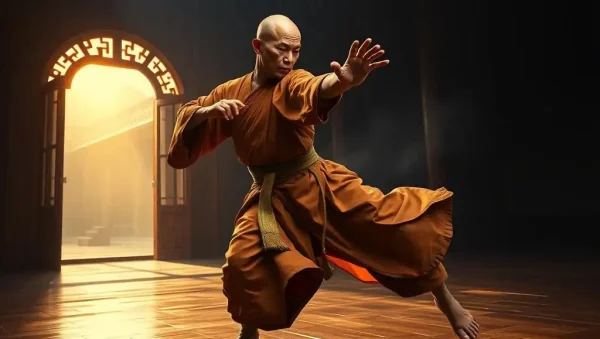
🥋 Embark on a transformative journey with the Shaolin Long Fist Training Guide, exploring the disciplined path to mastery through relentless dedication,…
Read article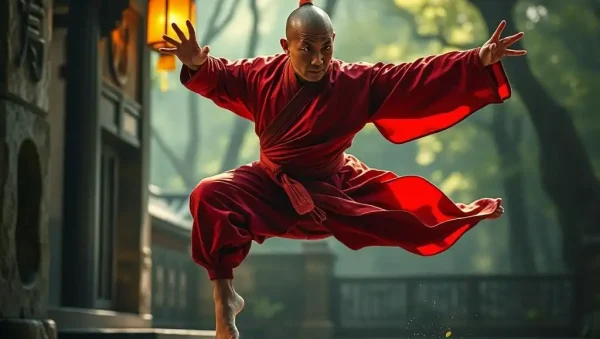
🥋 Master the art of evading and countering with Shaolin Long Fist footwork techniques, essential for enhancing agility, speed, and defensive strategy.…
Read article
🥋 Discover the fascinating journey of Long Fist martial arts evolution, tracing its transformation from ancient battlefield techniques to a revered modern…
Read article
☯️ Discover the profound philosophy and rich Shaolin Long Fist techniques history that transcend mere physical execution, offering a path to holistic…
Read article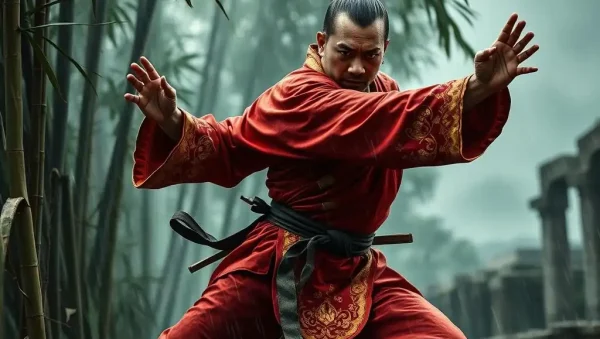
🥋 Discover the strategic brilliance of Shaolin Long Fist's ambush techniques. MartialArtsMastery.org unveils the art of surprise, offering historical context, training insights,…
Read article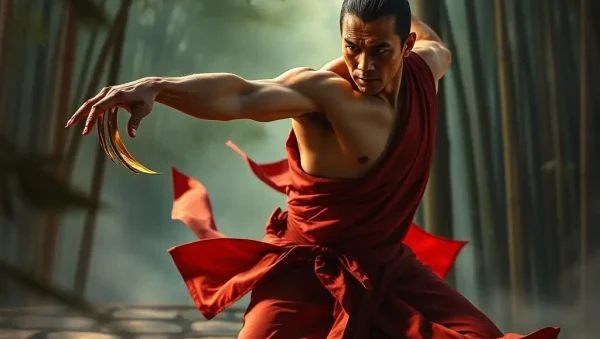
🌀 Uncover the rich Lian Huan Quan history, delving into the narrative woven through its movements. MartialArtsMastery.org explores the art, science, and…
Read article
💪 Unlock peak performance for Shaolin Long Fist practitioners. This regimen focuses on explosive power, core stability, and joint resilience, essential for…
Read articleShaolin Long Fist (Changquan) is one of the most iconic and influential styles of Northern Chinese Kung Fu, renowned for its expansive, flowing movements, explosive power, and deep historical roots within the Shaolin Temple. This subcategory offers a comprehensive deep dive into the specific techniques, traditional forms (taolu), and training methodologies that define this dynamic martial art, perfect for practitioners seeking structured knowledge and enthusiasts aiming to understand its technical brilliance.
Mastering Long Fist begins with its unique stance work and agile footwork, which form the foundation for all advanced techniques. The style emphasizes low, stable stances like the horse stance (Mabu) and bow stance (Gongbu), paired with quick directional changes and sliding steps that generate forward momentum and evasive mobility. Practitioners learn to root their power through the feet while maintaining lightness and speed, essential for executing the long-range strikes and kicks that characterize the system.
Expect detailed breakdowns of each fundamental stance, including alignment cues, weight distribution, and common mistakes to avoid. You’ll also discover how footwork patterns—such as the “twisting step” and “butterfly step”—are practiced in isolation before integrating into combinations. This foundation not only improves combat effectiveness but also builds incredible leg strength and posture, directly translating to better performance in forms and sparring drills.
Long Fist’s upper-body arsenal is vast, featuring linear and circular strikes that rely on full-body coordination rather than isolated arm strength. Key techniques include the threading punch (Chuan Zhang), hammer fist (Ping Chui), and the signature “double arm swing” (Shuang Bai), often delivered with whipping torso rotation. Defensively, the system uses sweeping parries, high blocks, and cross-arm guards designed to redirect force while setting up counter-offensives instantly.
This section provides step-by-step instructions for executing each strike with proper body mechanics, including hip rotation, shoulder relaxation, and breath control. You’ll also learn how to chain strikes into rapid-fire sequences that maintain pressure on opponents. Practical applications are highlighted, showing how these classical movements adapt to modern self-defense scenarios, making your training both authentic and relevant.
Long Fist is legendary for its high, snapping kicks and sweeping leg attacks, which target multiple levels from ankle to head. Signature kicks include the front snap kick (Tan Tui), roundhouse kick (Bian Tui), and the famous flying side kick (Xuan Feng Jiao), often performed with aerial flair in advanced forms. Leg sweeps and hooking techniques are equally crucial, creating off-balancing opportunities that set up takedowns or finishing strikes.
Inside this section, you’ll receive precise guidance on kick mechanics—chambering, hip extension, and recoiling—to maximize speed and control. Training drills for flexibility, balance, and explosive power are included, along with common errors like leaning back or compromising stance stability. Understanding the tactical use of kicks, from long-range probing to close-quarters sweeps, will elevate your overall fighting strategy and improve your form execution greatly.
The heart of Long Fist training lies in its fixed forms, which are choreographed sequences that encode combat applications, conditioning, and rhythm. Classic forms like “Lian Bu Quan” (Linking Steps Fist) for beginners and the advanced “Yi Lu Mai Fu” (First Route Ambush) are broken down movement by movement. Each form emphasizes continuity, extension, and contrast between speed and stillness, embodying the martial philosophy of “hardness within softness.”
Expect a systematic approach to learning forms: memorizing segments, understanding transitions, and practicing with mental intent (yi) to improve flow and power. You’ll also find tips on how to perform forms for competition or demonstration, including timing, facial expression, and spatial awareness. By internalizing these sequences, you not only preserve tradition but also develop a living library of techniques usable in spontaneous combat.
Beyond individual moves, Long Fist demands integrated power generation that originates from the legs, is guided by the waist, and expressed through the arms—known as “liu he” or six harmonies. Drills like silk-reeling exercises, iron palm basics, and repetitive striking on wooden dummies build both internal strength and external resilience. Breath control (tanden breathing) is synchronized with every movement, stabilizing the core and enhancing explosive output.
This subsection offers a progressive conditioning plan suitable for all levels, from bodyweight exercises to partner-based resistance work. You’ll learn how to develop, or “li”, power without sacrificing speed, using the unique “coiling” motions of the torso and hips. Recovery strategies, such as stretching protocols and joint mobility work, are also included to prevent injury and prolong your martial career, ensuring your body remains a capable weapon.
For most dedicated students, learning a beginner form like Lian Bu Quan takes around 3-6 months of consistent practice (2-3 sessions weekly). However, mastering the form’s dynamics, including speed, power, and intent, usually requires 1-2 years. Advanced forms can take several years to complete, as they demand superior flexibility, balance, and coordination. Consistency and quality over speed are emphasized.
Yes, when practiced with application-focused training. Many classical techniques, such as low sweeps, joint locks, and explosive palm strikes, translate directly to modern self-defense. However, traditional forms alone are insufficient; you must practice scenario-based drills and sparring to develop reflexes. The style’s focus on distance management and footwork gives practitioners practical tools to escape or neutralize threats effectively.
No, you can begin with your current fitness level. Long Fist training itself gradually improves flexibility and strength through progressive stretching and conditioning drills. Beginners often start with low kicks and modified stances, building up intensity over time. The key is patience and listening to your body to avoid injury. With consistent practice, athletes typically see significant gains in agility and endurance within months.
Long Fist emphasizes wide, extended movements, longer ranges, and dynamic kicks, whereas Praying Mantis focuses on rapid, short-range hand techniques, grappling-like hooks, and close-quarters footwork. Long Fist’s aesthetics are more expansive and athletic, while Mantis appears sharper and more compact. Both share Northern martial heritage but differ in tactical philosophy, physical conditioning, and combat rhythm.
Minimal equipment is required: loose clothing, a non-slip mat or wooden floor, and about 2x2 meters of open space for footwork and forms. Optional tools include a punching bag for power development, weighted ankle bands for conditioning, and a mirror to check posture. For kicks, a chair or wall can be used for balance support. A sparring partner is beneficial for applications but not essential for solo form practice.







