High Section Roundhouse: Reaching New Heights with Your Dollyo Chagi
🔥 Discover how mastering the Dollyo Chagi Roundhouse Technique elevates your martial arts skills. This powerful kick combines precision and agility, unlocking…
Read article
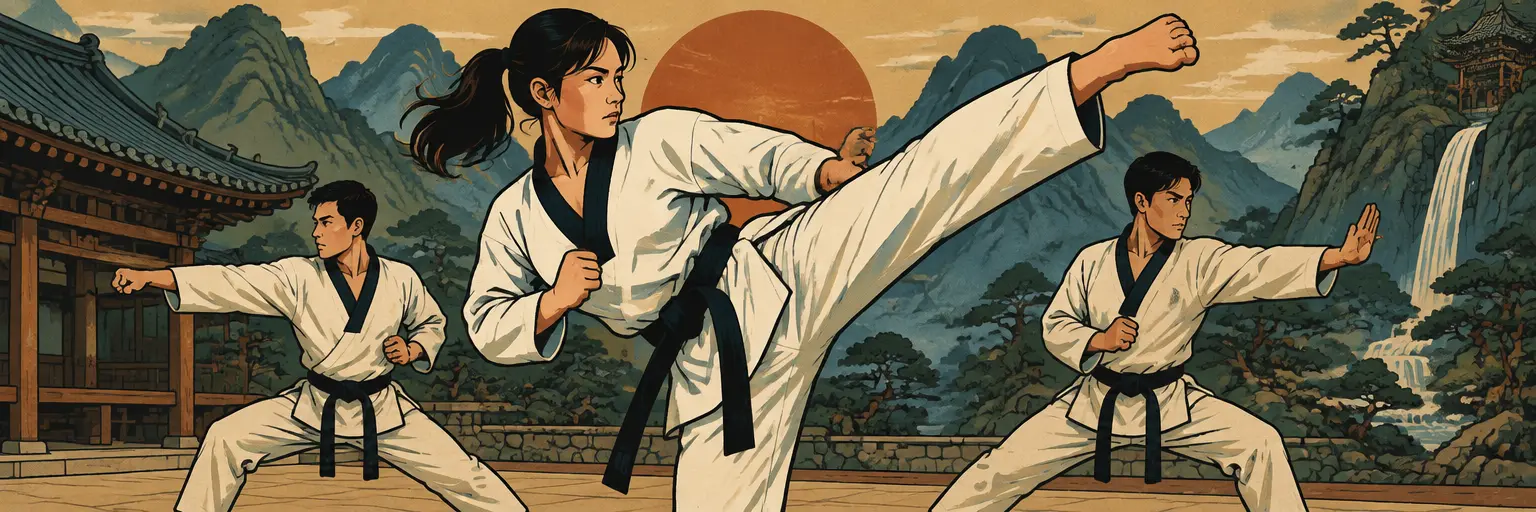
Dive into the explosive world of Taekwondo, a Korean martial art renowned for its dynamic, high-flying kicks and lightning-fast hand techniques. Our focused guide breaks down the fundamental kicks and hand strikes that form the backbone of this Olympic sport and powerful self-defense system. From the iconic turning kick (dollyo chagi) to the precise front kick (ap chagi) and the powerful knife-hand strike (sonkal taerigi), we demystify the biomechanics, balance, and breath control required to execute each movement with devastating efficiency. Whether you’re a white belt building your first arsenal of techniques or a seasoned practitioner refining your form, these core building blocks will enhance your agility, power, and spatial awareness. Unlock the secrets of proper hip rotation, chambering, and snap—essential elements that transform basic movements into masterful strikes. Perfect for beginners seeking a solid foundation and instructors looking for clear, actionable breakdowns, this resource bridges traditional discipline with modern training principles.
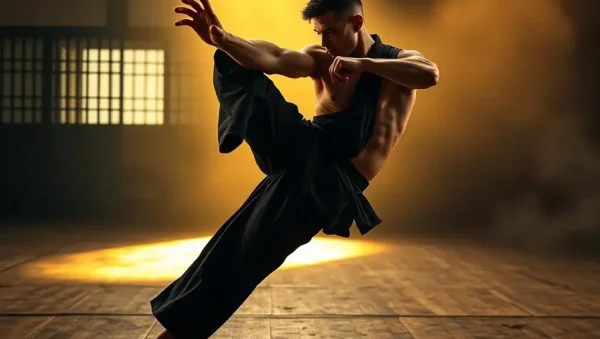
🔥 Discover how mastering the Dollyo Chagi Roundhouse Technique elevates your martial arts skills. This powerful kick combines precision and agility, unlocking…
Read article
🥋 Master the art of stability with Taekwondo kicking stance balance drills. These essential exercises enhance your stance control, improve power, and…
Read article
🥋Mastering the Taekwondo kick footwork technique is essential for effective strikes and defensive maneuvers, forming the foundation for all kicks and strikes.…
Read article
🥋 Mastering Taekwondo punching technique correction is essential for effective combat and injury prevention. Discover common mistakes and expert tips to refine…
Read article
🥋 Discover the comprehensive world of Taekwondo elbow strike techniques, mastering upward, downward, and spinning movements that enhance your fighting skills, deepen…
Read article
🥋 Discover the Jumping Front Kick technique basics, a powerful aerial attack that enhances agility and striking effectiveness. MartialArtsMastery.org explores its proper…
Read article
🥋 Master the precision and power of the Hansonkut single finger strike, a fundamental technique in Taekwondo. Explore its history, proper execution,…
Read articleWelcome to the explosive world of Taekwondo, a Korean martial art renowned for its high-flying kicks and precise hand strikes. Within this subcategory, we break down the essential building blocks of this Olympic sport, perfect for beginners and practitioners looking to refine their basics. Whether you are training for self-defense, fitness, or competition, mastering these foundational movements is your first step toward black belt excellence. Here, we combine technical breakdowns, historical context, and practical application to ensure your journey is both authentic and effective.
Mastering the fundamental kicks is the heart of Taekwondo. This section focuses on the three most critical movements: the front kick (ap chagi), the roundhouse kick (dollyo chagi), and the side kick (yeop chagi). You will learn the correct chambering position, hip rotation, and footwork that generate explosive power and speed. Each kick is broken down into step-by-step biomechanics, highlighting common mistakes like leaning back or dropping the guard, so you can build a stable and efficient technique from day one.
Beyond the basics, we explain how these kicks transition into sparring and self-defense scenarios. For instance, the front kick is perfect for maintaining distance, while the side kick offers powerful linear thrust against an advancing opponent. We provide drills to improve flexibility and balance, essential for achieving the head-height kicks Taekwondo is famous for. With clear visual cues and progressive training tips, you’ll develop muscle memory that makes these kicks feel natural and instinctive, setting a solid foundation for more advanced aerial techniques later.
While Taekwondo is known for kicks, hand strikes are equally vital for a balanced fighting system. This segment covers the basic punches (jireugi), including the jab (jap jireugi), cross (baro jireugi), and the less common but highly effective ridgehand (sonkal taerigi). You’ll understand the proper fist formation, wrist alignment, and hip twist that converts your body’s mass into kinetic force. We emphasize the importance of keeping your elbows tucked and your chin down, ensuring that every strike is both powerful and protective of your defense.
In practical application, hand strikes are your first line of defense when kicks are impractical in close quarters. We explore counter-attacking combinations that pair these punches with footwork, enabling you to close distance safely. Additionally, we discuss the philosophical discipline behind each strike, emphasizing control and precision over brute force. By integrating these hand techniques with your kicks, you create a more versatile and unpredictable fighting style, making you a formidable sparring partner and a more confident self-defense practitioner.
Every powerful kick and strike begins with a stable and mobile stance. Here, we dissect the key Taekwondo stances: the fighting stance (guryo seogi), walking stance (ap seogi), and back stance (dwi kubi seogi). You will learn the proper weight distribution, foot angles, and knee bends that allow for explosive forward, backward, and lateral movement. This section is not just about static poses; it’s about dynamic transitions that maintain balance while executing techniques at full speed.
Effective footwork is the secret weapon of advanced Taekwondo athletes. We guide you through shuffling, stepping, and pivot drills that improve your agility and reaction time. Understanding how to pivot your rear foot during a roundhouse kick or how to slide during a side kick dramatically increases your reach and power. We also cover the concept of "rhythm breaking" in sparring, using stances to feint and misdirect opponents. Mastering this foundation ensures that every subsequent technique you learn is more fluid, precise, and effective in real-world situations.
Once you have individual techniques, it’s time to chain them into devastating combinations. This section provides proven sparring combos that mix high kicks with low kicks and crisp hand strikes. For example, you’ll learn the classic "double roundhouse" to the body and head, or a jab-cross followed by a side kick to the midsection. These combinations are designed to disrupt your opponent’s rhythm, create openings, and score points in competition. We break down each sequence step-by-step, including target selection and timing.
We also delve into combination drills for speed and accuracy, using pads and bags to simulate live targets. You’ll understand how to seamlessly transition between stances and directions, maintaining constant pressure on your opponent. For self-defense, we adapt these combinations into practical counters against common attacks like a grab or a punch. By internalizing these patterns, you enhance your muscle memory, allowing your body to react automatically under stress. This blends sport technique with survival instincts, making your Taekwondo practice comprehensive and deeply rewarding.
Exceptional kicks require exceptional flexibility and balance. This portion of the subcategory is dedicated to the physical conditioning that supports all fundamental techniques. You will find a series of stretching routines tailored to open up your hamstrings, hip flexors, and calves for higher kicks. We also implement balance drills, such as standing on one leg while performing slow, controlled kicks, which strengthens stabilizer muscles and improves proprioception. Coordination exercises, like kicking while shifting directions, are essential for fluid movement.
These drills are not just about flexibility; they are about injury prevention and longevity in martial arts. We explain how to safely increase your range of motion without overstretching, and how to integrate dynamic stretching into your warm-up for optimal performance. Additionally, we offer plyometric and isometric exercises that build explosive power from a static position. By dedicating time to these supplemental practices, you elevate your foundational kicks and strikes to a new level of efficiency and grace, avoiding common plateaus that many beginners face.
The roundhouse kick (dollyo chagi) is often considered the most important because of its versatility and power. It can be thrown to the thigh, body, or head and is used extensively in both sparring and self-defense. Mastering its hip rotation and chambering also translates directly to many other kicks.
With consistent practice (2-3 times per week), most beginners can achieve reasonable proficiency in fundamental kicks and hand strikes within 3-6 months. However, true mastery involves refining balance, speed, and power for several years. The journey is ongoing, but the basics provide immediate confidence and fitness benefits.
For self-defense, a balanced approach is best. While kicks deliver powerful long-range strikes, hand strikes are faster and more practical in close quarters. Prioritize the front kick and side kick for distance management, and pair them with solid jabs and crosses. Avoid high kicks in self-defense unless trained for speed.
Practice dynamic stretching before training (leg swings, lunges) and static stretching after your workout (hamstring holds, butterfly stretch). Never bounce into a stretch. Consistency is key—stretch daily for at least 15 minutes. Use a support like a wall for slightly higher kicks to safely push your limits.
ITF (International Taekwondo Federation) focuses more on power breaking and traditional patterns, with a wider, more linear stance and less hip rotation. WT (World Taekwondo) emphasizes Olympic sparring with faster, circular kicks and a more upright, bladed stance. Both share the same core kicks and strikes, but their execution style differs.







